
Exercises
This quiz examines physiotherapy management of female stress urinary incontinence. It covers continence anatomy, clinical assessment, pelvic floor muscle examination, exercise prescription, breathing, functional training, biofeedback, bladder diaries, safety considerations, and outcome measures. Questions range from foundational concepts to clinical interpretation and evidence-based treatment decisions.
Answer the questions below and check the explanation for each answer.
0/19 answered
Auto audio on: the next questions will be read aloud when you click Continue.
Stress urinary incontinence is involuntary urine leakage associated with effort, exertion, coughing, or sneezing. These activities rapidly increase intra-abdominal pressure.
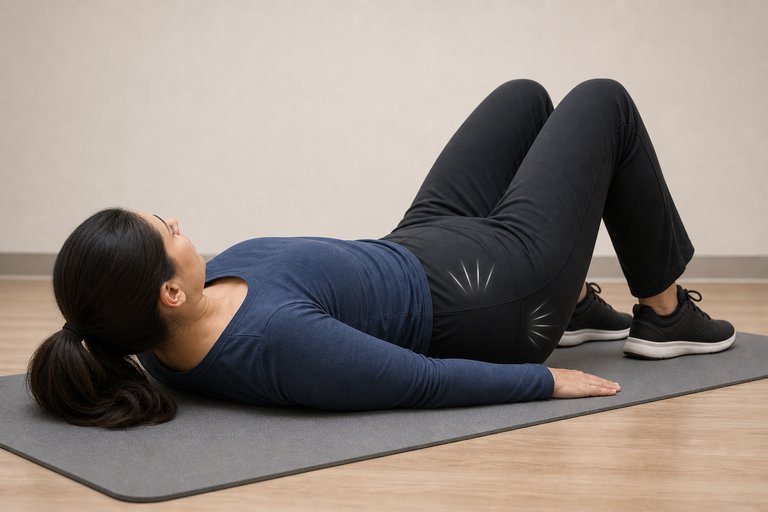
Visible buttock squeezing indicates excessive recruitment of the gluteal muscles. Patients should learn to contract the pelvic floor with minimal unnecessary activity in surrounding muscles.
On the 0–5 Modified Oxford Scale, grade 3 represents a moderate contraction with a definite lift and resistance. Grade 0 indicates no contraction, while grade 5 is strong.
In PERFECT, P refers to power, commonly graded with the Modified Oxford Scale. The remaining elements examine endurance, repetitions, fast contractions, and timed recording.
A bladder diary records intake, voiding frequency and volume, leakage episodes, urgency, and relevant activities. It helps characterize symptoms and monitor change over time.
Supervised pelvic floor muscle training for at least three months is a recommended first-line treatment. The program should be individualized, progressive, and supported by adherence strategies.
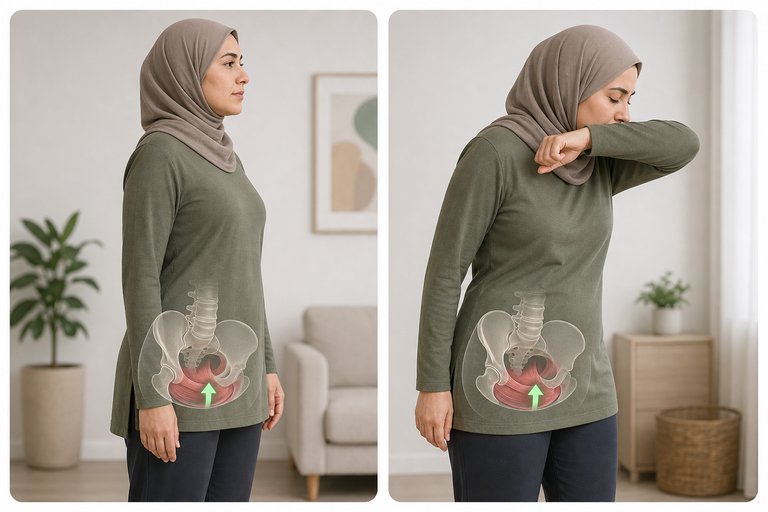
The Knack is a deliberate pelvic floor contraction performed immediately before and during an expected pressure increase, such as coughing, sneezing, or lifting.
Biofeedback displays information about muscle activation, helping patients improve awareness, recruitment, relaxation, and timing. It does not strengthen muscle without active training or directly measure force.
Visible hematuria is a red-flag symptom requiring appropriate medical evaluation. Pelvic floor exercises may address stress leakage but do not replace investigation of possible urinary tract disease.
Urgency urinary incontinence involves leakage accompanied or immediately preceded by a compelling urge. Leakage with jumping or sneezing is more typical of stress urinary incontinence.
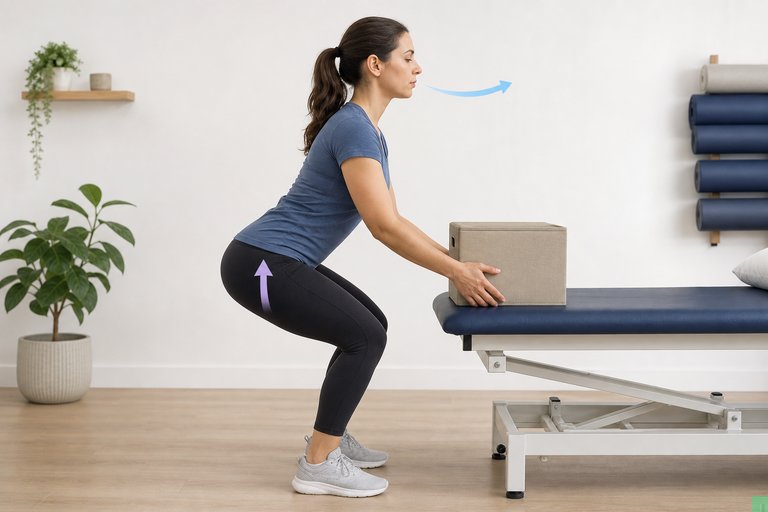
Exhaling during exertion can reduce unnecessary breath holding and support coordinated pressure management. The pelvic floor contraction should be timed with the demanding phase of the task.
Effective pelvic floor function requires both contraction and complete relaxation. Poor relaxation may affect coordination, voiding, comfort, and the quality of subsequent contractions.
Surface electromyography estimates electrical activity rather than force. Electrode placement, movement artifact, and activity from nearby muscles can influence the recorded signal.
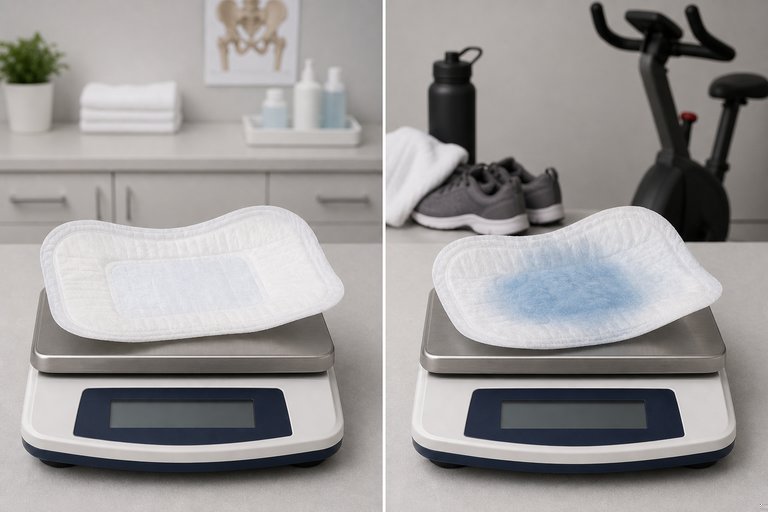
A pad test estimates urine loss from the increase in pad weight over a defined period or activity protocol. It provides an objective measure of leakage quantity.
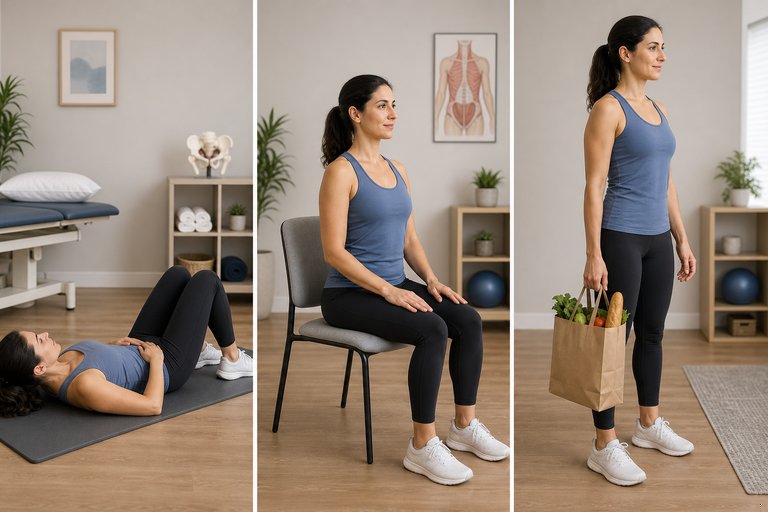
Training commonly progresses from positions in which correct activation is achievable to more demanding upright and functional tasks. Progression should reflect the patient's symptoms and goals.
An active vaginal or pelvic infection is a reason to defer internal examination and arrange appropriate care. Informed consent, privacy, comfort, and relevant precautions must also be addressed.
Adherence improves when training is individualized, achievable, connected to daily routines, and supported by reminders, feedback, follow-up, and goals that matter to the patient.
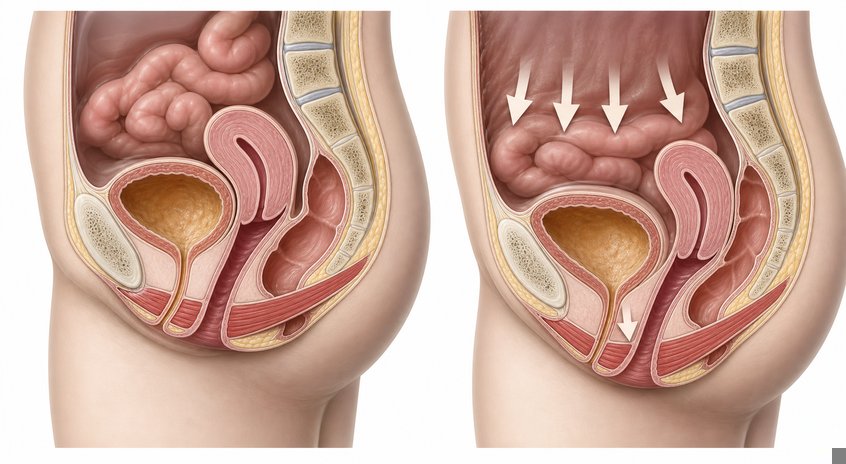
Reduced pelvic floor and connective tissue support can allow excessive movement of the bladder neck and urethra during pressure increases, compromising urethral closure.
The ICIQ-UI Short Form is a patient-reported outcome measure covering leakage frequency, perceived amount, and impact on everyday life, with an additional item concerning leakage situations.

Free CourseShoulder assessment
5

(5)

2h31m

24 exercises

Free CourseOrthopaedics training
5
(2)
5h41m
13 exercises
Free CourseCervical Spine assessment
5
(2)
2h21m
11 exercises

Free CourseBiomechanics lectures
5
(6)
9h19m
14 exercises
Free CourseAnkle Foot Assessment
4.8
(42)
44m
18 exercises
Free CourseSpine Assessment
4.7

(110)
2h04m
28 exercises

Free CourseKnee Assessment
4.7
(60)
1h00m
28 exercises

Free CourseShoulder Assessment
4.7
(60)
50m
19 exercises
Thousands of online courses in video, ebooks and audiobooks.
To test your knowledge during online courses
Generated directly from your cell phone's photo gallery and sent to your email

Download our app via QR Code or the links below:.



Carry knowledge in your pocket.
Download the Cursa app.
There are hundreds of free courses available, with a free certificate of completion that is saved in your mobile image gallery.
Download the app to access the Course Completion Certificate for Free.


+ 10 million
students

Free and Valid
Certificate

60 thousand free
exercises

4.8/5 rating in
app stores

Free courses in
video and ebooks