
Exercises
Explore the essentials of Vestibular Rehabilitation Therapy (VRT) with this educational quiz. Test your understanding of how VRT helps people manage dizziness, vertigo, balance difficulties, and motion sensitivity through individualized exercise programs. Questions cover common vestibular conditions, habituation and gaze-stabilization exercises, vestibulo-ocular reflex (VOR) training, the role of rehabilitation professionals, expected program timelines, and factors that support successful recovery. Ideal for students, healthcare learners, and anyone seeking a clearer overview of vestibular rehabilitation principles.
Answer the questions below and check the explanation for each answer.
0/10 answered
Auto audio on: the next questions will be read aloud when you click Continue.
The main purpose of Vestibular Rehabilitation Therapy is to help patients reduce dizziness, improve balance, and stabilize their gaze under various conditions.
Therapists focusing on Vestibular Rehabilitation primarily manage symptoms like vertigo, dizziness, and other balance-related issues in patients.
Gaze stability exercises are a significant part of Vestibular Rehabilitation, aiming to improve gaze fixation during movement.
Benign Paroxysmal Positional Vertigo (BPPV) is one of the most common conditions treated using Vestibular Rehabilitation, as it often causes dizziness and balance issues.
Habituation exercises aim to desensitize the vestibular system to motion stimuli, reducing dizziness symptoms during everyday activities.
Physical Therapists, often specialized in Vestibular Rehabilitation, are typically the professionals guiding patients through therapy to manage balance and dizziness issues.
Vestibular Rehabilitation programs typically last between 6-8 weeks, allowing time for patients to adapt and notice improvements in their symptoms.
Success in Vestibular Rehabilitation heavily relies on patient compliance and regular performance of the prescribed exercises.
During Vestibular Rehabilitation, patients should adhere to exercise prescriptions and avoid performing more exercises than recommended as it may worsen symptoms.
Vestibulo-Ocular Reflex (VOR) exercises are critical in Vestibular Rehabilitation for improving eye and head movement coordination.
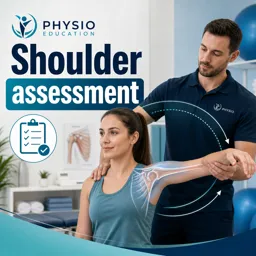
Free CourseShoulder assessment
5

(4)

2h31m

24 exercises
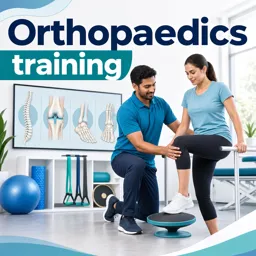
Free CourseOrthopaedics training
5
(1)
5h41m
13 exercises
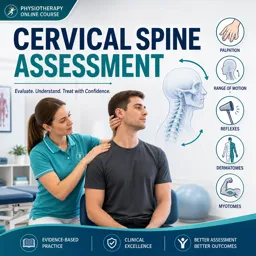
Free CourseCervical Spine assessment
5
(1)
2h21m
11 exercises
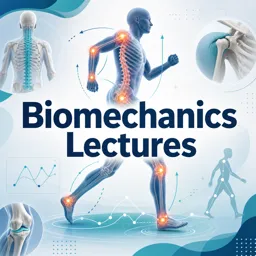
Free CourseBiomechanics lectures
5
(6)
9h19m
14 exercises
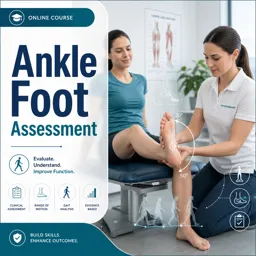
Free CourseAnkle Foot Assessment
4.8
(42)
44m
18 exercises
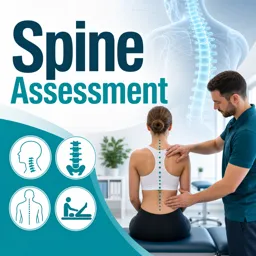
Free CourseSpine Assessment
4.7

(110)
2h04m
28 exercises
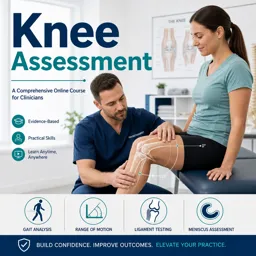
Free CourseKnee Assessment
4.7
(58)
1h00m
28 exercises
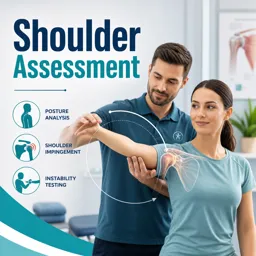
Free CourseShoulder Assessment
4.7
(60)
50m
19 exercises
Thousands of online courses in video, ebooks and audiobooks.
To test your knowledge during online courses
Generated directly from your cell phone's photo gallery and sent to your email

Download our app via QR Code or the links below:.



Carry knowledge in your pocket.
Download the Cursa app.
There are hundreds of free courses available, with a free certificate of completion that is saved in your mobile image gallery.
Download the app to access the Course Completion Certificate for Free.


+ 10 million
students

Free and Valid
Certificate

60 thousand free
exercises

4.8/5 rating in
app stores

Free courses in
video and ebooks