
Exercises
How well do you understand keyword optimization for search engine optimization (SEO) and app store optimization (ASO)? This quiz covers the role of keywords in helping websites, blog posts, and mobile apps reach the right audience. Test your knowledge of keyword research best practices, search intent, long-tail and general keywords, keyword selection, and the risks of keyword stuffing. You will also explore why optimized app titles and localized app listings matter for ASO, along with strategies for balancing broad, competitive terms with specific, high-intent phrases. Ideal for marketers, content creators, app developers, and anyone building a stronger organic search or app store visibility strategy.
Answer the questions below and check the explanation for each answer.
0/10 answered
Auto audio on: the next questions will be read aloud when you click Continue.
The primary function of keywords in SEO (Search Engine Optimization) and ASO (App Store Optimization) is to improve the visibility in search results. Keywords help search engines and app stores understand the content's relevance to a user's query, thus enhancing the chance of appearing higher in search results.
Option 2 is NOT a recommended practice because guessing what your users might search for can lead to inaccurate keyword targeting and less effective SEO strategies. Instead, it's important to use data-driven methods to understand your audience's search behavior.
Optimizing app titles with keywords is crucial for two main reasons: it is where users first engage with the app, making it an immediate lens through which potential users assess your app's relevance to their needs. Additionally, it aids in the app's branding efforts as a well-chosen title can enhance brand recall and identity. Hence, both options 1 and 2 are correct.
Search intent refers to the underlying reason behind a user's search query. It indicates what the user is hoping to find or accomplish by searching that keyword. Understanding search intent helps in choosing keywords that align with what users are actually looking for, thereby improving the chances of ranking higher in search engine results and driving relevant traffic to a website.
Keyword stuffing can make the app description less persuasive because it results in awkward and unreadable content that detracts from the user's experience. Additionally, app stores like Apple App Store and Google Play Store have policies against keyword stuffing, and violating these can lead to the app being penalized or demoted in search rankings. Therefore, both risks are valid concerns in ASO.
Long-tail keywords in SEO and ASO are specific and often longer keyword phrases that target niche demographics rather than a broad audience. They generally have less competition than short, popular keywords, making them useful for attracting targeted traffic.
When choosing keywords for SEO, the number of letters in the keyword is the least important factor. What really matters is how relevant the keywords are to the content and their monthly search volume. These factors impact how well the content could rank in search engine results.
App localization in ASO involves not only translating app content into different languages but also modifying keywords to fit the cultural context and language of the target market. Both processes are essential to ensure that the app appeals to users in various regions, improving visibility and engagement across different locales.
When creating content for a 'healthy eating' blog, using a specific keyword like Nutritious and healthy recipes for families is more effective. This keyword phrase is specific, targets a particular audience (families), and directly relates to the theme of healthy eating. It is likely to attract readers who are specifically searching for healthy recipes for their families.
Balancing the use of general and specific keywords in SEO and ASO is crucial because general keywords help with brand identity by attracting a broad audience, while specific keywords target niche audiences. They are also easier to rank for, making it beneficial to use both types of keywords to effectively reach and engage the desired audience. Hence, both are correct.
Free CourseGetting Started
5

(4)

2h46m

21 exercises
Free CourseOn-Page SEO
5
(1)
38m
5 exercises

Free CourseInteractive Content in Digital Marketing
5
(1)
2h12m
12 exercises
Free CourseSEO for Beginners
4.9
(88)
1h49m
16 exercises

Free CourseGoogle Digital Marketing and Ecommerce
4.7

(31)
13h33m
28 exercises
Free CourseApp marketing
4.7
(82)
3h57m
38 exercises
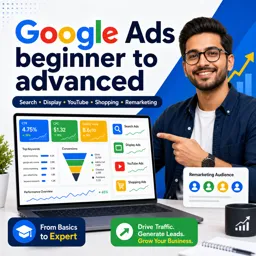
Free CourseGoogle Ads beginner to advanced
4.7
(21)
15h53m
13 exercises

Free CourseSocial Media Management
4.7
(6)
7h54m
6 exercises
Thousands of online courses in video, ebooks and audiobooks.
To test your knowledge during online courses
Generated directly from your cell phone's photo gallery and sent to your email

Download our app via QR Code or the links below:.


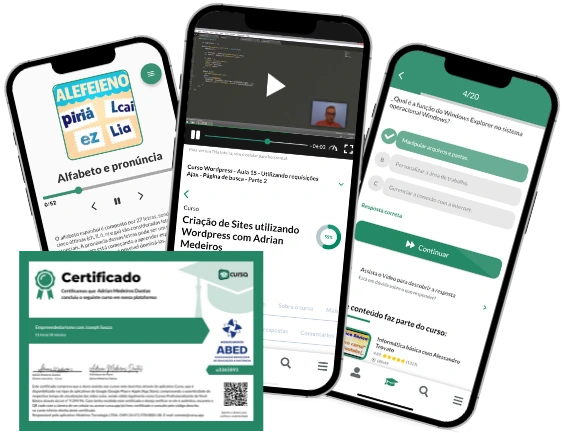
Carry knowledge in your pocket.
Download the Cursa app.
There are hundreds of free courses available, with a free certificate of completion that is saved in your mobile image gallery.
Download the app to access the Course Completion Certificate for Free.


+ 10 million
students

Free and Valid
Certificate

60 thousand free
exercises

4.8/5 rating in
app stores

Free courses in
video and ebooks