
Exercises
Explore Japan's transformation from a decentralized feudal society into a centralized industrial and imperial power. This quiz examines the fall of the Tokugawa shogunate, the restoration of imperial rule, the Charter Oath, military and land reforms, the Iwakura Mission, the decline of the samurai, constitutional government, industrialization, and Japan's emergence as a major international power during the Meiji era.
Answer the questions below and check the explanation for each answer.
0/16 answered
Auto audio on: the next questions will be read aloud when you click Continue.
Matthew Perry arrived with steam-powered warships in 1853. His expedition helped compel the Tokugawa government to sign the Convention of Kanagawa in 1854.
The Tokugawa shogunate had ruled Japan since 1603. Its collapse during the Boshin War allowed authority to be formally restored to Emperor Meiji.
The Satsuma-Choshu Alliance united two powerful domains that had previously been rivals. Their military cooperation was crucial to defeating the shogunate.
The Charter Oath declared that knowledge should be sought throughout the world to strengthen imperial rule. It signaled an openness to institutional and technological change.
In 1871, the government abolished the feudal domains, or han, and replaced them with prefectures governed under central authority.
The 1873 conscription law required eligible men from different social classes to serve. It created a national army and weakened the samurai monopoly on military service.
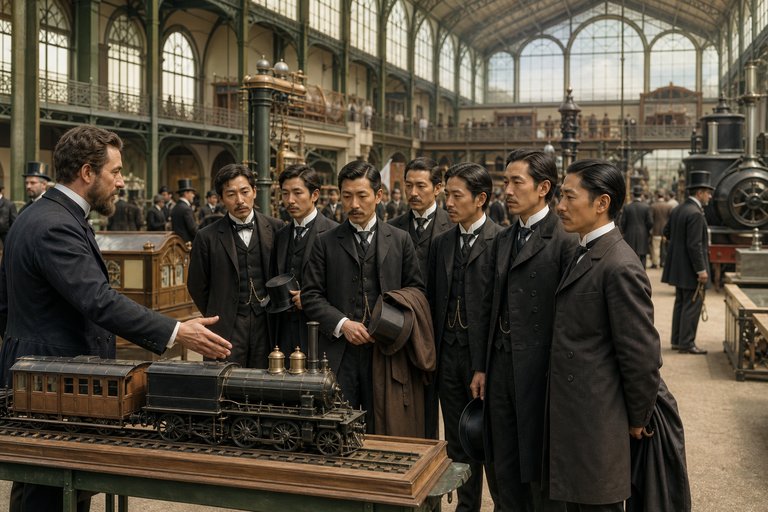
The Iwakura Mission toured the United States and Europe to examine governments, schools, factories, and militaries. It also attempted, unsuccessfully at that time, to revise unequal treaties.
The land tax reform assessed taxes according to land value and required payment in money rather than rice. This provided the central government with more predictable revenue.
The government converted samurai stipends into bonds and opened military service to commoners. These measures removed the economic and military foundations of samurai privilege.
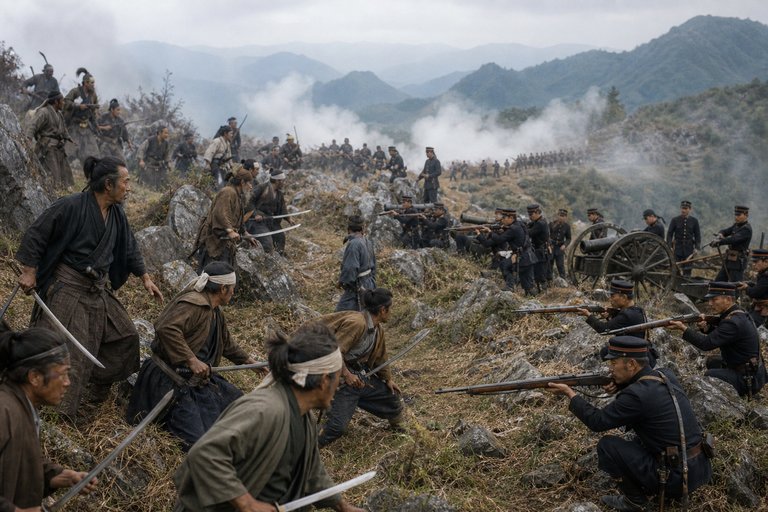
The Satsuma Rebellion was the largest armed revolt by disaffected former samurai. Its defeat in 1877 confirmed the strength of the new conscript army.
The Meiji Constitution was promulgated in 1889 and took effect in 1890. It established a constitutional framework while preserving extensive authority for the emperor.

The Imperial Diet opened in 1890. It consisted of a House of Peers and an elected House of Representatives, although voting rights were initially very limited.
Meiji leaders drew heavily from the Prussian-German model, which combined constitutional institutions with a strong monarch and powerful executive authority.
The Rescript linked education with Confucian family ethics, civic duty, and loyalty to the emperor. It became an important statement of official Meiji ideology.
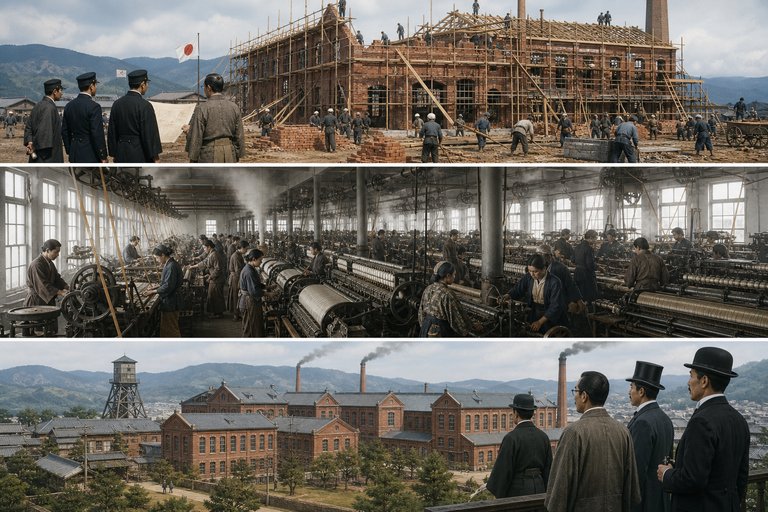
The Meiji state built model factories, mines, railways, and shipyards, then sold many enterprises to private investors. This process contributed to the growth of large business groups.
These victories showed that Meiji reforms had produced modern armed forces and enabled imperial expansion. Japan was increasingly recognized as a major power.
Free CourseIntroduction to Ancient Greek History
5

(1)

28h29m

24 exercises
Free CourseAmerican History
5
(2)
19h30m
25 exercises
Free CourseHistory for Kids
5
(1)
6h04m
53 exercises
Free CourseHistory of the World since 1500 CE
4.9
(8)
25h56m
20 exercises
Free CourseHistory of the World to 1500 CE
4.6

(22)
31h11m
25 exercises

Free CourseAmerican History Homeschool Curriculum
1
(1)
3h56m
22 exercises
Free CourseAncient History Curriculum - from Creation through the Resurrection
New
5h47m
19 exercises

Free CourseComplete U.S. History
New
80h21m
34 exercises
Thousands of online courses in video, ebooks and audiobooks.
To test your knowledge during online courses
Generated directly from your cell phone's photo gallery and sent to your email

Download our app via QR Code or the links below:.



Carry knowledge in your pocket.
Download the Cursa app.
There are hundreds of free courses available, with a free certificate of completion that is saved in your mobile image gallery.
Download the app to access the Course Completion Certificate for Free.


+ 10 million
students

Free and Valid
Certificate

60 thousand free
exercises

4.8/5 rating in
app stores

Free courses in
video and ebooks