A polis was a self-governing city-state: both a physical settlement and a community of citizens sharing political rights, duties, and values.

Duration of the online course: 28 hours and 29 minutes
5

(1)
Build a strong foundation in Ancient Greek history with this free online course—polis, Sparta, Athens, democracy and war—plus quizzes and certificate-ready learning.
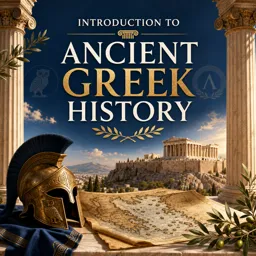
Ancient Greece is more than a chapter in a textbook; it is one of the key starting points for understanding how Western political ideas, civic identity, and historical thinking took shape. This free online course gives you a clear, story-driven pathway through Greek history, showing how small communities evolved into powerful city-states, how new forms of government emerged, and why Greek conflicts still matter when we study power, strategy, and society today.
You will begin with the big question of significance: what makes the ancient Greeks so central in the broader narrative of Western civilization? From there, the course moves into the Greek Dark Ages, exploring what changed after the collapse of earlier Bronze Age systems and what evidence points to Greek-speaking peoples settling in the Aegean world. Instead of treating the period as a blank gap, you will learn how historians reason from limited sources and why that era set the conditions for what came next.
As the polis rises, the course highlights how the idea of a city was also an idea of citizenship, shared values, and public responsibility. You will see how colonization, internal pressures, and the experience of tyranny could reshape communities and open paths toward more organized institutions. From Sparta’s distinctive social order and the role of the agoge, to Athens’ early aristocratic dominance and later political transformations, you will connect social structure to real decision-making and long-term consequences.
The course then follows the high-stakes struggles that defined the classical period, including the Persian Wars and the strategic importance of events like Marathon. You will track the growth of Athenian power through the Delian League, understand why contributions mattered, and examine the turning points that changed the character of alliances into empire. Special attention is given to how Athenian democracy worked in practice, including how civic participation, law, and public judgment differed from modern courtroom expectations.
Finally, you will engage with the Peloponnesian War and the continuing relevance of Thucydides for explaining conflict, fear, and rivalry between states. The course carries the story into the fourth century struggle for hegemony, the shifting balance of power after major settlements, the impact of Theban victory at Leuctra, and the final loss of polis autonomy to Macedon. Throughout, short assessments help you reinforce understanding, test key ideas, and build confidence as you progress.
Whether you are studying history for school, preparing for further coursework, or learning out of curiosity, this course offers a coherent framework for the eras, institutions, and debates that made ancient Greece a lasting reference point in world history.

28 hours and 29 minutes of online video course

Digital certificate of course completion (Free)

Exercises to train your knowledge

100% free, from content to certificate
What was the polis in ancient Greek society?
A polis was a self-governing city-state: both a physical settlement and a community of citizens sharing political rights, duties, and values.
Why was the Battle of Marathon important to ancient Greece?
In 490 BCE, Athens defeated a Persian invasion at Marathon, preserving its independence and boosting Greek confidence before later Persian Wars.
What did Thucydides identify as the main cause of the Peloponnesian War?
Thucydides argued that Sparta's fear of Athens' growing power and influence was the underlying cause of the war.
Ready to get started?Download the app and get started today.
Install the app now
to access the course
Over 5,000 free courses
Programming, English, Digital Marketing and much more! Learn whatever you want, for free.

Study plan with AI
Our app's Artificial Intelligence can create a study schedule for the course you choose.

From zero to professional success
Improve your resume with our free Certificate and then use our Artificial Intelligence to find your dream job.
You can also use the QR Code or the links below.



Free CourseAmerican History
5
(2)

19h30m

25 exercises
Free CourseHistory for Kids
5
(1)
6h04m
53 exercises
Free CourseHistory of the World since 1500 CE
4.9
(8)
25h56m
20 exercises
Free CourseHistory of the World to 1500 CE
4.6

(22)
31h11m
25 exercises
Free CourseAmerican History Homeschool Curriculum
1
(1)
3h56m
22 exercises
Free CourseAncient History Curriculum - from Creation through the Resurrection
New
5h47m
19 exercises
Free CourseComplete U.S. History
New
80h21m
34 exercises
Carry knowledge in your pocket.
Download the Cursa app.
There are hundreds of free courses available, with a free certificate of completion that is saved in your mobile image gallery.
Download the app to access the Course Completion Certificate for Free.


+ 10 million
students

Free and Valid
Certificate

60 thousand free
exercises

4.8/5 rating in
app stores

Free courses in
video and ebooks