
Exercises
This quiz assesses practical knowledge of desktop PC power supply units. It covers ATX connectors, voltage tolerances, multimeter testing, modular cables, efficiency ratings, load-related failures, fan behavior, and electrical safety. The questions are designed for learners preparing to install, test, or troubleshoot power supplies in an IT support environment.
Answer the questions below and check the explanation for each answer.
0/11 answered
Auto audio on: the next questions will be read aloud when you click Continue.
A PSU converts incoming alternating current into regulated direct-current outputs, including +12 V, +5 V, and +3.3 V, used by PC components.
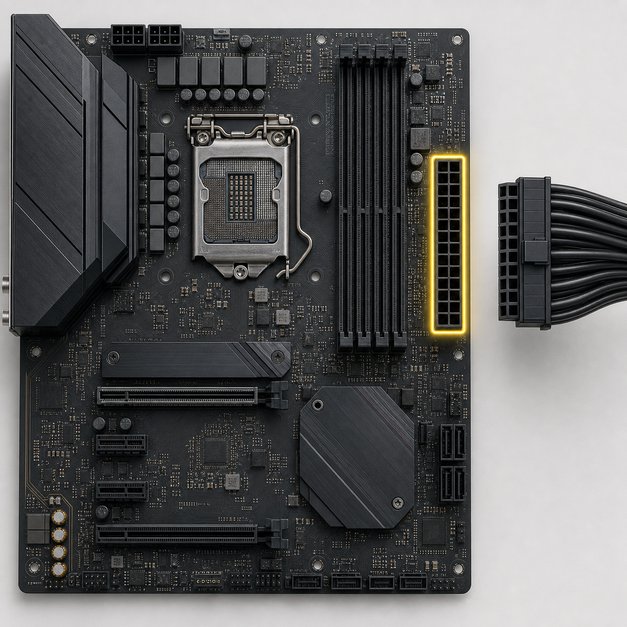
The wide 24-pin ATX connector supplies the motherboard with its main +3.3 V, +5 V, +12 V, standby, and control connections.
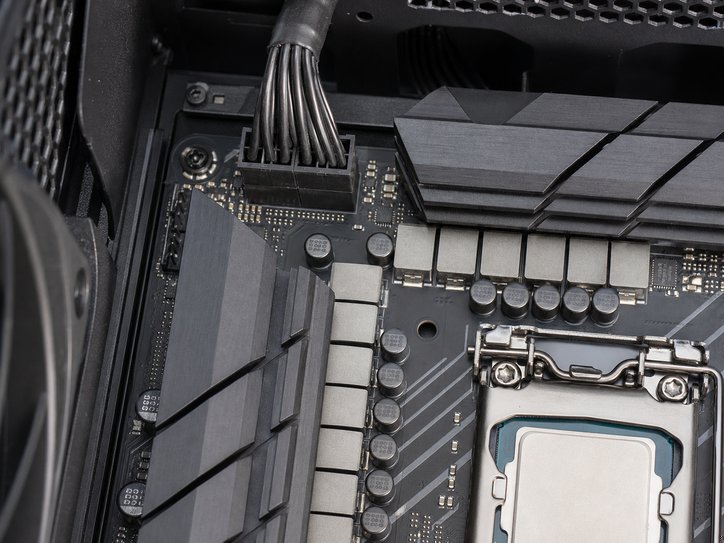
The EPS12V cable connects near the CPU socket and provides +12 V to the processor's voltage-regulation circuitry. It commonly separates into two four-pin sections.
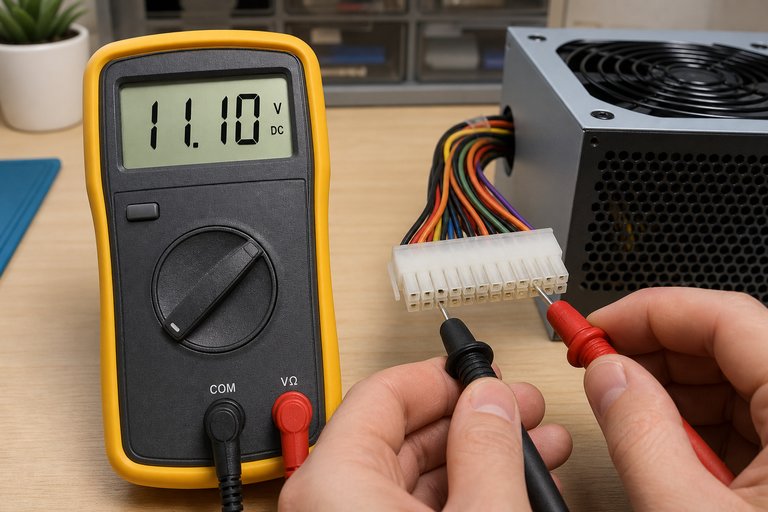
The acceptable ±5% range for a +12 V rail is 11.40 V to 12.60 V. A reading of 11.10 V is below that range and requires further investigation.
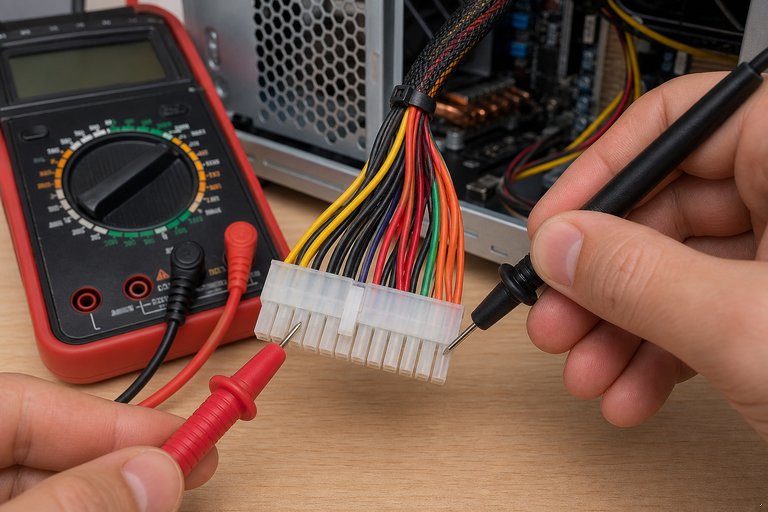
The black probe is connected to a ground terminal, typically represented by a black PSU wire. The red probe then measures the selected voltage rail relative to ground.
Bridging PS_ON to ground can make an ATX PSU start without a motherboard. It does not verify voltage quality, stability, protection circuits, or performance under load.
A demanding GPU can expose an undersized, degraded, or improperly connected PSU. Capacity, rail stability, required PCIe cables, and connector seating should be checked.
80 PLUS levels are based on AC-to-DC conversion efficiency measured under specified conditions and loads. The certification does not directly guarantee output quality or reliability.
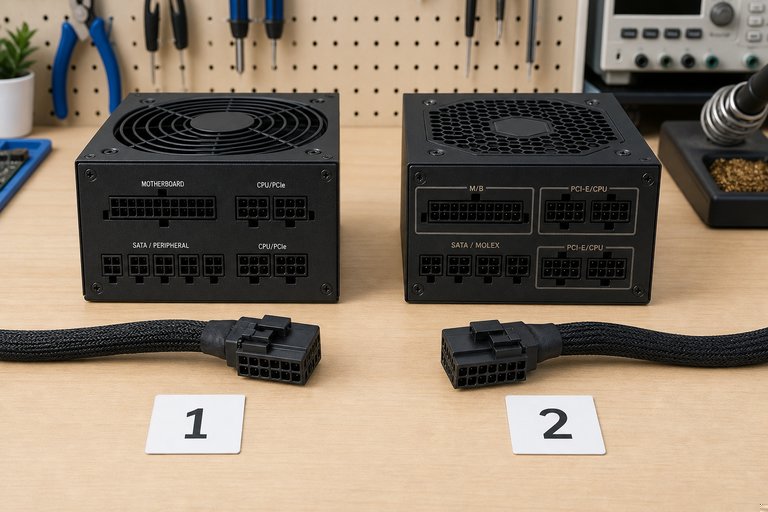
Modular PSU-side pinouts are not universally standardized. A cable may physically fit while routing voltage to the wrong pins, potentially destroying drives or other components.
Many efficient PSUs use a zero-RPM or semi-passive mode. Their fans remain stopped at low loads and start only after a temperature or load threshold is reached.
PSUs contain high-voltage capacitors that can retain a dangerous charge after disconnection. IT support technicians should not open a PSU unless specifically trained and equipped for such repairs.
Free CourseOperating Systems and Systems Programming
5

(4)

38h48m

26 exercises
Free CourseOperating System
5
(3)
16h53m
42 exercises

Free CourseHome Networking 101
5
(1)
1h50m
4 exercises

Free CourseBasic Commands in Linux
4.8

(4)
2h15m
6 exercises
Free CourseComputer operating systems
4.7
(109)
6h00m
23 exercises

Free CourseHardware and Network full course
4.6
(17)
20h08m
23 exercises
Free CourseLinux command line tutorial
4.5
(59)
25h01m
40 exercises

Free CourseUbuntu Linux training
4.5
(32)
4h06m
33 exercises
Thousands of online courses in video, ebooks and audiobooks.
To test your knowledge during online courses
Generated directly from your cell phone's photo gallery and sent to your email

Download our app via QR Code or the links below:.


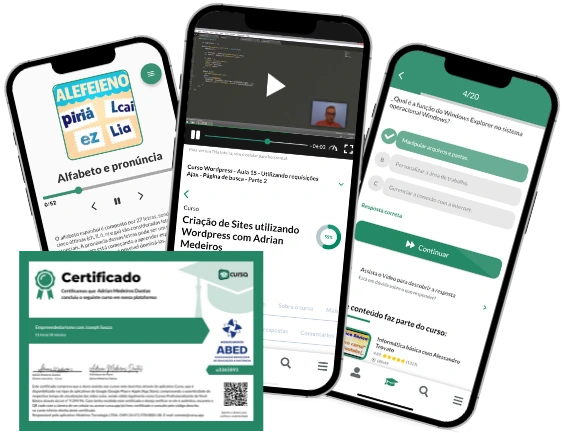
Carry knowledge in your pocket.
Download the Cursa app.
There are hundreds of free courses available, with a free certificate of completion that is saved in your mobile image gallery.
Download the app to access the Course Completion Certificate for Free.


+ 10 million
students

Free and Valid
Certificate

60 thousand free
exercises

4.8/5 rating in
app stores

Free courses in
video and ebooks