Duration of the online course: 16 hours and 53 minutes
5
(2)
Build real OS skills fast with this free online course—processes, scheduling, memory, file systems and more, plus exercises to help you earn a certificate.
In this free course, learn about
Core OS goals and functions: resource management, abstraction, protection, and convenience
System startup flow: bootstrap program/loader role and OS generation/boot sequence concepts
Concurrency control: critical-section problem, Peterson, test-and-set, semaphores vs monitors tradeoffs
Classical synchronization problems: bounded buffer, readers-writers, dining philosophers and solutions
Deadlocks: conditions, handling strategies, and prevention/avoidance/detection/recovery basics
Memory, files, and storage: main/virtual memory, file systems & implementation, mass storage structure
About the free online course
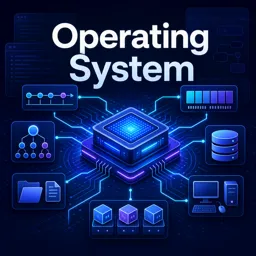
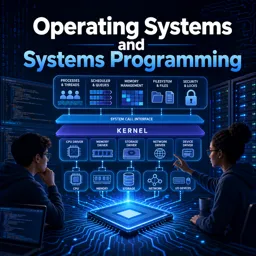
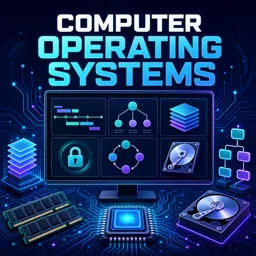
Understanding how an operating system works changes the way you troubleshoot computers, write efficient software, and make infrastructure decisions. This free online Operating System course is designed to help you move from surface-level familiarity to a clear, practical grasp of what happens from the moment a machine boots to the moment applications run smoothly (or fail). You will connect foundational theory with the kinds of problems faced in IT support, hardware diagnostics, and programming workflows.
You will start by exploring what an operating system is responsible for and how it organizes the computer system: storage hierarchies, input/output structure, and architectural models used in modern computing environments. From there, you will see how operating systems expose capabilities through services, user interfaces, and system calls, giving programs a safe and consistent way to request work such as file access, process control, and communication.
A major focus is process management and concurrency. You will learn the differences between processes and threads, how process state and control information are tracked, and what really happens during a context switch. As you progress, you will understand how operating systems create and terminate processes, coordinate interprocess communication, and support networked interactions with tools such as sockets and remote procedure calls. These concepts are essential for debugging performance bottlenecks, reasoning about application behavior, and understanding how distributed systems coordinate tasks.
You will also build strong intuition around CPU scheduling and synchronization. By working through practice questions and solved problems, you will strengthen your ability to compare scheduling strategies, interpret key criteria such as responsiveness and turnaround time, and recognize tradeoffs between preemptive and non-preemptive approaches. You will then dive into critical sections, locks, semaphores, monitors, and classic synchronization challenges, developing the mindset needed to prevent race conditions and ensure correctness in concurrent programs.
Finally, the course ties system-level decisions to memory and storage through coverage of main memory, virtual memory, file systems, and mass storage. By the end, you will have a structured mental model of an operating system and the confidence to apply it in technical interviews, academic studies, IT support tasks, and software engineering practice.
Course content
Video class: Introduction to Operating Systems16m
Exercise: What is a key function of an operating system?
Video class: Basics of OS (Computer System Operation)18m
Exercise: What is the function of a bootstrap program in a computer system?
Video class: Basics of OS (Storage Structure)10m
Exercise: In the hierarchy of storage devices in a computer system, which of the following statements is true regarding the access time and size of storage devices?
Video class: Basics of OS (I/O Structure)12m
Exercise: What is the primary advantage of using Direct Memory Access (DMA) in IO operations?
Video class: Computer System Architecture13m
Exercise: Which type of computer system architecture involves multiple complete systems coupled together to accomplish computational work?
Video class: Operating System Structure12m
Exercise: What is the primary benefit of multi-programming in an operating system?
Video class: Operating System Services13m
Exercise: Which of the following is NOT a common service provided by an operating system?
Video class: User Operating System Interface13m
Exercise: What are the two fundamental user interface approaches for operating systems?
Video class: System Calls12m
Exercise: What is the primary function of a system call in an operating system?
Video class: Types of System Calls11m
Exercise: Into how many major categories can system calls be roughly grouped?
Video class: System Programs12m
Exercise: Which of the following categories does a program belong to if it modifies the inner content of files stored on disk?
Video class: Operating System Design13m
Exercise: What is a major reason for separating policy and mechanism in operating system design?
Video class: Structures of Operating System19m
Exercise: Which of the following operating system structures is known for having each function packed into one level, making modifications and maintenance difficult?
Video class: Virtual Machines11m
Exercise: What is the fundamental idea behind a virtual machine?
Video class: Operating System Generation and System Boot12m
Exercise: What is the role of the 'bootstrap loader' in the booting process of a computer operating system?
Video class: Process Management (Processes and Threads)07m
Exercise: What is the key difference between a process and a thread?
Video class: Process State08m
Exercise: Which of the following statements correctly describes the state of a process waiting for a signal?
Video class: Process Control Block07m
Exercise: What is the Process Control Block (PCB) used for in an operating system?
Video class: Process Scheduling11m
Video class: Context Switch10m
Exercise: What is a context switch in an operating system?
Video class: Operation on Processes – Process Creation12m
Exercise: In an operating system, when a process creates a new process using a system call, what is the parent process able to do in terms of execution?
Video class: Operation on Processes – Process Termination09m
Video class: Interprocess Communication12m
Exercise: Which of the following is a fundamental model of inter-process communication that involves processes communicating via shared regions of memory?
Video class: Shared Memory Systems14m
Video class: Message Passing Systems (Part 1)10m
Exercise: What is one of the main advantages of using message passing systems over shared memory systems in a distributed environment?
Video class: Message Passing Systems (Part 2)23m
Video class: Message Passing Systems (Part 3)14m
Video class: Sockets in Operating System11m
Video class: Remote Procedure Calls (RPC)14m
Exercise: Which communication system best facilitates communication between processes on different systems across a network?
Video class: Issues in RPC18m
Video class: Introduction to Threads14m
Exercise: What is one of the main benefits of using multi-threaded processes in an operating system?
Video class: Multithreading Models17m
Video class: fork() and exec() System Calls20m
Exercise: In an operating system, which system call is responsible for creating a duplicate process, often referred to as the child process?
Video class: Threading Issues [fork()10m
Video class: Threading Issues (Thread Cancellation)10m
Exercise: Which of the following best describes deferred thread cancellation?
Video class: Introduction to CPU Scheduling10m
Video class: CPU and I/O Burst Cycles08m
Exercise: In the context of process execution, which of the following best describes the term 'CPU burst'?
Video class: Preemptive and Non-Preemptive Scheduling18m
Video class: Scheduling Criteria13m
Exercise: Which of the following scheduling criteria refers to the time from the submission of a request until the first response is produced, not the time it takes to output the response?
Video class: Scheduling Algorithms - First Come First Served (FCFS)17m
Video class: First Come First Served Scheduling (Solved Problem 1)18m
Exercise: What is a disadvantage of the First-Come-First-Served (FCFS) scheduling algorithm?
Video class: First Come First Served Scheduling (Solved Problem 2)09m
Video class: Scheduling Algorithms - Shortest Job First (SJF)28m
Exercise: Which statement correctly describes the key characteristic of the Shortest Job First (SJF) scheduling algorithm?
Video class: Shortest Job First Scheduling (Solved Problem 1)11m
Video class: Shortest Job First Scheduling (Solved Problem 2)11m
Exercise: In a preemptive Shortest Remaining Time First scheduling algorithm, which characteristic allows a currently running process to be interrupted by another process?
Video class: Scheduling Algorithms - Priority Scheduling17m
Video class: Priority Scheduling (Solved Problem 1)15m
Exercise: When using a preemptive priority scheduling algorithm, which condition will cause the currently executing process to be preempted by an incoming process?
Video class: Priority Scheduling (Solved Problem 2)13m
Video class: Scheduling Algorithms - Round Robin Scheduling15m
Exercise: Which of the following scheduling algorithms uses a time quantum to allocate CPU time to processes in a circular manner?
Video class: Round Robin Scheduling (Turnaround Time19m
Video class: Round Robin Scheduling - Solved Problem (Part 1)19m
Exercise: What is a key characteristic of round-robin scheduling in operating systems?
Video class: Round Robin Scheduling - Solved Problem (Part 2)06m
Video class: Multilevel Queue Scheduling Algorithm14m
Exercise: In a multi-level queue scheduling system, what happens to a process in a lower priority queue if a new process arrives in a higher priority queue?
Video class: Multilevel Feedback-Queue Scheduling Algorithm14m
Video class: Scheduling Algorithms – Solved Problems21m
Exercise: Which of the following scheduling algorithms is designed to improve throughput by focusing on processes with the shortest burst times first?
Video class: Process Synchronization21m
Video class: The Critical-Section Problem13m
Video class: Peterson’s Solution21m
Video class: Test and Set Lock19m
Video class: Semaphores22m
Video class: Disadvantages of Semaphores11m
Exercise: What is a major disadvantage of using semaphores for process synchronization?
Video class: The Bounded Buffer Problem15m
Video class: The Readers Writers Problem15m
Exercise: What is a primary condition of the Reader's Writer's problem that must be ensured to avoid conflicts when accessing shared data?
Video class: The Dining Philosophers Problem20m
Video class: Monitors13m
Exercise: What is a key benefit of using monitors over semaphores in process synchronization?
Video class: Dining Philosophers Solution using Monitors15m
Video class: Process Synchronization - Problem 109m
Exercise: Consider two processes A and B that are synchronized using shared boolean variables x and y. Process A enters its critical section if x is true, while process B enters its critical section if y is false. Assume the initial values of x and y do not ensure mutual exclusion. Which of the following statements best describes the properties achieved by this method?
Video class: Process Synchronization - Problem 213m
Video class: Process Synchronization - Problem 308m
Exercise: Consider two processes P1 and P2 that need to access a shared resource. The processes use two shared variables, `wantP1` and `wantP2`, initialized to false. Both processes use the following access method: if a process wants to enter the critical section, it sets its respective `want` variable to true, and then waits if the other `want` variable is true. Once it exits the critical section, it sets its `want` variable to false. Which of the following statements is true about this access method?
Video class: Process Synchronization - Problem 409m
Video class: Process Synchronization - Problem 504m
Exercise: A counting semaphore is initialized to 15. If 5 wait (P) operations and 3 signal (V) operations are performed, what is the final value of the semaphore?
Video class: Deadlocks | Chapter-7 | Operating System | nesoacademy.org01m
Video class: Main Memory | Chapter-8 | Operating System | nesoacademy.org01m
Video class: Virtual Memory | Chapter-9 | Operating System | nesoacademy.org01m
Video class: File Systems | Chapter-10 | Operating System | nesoacademy.org00m
Video class: File System Implementation | Chapter-11 | Operating System | nesoacademy.org00m
Video class: Mass Storage Structure | Chapter-12 | Operating System | nesoacademy.org01m
This free course includes:
16 hours and 53 minutes of online video course
Digital certificate of course completion (Free)
Exercises to train your knowledge
100% free, from content to certificate
What is the difference between a process and a thread in an operating system?
A process has its own memory and resources, while threads are lightweight execution units that share a process’s memory and resources.
How does Round Robin CPU scheduling work?
Round Robin assigns each ready process a fixed time quantum in a repeating cycle, improving responsiveness in time-sharing systems.
What is the purpose of a semaphore in process synchronization?
A semaphore controls access to shared resources by coordinating processes or threads and helping prevent race conditions.
Ready to get started?Download the app and get started today.

















Course comments: Operating System
Suresh Kumar
The academy certification program enhanced my expertise equipping me with invaluable skills for future success. Thank You
Suresh Kumar
The academy certification program enhanced my expertise , equipping me with invaluable skills for future success.