
Exercises
Explore the anatomy of the human integumentary system, including the epidermis, dermis, hypodermis, hair follicles, nails, cutaneous glands, and sensory receptors. This 13-question quiz combines foundational concepts with visual identification and applied anatomical knowledge. It is designed to assess how well you understand the locations, structures, tissue types, and relationships that allow the skin and its appendages to protect and sense the external environment.
Answer the questions below and check the explanation for each answer.
0/13 answered
Auto audio on: the next questions will be read aloud when you click Continue.
The epidermis is the superficial epithelial layer, the dermis lies beneath it, and the hypodermis connects the skin to deeper structures.
The stratum basale is the deepest epidermal layer. Its dividing cells continually produce keratinocytes that move toward the surface.
Thick skin contains abundant eccrine glands and a stratum lucidum, but it lacks hair follicles and their associated sebaceous glands.
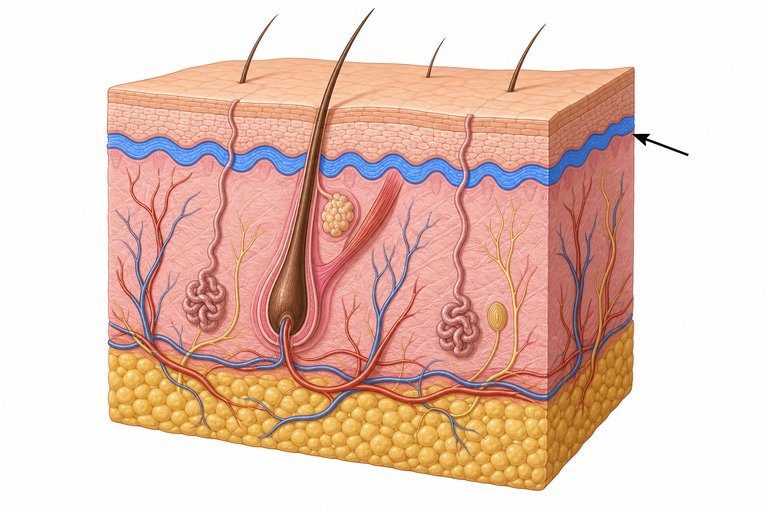
The thin, superficial region containing dermal papillae is the papillary layer. It interlocks with the overlying epidermis.
The reticular dermis consists mainly of dense irregular connective tissue, whose collagen bundles resist tension from several directions.
Melanocyte cell bodies lie mainly in the stratum basale. Their processes transfer melanin-containing granules to nearby keratinocytes.
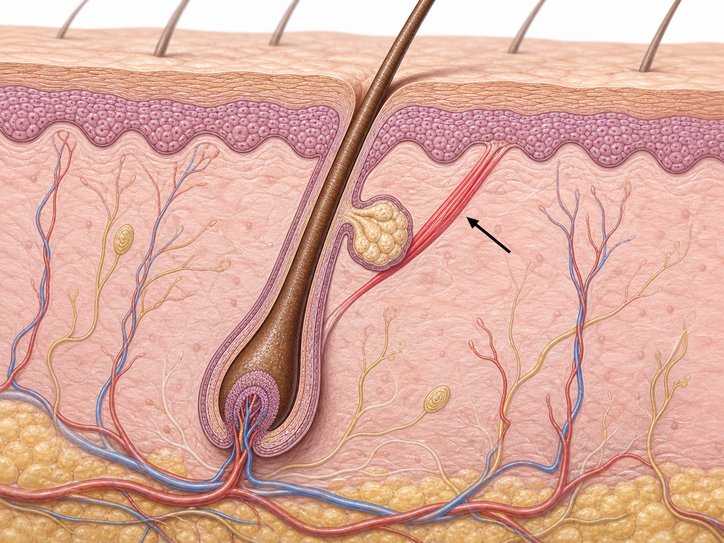
The arrector pili is a small band of smooth muscle connecting a hair follicle to the superficial dermis. Its contraction raises the hair.
Sebaceous glands use holocrine secretion: entire secretory cells rupture and become part of the oily sebum released into a hair follicle.
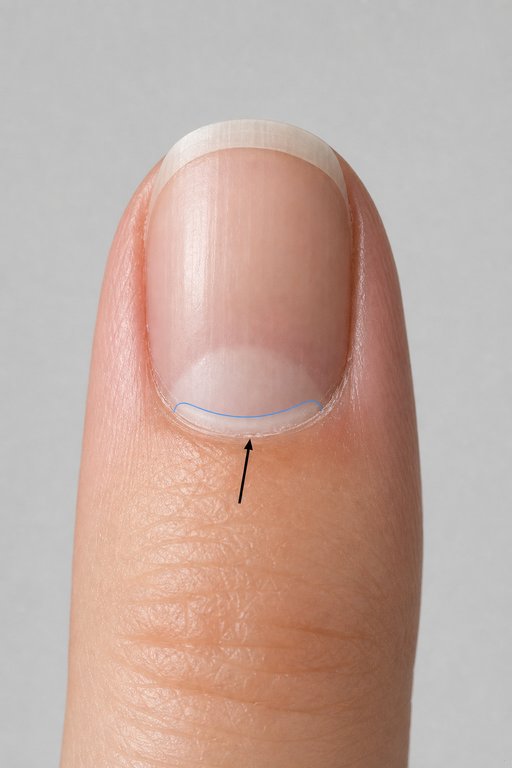
The lunula is the pale crescent at the proximal end of the nail plate. It represents the visible portion of the underlying nail matrix.
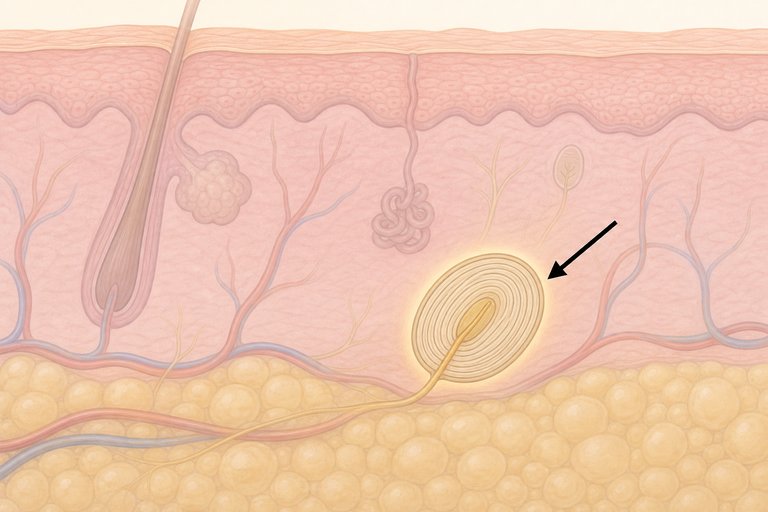
The lamellated, or Pacinian, corpuscle responds mainly to deep pressure and high-frequency vibration. It is located in the deep dermis or hypodermis.
The epidermis contains no blood vessels. Oxygen and nutrients diffuse from capillaries in the underlying dermis, especially those near the dermal papillae.
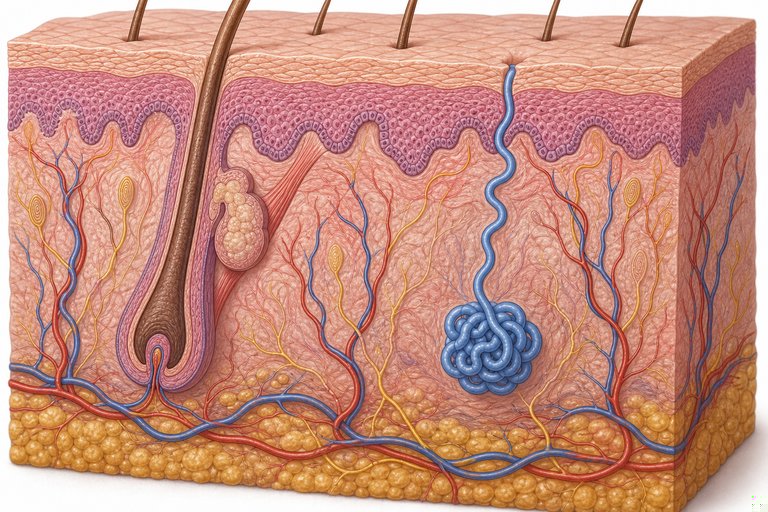
An eccrine sweat gland has a coiled tubular secretory portion and a duct that opens at a pore on the skin surface rather than into a hair follicle.
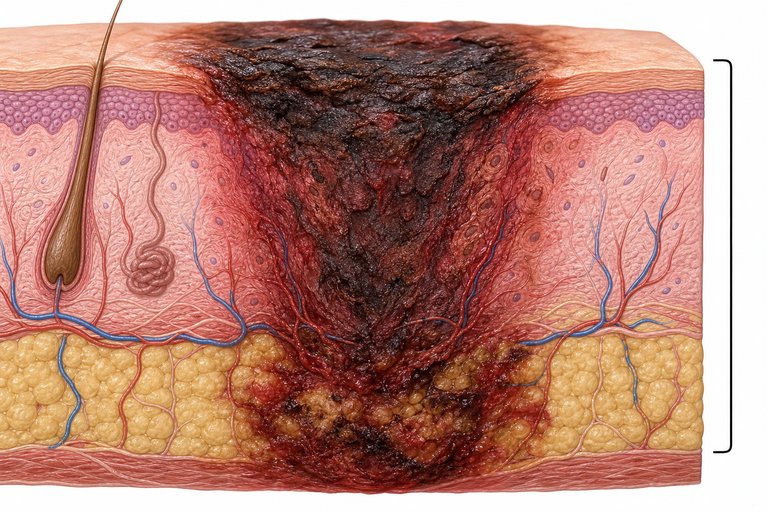
A full-thickness burn destroys the complete epidermis and dermis and may extend into the hypodermis. Cutaneous nerve endings can also be destroyed.
Free CourseMusculoskeletal System
5

(1)

7h01m

12 exercises
Free CourseThe Circulatory System
5
(3)
5h08m
19 exercises
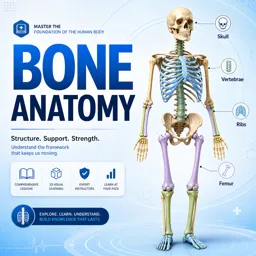
Free CourseBone Anatomy
5
(3)
1h37m
21 exercises

Free CourseMuscle Anatomy
5
(2)
1h05m
6 exercises
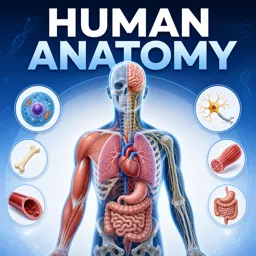
Free CourseHuman Anatomy
4.9
(7)
16h13m
36 exercises

Free CourseHuman anatomy and physiology videos
4.8
(121)
18h47m
21 exercises
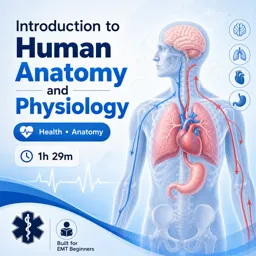
Free CourseIntroduction to human anatomy and physiology
4.8
(14)
1h29m
10 exercises
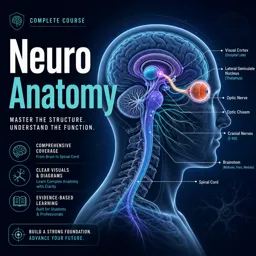
Free CourseNeuro Anatomy
4.5

(6)
6h09m
16 exercises
Thousands of online courses in video, ebooks and audiobooks.
To test your knowledge during online courses
Generated directly from your cell phone's photo gallery and sent to your email

Download our app via QR Code or the links below:.



Carry knowledge in your pocket.
Download the Cursa app.
There are hundreds of free courses available, with a free certificate of completion that is saved in your mobile image gallery.
Download the app to access the Course Completion Certificate for Free.


+ 10 million
students

Free and Valid
Certificate

60 thousand free
exercises

4.8/5 rating in
app stores

Free courses in
video and ebooks