
Exercises
Explore the anatomy and functions of the human digestive system with this educational quiz. Test your understanding of how food moves through the body, from carbohydrate digestion in the mouth to nutrient absorption in the small intestine and water absorption in the large intestine. Questions cover key digestive organs and structures, including the stomach, pancreas, gallbladder, intestines, and epiglottis, as well as bile storage, insulin production, chyme, digestive enzymes, and vitamin synthesis. Ideal for students reviewing biology, anatomy, physiology, or digestive health basics.
Answer the questions below and check the explanation for each answer.
0/10 answered
Auto audio on: the next questions will be read aloud when you click Continue.
The small intestine is primarily responsible for the absorption of nutrients from digested food. Its inner surface is lined with villi to increase the surface area for nutrient absorption.
The pancreas is responsible for producing insulin, a hormone crucial for regulating blood sugar levels.
The large intestine primarily absorbs water and salts from the material that hasn't been digested as food and is essential for forming solid waste for excretion.
The duodenum, the first part of the small intestine, is the main site for chemical digestion where enzymes from the pancreas and bile from the liver are mixed with the chyme.
The gallbladder stores and concentrates bile produced by the liver until it is needed for digestion in the small intestine.
Salivary amylase is the enzyme that begins the digestion of carbohydrates in the mouth, breaking down starches into simpler sugars.
The epiglottis is a flap of tissue that covers the trachea during swallowing to prevent food from entering the windpipe.
The fundus is the upper part of the stomach that functions as a storage area for undigested food and gases released from the digestive process.
Chyme refers to the semi-fluid mass of partly digested food and digestive secretions formed in the stomach during digestion.
Vitamin K is synthesized in the large intestine by gut bacteria. It plays a crucial role in blood clotting and bone health.
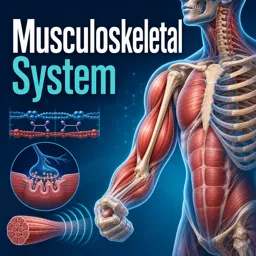
Free CourseMusculoskeletal System
5

(1)

7h01m

12 exercises
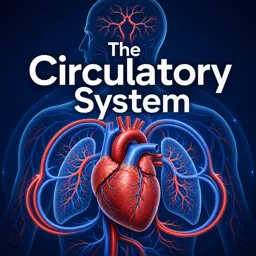
Free CourseThe Circulatory System
5
(2)
5h08m
19 exercises
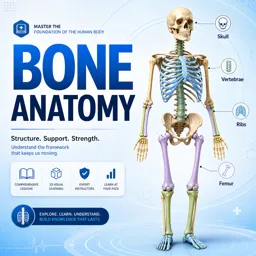
Free CourseBone Anatomy
5
(3)
1h37m
21 exercises

Free CourseMuscle Anatomy
5
(2)
1h05m
6 exercises
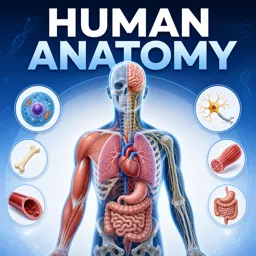
Free CourseHuman Anatomy
4.9
(7)
16h13m
36 exercises
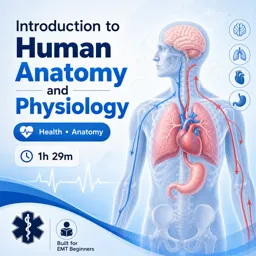
Free CourseIntroduction to human anatomy and physiology
4.8
(13)
1h29m
10 exercises
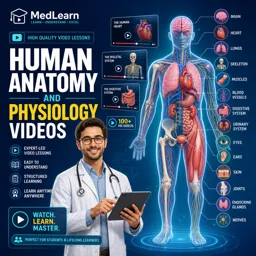
Free CourseHuman anatomy and physiology videos
4.8
(120)
18h47m
21 exercises
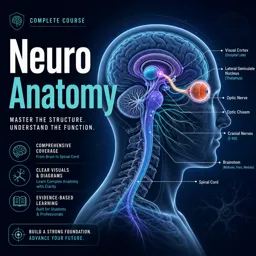
Free CourseNeuro Anatomy
4.5

(6)
6h09m
16 exercises
Thousands of online courses in video, ebooks and audiobooks.
To test your knowledge during online courses
Generated directly from your cell phone's photo gallery and sent to your email

Download our app via QR Code or the links below:.


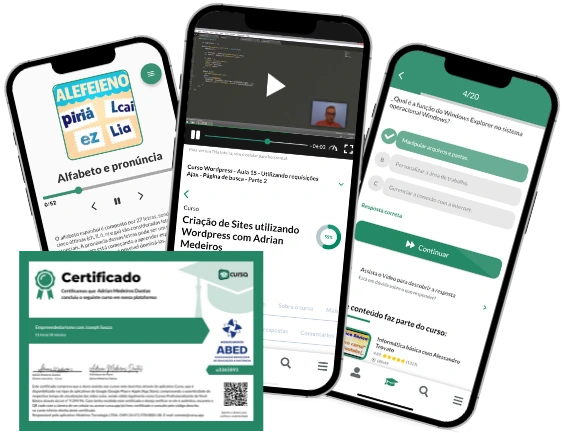
Carry knowledge in your pocket.
Download the Cursa app.
There are hundreds of free courses available, with a free certificate of completion that is saved in your mobile image gallery.
Download the app to access the Course Completion Certificate for Free.


+ 10 million
students

Free and Valid
Certificate

60 thousand free
exercises

4.8/5 rating in
app stores

Free courses in
video and ebooks