Healthy-looking skin is often less about chasing “miracle” trends and more about making smart, consistent choices—especially when trying new products. If you’ve ever bought a serum that stung, a moisturizer that broke you out, or a “gentle” cleanser that left you tight and flaky, the missing skill is usually not motivation—it’s product literacy. This guide focuses on three practical, career-relevant abilities taught in skin care education: reading cosmetic labels, patch-testing correctly, and building a routine that minimizes irritation while still delivering results.
If you want structured learning with a clear pathway, explore the broader category of https://cursa.app/free-online-aesthetics-courses and the dedicated https://cursa.app/free-courses-aesthetics-online collection for free online courses and certification options.
1) Start with label-reading: what matters (and what doesn’t)
Cosmetic labels can feel technical, but they’re predictable once you know the rules. Ingredients are typically listed in descending order by concentration until the 1% line—below that, items can appear in any order. This means the first 5–10 ingredients often tell you most of what a product is: the base, the primary functional ingredients, and the main texture agents.
Ignore hype terms like “clean,” “dermatologist tested,” or “clinical grade” unless they come with specific, verifiable context. Instead, look for:
- Humectants (hydration magnets): glycerin, hyaluronic acid, panthenol, urea
- Emollients (smooth feel): squalane, fatty alcohols (cetyl/stearyl), triglycerides
- Occlusives (seal water in): petrolatum, dimethicone, waxes
- Barrier-supporting lipids: ceramides, cholesterol, linoleic acid–rich oils
- Potential irritants/sensitizers: fragrance/parfum, essential oils, some botanical extracts, high alcohol content (e.g., alcohol denat.) depending on formula
2) Understand “actives” without overdoing them
Many routines become irritated not because the ingredients are “bad,” but because too many actives are layered too quickly. Common actives include retinoids, exfoliating acids (AHA/BHA/PHA), vitamin C, and benzoyl peroxide. They can be effective—yet they also increase the risk of dryness, peeling, and sensitivity if introduced aggressively.
When evaluating an active, ask:
- What problem is it solving? (texture, acne, pigmentation, dullness)
- How often is it meant to be used? (daily vs. 1–3× weekly)
- What is the delivery format? (leave-on serum is stronger than a rinse-off cleanser with similar ingredients)
- What else is already in the routine? (stacking multiple exfoliants is a common mistake)
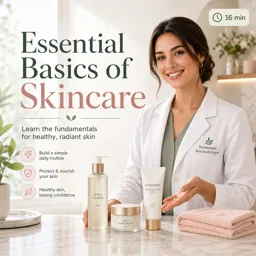
To deepen practical knowledge of foundational steps and how they support active use, review the learning path in https://cursa.app/free-online-courses/basic-skincare.

3) Patch-testing properly (most people do it wrong)
Patch-testing is a skill—done correctly, it reduces the chance of a full-face reaction and helps identify what your skin can tolerate. “Trying it once on your face” isn’t a patch test.
How to patch-test a leave-on product (serums, moisturizers, sunscreens):
- Choose a discreet area with similar sensitivity to the face (behind the ear or along the jawline).
- Apply a small amount (about a pea-sized dot spread thinly).
- Leave it on and monitor at 15–30 minutes for stinging, then again at 24 and 48 hours for delayed reactions (itching, bumps, redness).
- If clear, try the product on a small facial zone for a few uses before full-face application.
For rinse-off products (cleansers, masks): apply to the patch area for the intended contact time, rinse, and watch for delayed irritation.
Important: patch tests can’t predict everything (for example, clogged pores from a heavy texture may take days), but they’re excellent for catching immediate or allergic-type reactions.
4) Build an irritation-minimizing routine: the “calm first, treat second” approach
If you’re dealing with frequent sensitivity, simplify to a calming baseline before adding treatments. A reliable structure looks like this:
- Cleanse (gentle, non-stripping)
- Moisturize (barrier-supporting)
- Protect (broad-spectrum sunscreen in the daytime)
- Treat (one targeted active at a time)
Two practical rules prevent most irritation spirals:
- Change one variable at a time. If you start a new cleanser, don’t introduce a new acid toner the same week.
- Increase frequency slowly. Many actives work well at 2–3 times per week. More is not automatically better.
If facial techniques and professional-style care steps interest you, browse https://cursa.app/free-online-courses/facial-skin-care for skill-focused training.
5) Red flags on labels when your skin is reactive
Reactive skin isn’t “weak”—it’s often signaling barrier stress. If your face frequently feels hot, tight, or itchy, consider avoiding or limiting:
- Heavy fragrance loads (parfum, multiple essential oils)
- High-alcohol formulas when used repeatedly (especially if you’re already dry)
- Multiple strong actives in one product (e.g., high-strength exfoliants plus retinoid plus vitamin C)
- Over-exfoliation cues: persistent sting with water, shiny tightness, sudden widespread flaking
To balance this, look for barrier-friendly signals like ceramides, glycerin, panthenol, colloidal oatmeal, and gentle surfactants in cleansers. If you’re studying skin care professionally, being able to spot these patterns quickly is a major advantage when assessing product compatibility.
6) Advanced skill: troubleshoot irritation with a simple decision tree
When a product “doesn’t work,” narrowing down the cause saves time and prevents compounding damage. Use this quick logic:
- Immediate burning within minutes → potential irritant reaction; wash off and stop use
- Itchy rash, hives, swelling → possible allergy; discontinue and consider medical guidance
- Dryness/peeling over days → likely barrier overload; reduce frequency, add moisturizer, pause actives
- Breakouts over 1–3 weeks → could be comedogenic texture, occlusion, or simply too-rich layering; simplify and re-test one item

7) Where hair removal fits: irritation prevention matters there too
Skin care education often overlaps with hair removal because post-treatment sensitivity is common. If you’re learning services and aftercare, understanding barrier support and inflammation control is essential—especially around the face and bikini area.
Explore the https://cursa.app/free-online-courses/waxing topic to learn technique, hygiene, and aftercare basics that reduce bumps and irritation.
Conclusion: master the process, not the product
Great skin care outcomes come from repeatable skills: interpreting ingredient lists, patch-testing methodically, and building routines that respect the skin barrier. Once you can do that, you can evaluate almost any product calmly—without guesswork, trend-chasing, or constant irritation cycles.
Continue learning through the https://cursa.app/free-courses-aesthetics-online course library and expand into related topics in https://cursa.app/free-online-aesthetics-courses to strengthen both personal practice and professional-ready knowledge.