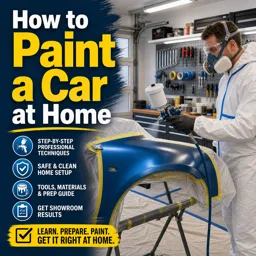
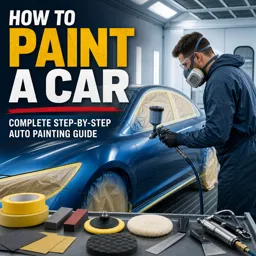
How to Prepare Your Car for a Professional Paint Job

Learn essential steps to prepare your car for a professional paint job. From cleaning to priming, ensure a flawless, long-lasting finish.

Share on Linkedin Share on WhatsApp

Estimated reading time: 2 minutes

Article image How to Prepare Your Car for a Professional Paint Job

Painting your car can refresh its look and extend its life, but a flawless finish starts with proper preparation. Follow these essential steps to ensure your car’s paint job turns out stunning and durable.

1. Clean Your Vehicle Thoroughly

  • Initial Wash: Use automotive soap to remove dirt, grease, and debris. Avoid dish detergents that can damage the finish.
  • Degreasing: Apply a degreaser or wax remover to eliminate stubborn grime and old wax residues.

2. Remove Parts & Trim
Detach mirrors, badges, handles, and trim pieces to prevent overspray and achieve a professional finish. Label and safely store all removed parts for easy reassembly.

3. Sanding the Surface

  • Identify Flaws: Look for chips, scratches, and rust spots.
  • Sand the Bodywork: Use 320- to 600-grit sandpaper to smooth surfaces and feather edges around repairs.
  • Clean Again: Wipe down with a tack cloth to remove dust and prepare for painting.

4. Address Dents and Imperfections
Fill dents with quality body filler, then sand smooth after it cures. This step ensures a sleek, even surface.

5. Masking for Precision
Use automotive masking tape and paper or plastic to cover windows, lights, tires, and other areas not to be painted. Take your time for crisp lines and full coverage to reduce cleanup.

6. Priming the Surface
Apply a high-quality automotive primer to create a uniform base. Allow it to cure fully, then lightly sand with fine-grit paper for optimal smoothness.

Conclusion
Thorough preparation is the key to a professional, long-lasting paint job. By carefully cleaning, sanding, masking, and priming, you set the stage for a flawless finish that lasts. For those interested in advancing skills, professional courses in car and motorcycle repairs offer valuable hands-on training and techniques.

Integrating Renewable Energy Systems: Essential Skills for Modern Electricians

Discover essential skills electricians need for renewable energy systems, including solar, wind, storage, safety, and career growth opportunities.

Building Confidence with Intermediate Electronics: Practical Applications and Circuit Design

Gain confidence in intermediate electronics with practical applications, circuit design tips, essential tools, and real-world scenarios for electricians.

Exploring Analog and Digital Circuits: A Guide for Intermediate Electronics Learners

Learn intermediate electronics with analog and digital circuits, including op-amps, logic gates, microcontrollers, and practical project-based tips for learners.

Intermediate Electronics: Taking Your Electrical Skills to the Next Level

Expand your electrical skills with intermediate electronics, covering circuits, ICs, microcontrollers, and practical applications for electricians and enthusiasts.

Mastering Sensors and Transducers: Intermediate Electronics for Electricians

Learn intermediate electronics for electricians with sensors and transducers, including applications, signal conditioning, and practical skills for modern systems.

Mastering Logistics Management: The Backbone of Modern Business Operations

Discover how mastering logistics management drives efficiency, reduces costs, and enhances careers in modern business operations.

Optimizing Logistics Management for Global Supply Chains

Learn how to optimize global logistics management with technology, best practices, and sustainability strategies to enhance efficiency and competitiveness.

The Strategic Role of Technology in Transforming Logistics Management

Explore how technology transforms logistics management, enhancing efficiency, sustainability, and customer satisfaction in modern supply chains.