
A flywheel stores rotational energy to smooth engine power pulses, help maintain momentum, and provide a mounting surface for the clutch or torque converter.

Duration of the online course: 1 hours and 33 minutes
4.5


(11)
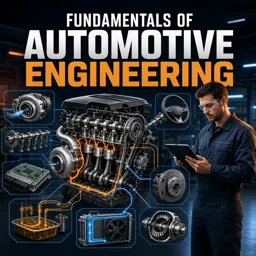
Build real automotive engineering skills with this free online course—learn engines, electrics, ECU basics, steering, brakes, cooling and more. Certificate-ready.
Strengthen your practical understanding of how modern vehicles work with this Fundamentals of Automotive Engineering course, designed for learners who want job-ready knowledge for the automotive repair world. Whether you are preparing for a technician role, improving your workshop confidence, or simply want to speak the language of automotive systems, this training helps you connect the dots between mechanical components, electronics, and control.
You will start with the core of every vehicle: the engine. By focusing on how key parts interact—such as the flywheel and valve train—you will develop a clearer picture of how power is generated and managed. From there, you will explore how performance and efficiency can be increased through turbocharging, including why temperature management matters and how an intercooler supports reliable boost under real driving conditions.
Modern repair work also depends heavily on electrical fundamentals, so the course guides you through essential concepts used in diagnostics, wiring, and component testing. Understanding the relationship between voltage, current, and resistance makes it easier to troubleshoot faults systematically instead of guessing. You will then step into the world of electronic control, learning how an ECU makes decisions and how sensor data—such as measured airflow—affects fueling and overall engine operation.
To round out a complete vehicle perspective, you will examine steering geometry and alignment concepts that influence stability and self-centering, then move into driveline behavior through differentials and traction limitations. You will also build a strong foundation in safety-critical systems by understanding what brakes are meant to achieve and why consistent stopping performance depends on proper system function. Finally, you will learn why lubrication and cooling are essential for durability, protecting the engine from wear and thermal stress. With short checks along the way, this free online course supports confident learning and prepares you to apply engineering logic to everyday automotive problems.

1 hours and 33 minutes of online video course

Digital certificate of course completion (Free)

Exercises to train your knowledge

100% free, from content to certificate
What does a flywheel do in a car engine?
A flywheel stores rotational energy to smooth engine power pulses, help maintain momentum, and provide a mounting surface for the clutch or torque converter.
What is the difference between SOHC and DOHC engines?
SOHC uses one camshaft per cylinder bank, while DOHC uses two, allowing more precise valve control and commonly supporting four valves per cylinder.
Why is an intercooler used with a turbocharger?
An intercooler cools compressed intake air from the turbocharger, increasing air density and helping improve power, efficiency, and knock resistance.
Ready to get started?Download the app and get started today.
Install the app now
to access the course
Over 5,000 free courses
Programming, English, Digital Marketing and much more! Learn whatever you want, for free.

Study plan with AI
Our app's Artificial Intelligence can create a study schedule for the course you choose.

From zero to professional success
Improve your resume with our free Certificate and then use our Artificial Intelligence to find your dream job.
You can also use the QR Code or the links below.




Free CourseHow to Paint a Car at Home
5
(7)

24m

3 exercises
Free CourseVehicle Maintenance
5
(1)
12h03m
12 exercises
Free CourseHow to Paint a Car: Complete Step-by-Step Auto Painting Guide
5
(2)
2h12m
6 exercises
Free CourseToyota Car Repair
4.9
(9)
27h15m
29 exercises
Free CourseHow a Car works
4.8
(11)
55m
21 exercises
Free CourseDiesel Mechanic classes
4.8
(13)
4h10m
11 exercises
Free CourseDiesel Engines Motorz
4.7
(3)
3h54m
10 exercises

Free CourseCar maintenance lessons
4.6
(8)
10h10m
29 exercises
Free CourseHow do Eletric Vehicles works
4.5
(4)
2h59m
6 exercises
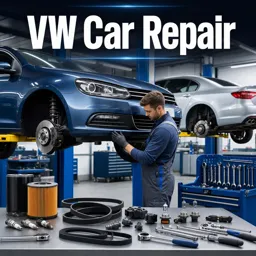
Free CourseVW Car Repair
4
(3)
4h32m
25 exercises
Carry knowledge in your pocket.
Download the Cursa app.
There are hundreds of free courses available, with a free certificate of completion that is saved in your mobile image gallery.
Download the app to access the Course Completion Certificate for Free.


+ 10 million
students

Free and Valid
Certificate

60 thousand free
exercises

4.8/5 rating in
app stores

Free courses in
video and ebooks
Course comments: Fundamentals of Automotive Engineering
Nitesh Kusum Panjabrao Padghan
Very Nice Experience I got. Teaching is nice with the 3D animation it is easier to understand the things. Thank You for having such good program.