
Free ebook for learning Hangul: read and write Korean letters, syllable blocks, batchim, sound rules, and everyday words.
Free ebook content
-

Hangul Building Blocks: Consonants and Vowels for Fast Korean Reading
+ Exercise: When practicing the consonant contrast ㄱ / ㅋ / ㄲ using the palm test, what should you feel for the aspirated consonant ㅋ?
-
Writing Hangul Clearly: Stroke Order, Proportions, and Handwriting Tips
+ Exercise: When practicing commonly confused Hangul pairs (like ㅁ vs ㅂ or ㅈ vs ㅊ), what approach best improves legibility while keeping syllable-block spacing consistent?
-
Forming Hangul Syllable Blocks: How Korean Letters Combine in Real Words
+ Exercise: When a Korean syllable begins with a vowel sound, how is the initial (초성) slot filled in the syllable block?


-
Batchim Essentials: Reading Final Consonants in Hangul Without Guessing
+ Exercise: When reading a Hangul syllable in isolation (ending a word or followed by a consonant), what is the correct way to determine the final sound of its 받침?
-
Hangul Sound Rules for Smooth Reading: Linking, Assimilation, and Tense Sounds
+ Exercise: In which situation is tensing (된소리되기) most likely to occur during natural reading?
-
Common Hangul Spelling Patterns: Double Consonants, Compound Vowels, and Frequent Endings
+ Exercise: When reading Hangul quickly, how should you treat double consonants like ㄲ, ㄸ, ㅃ, ㅆ, ㅉ?
About the free ebook
Hangul Made Simple: Learn to Read and Write Korean in a Weekend
Start decoding Korean with a practical introduction to Hangul, Korea’s logical writing system. This free ebook helps learners recognize letters, build syllable blocks, and read everyday Korean words with greater confidence.
Build a reliable reading foundation
Learn how consonants and vowels work together, how letter position affects a syllable block, and how to write characters with clear proportions and useful stroke order. The approach focuses on patterns you can reuse rather than isolated memorization.
Understand the sounds behind Korean spelling
Explore final consonants, known as batchim, along with common sound changes that occur when syllables meet. Clear explanations of linking, assimilation, tense consonants, double consonants, and compound vowels make unfamiliar words easier to sound out.
Read Korean as it appears in daily life
Practice decoding common words and signs while learning to notice frequent spelling patterns. By connecting written forms to pronunciation rules, you can move beyond naming individual letters and begin reading complete Korean syllables smoothly.
What you will develop
- Recognition of core Hangul consonants and vowels
- Confidence forming and handwriting syllable blocks
- A practical method for reading batchim and sound-rule changes
- Stronger awareness of recurring Korean spelling patterns
This ebook is designed for independent learners who want a focused, approachable path to reading and writing Hangul accurately.
How do Hangul letters form Korean syllable blocks?
A consonant and vowel are arranged into a compact block; an optional final consonant is placed at the bottom.
What is batchim in Korean pronunciation?
Batchim is a final consonant at the bottom of a Hangul syllable that can affect its sound and the following syllable.
Why do some Hangul words sound different from their spelling?
Korean sound rules can link, change, or strengthen consonants when syllables are pronounced together.
This ebook includes:

7 content chapters

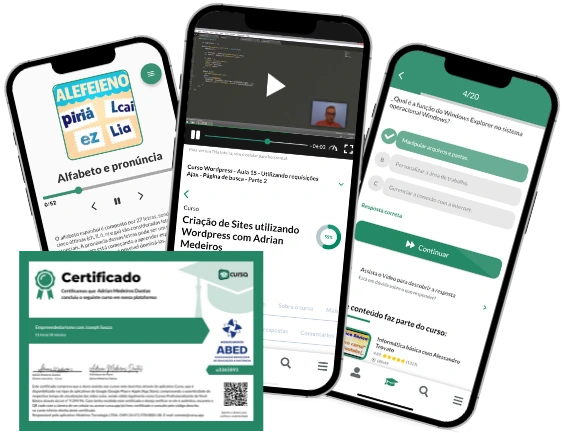
Digital certificate of course completion (Free)

Exercises to train your knowledge

100% free, from content to certificate
Ready to get started?

 recommended
In the app you will also find...

Over 5,000 free courses
Programming, English, Digital Marketing and much more! Learn whatever you want, for free.

Study plan with AI
Our app's Artificial Intelligence can create a study schedule for the course you choose.

From zero to professional success
Improve your resume with our free Certificate and then use our Artificial Intelligence to find your dream job.
You can also use the QR Code or the links below.