가다 means “to go” on a particular occasion, while 다니다 means going somewhere regularly or commuting, such as attending school or work.

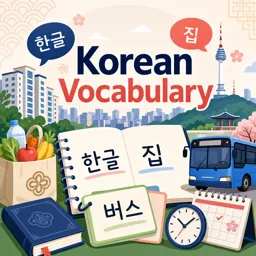
Duration of the online course: 13 hours and 13 minutes
5

(1)
Build practical Korean vocabulary fast with a free online course—everyday words, listening practice, and real-life expressions, plus a shareable certificate option.
Expanding your Korean vocabulary is one of the quickest ways to feel more confident reading, listening, and speaking in everyday situations. This free online course is designed to help you recognize and use the kind of words you actually meet in real life: at home, on the street, on public transport, while shopping, or when ordering food. Instead of memorizing isolated lists, you will connect words to scenes, routines, and natural expressions, making it easier to recall them when you need them.
As you progress, you will strengthen the foundation that beginners need most: core daily terms, common phrases to get started, and the ability to notice vocabulary in context. You will also explore useful language around names and how they work, time expressions, numbers, and verbs that change depending on what you are wearing or taking off. These details matter in Korean, and learning them early helps you sound more natural and avoid the mistakes that slow learners down.
The course goes beyond basic meaning by showing nuance. You will meet emotion words that are hard to translate directly, synonyms with different usage, and idioms that reveal how Koreans commonly express ideas. You will also encounter modern shortened slang you might see online, so your vocabulary stays relevant across formal and casual settings.
Listening practice is built in to help your ear catch familiar words at real speed. Short, focused exercises reinforce what you learn so you can move from recognition to confident use. By the end, you should be able to understand more of what you hear in Korean content, react more quickly in simple interactions, and keep building vocabulary independently with better intuition and accuracy.

13 hours and 13 minutes of online video course

Digital certificate of course completion (Free)

Exercises to train your knowledge

100% free, from content to certificate
What is the difference between 가다 (gada) and 다니다 (danida) in Korean?
가다 means “to go” on a particular occasion, while 다니다 means going somewhere regularly or commuting, such as attending school or work.
What does 휴게소 (hyugeso) mean in Korean?
휴게소 means a highway rest area, where travelers can rest, eat, and use facilities.
Which Korean verb is used for wearing shoes or other items on the feet?
신다 (sinda) is used for putting on or wearing footwear such as shoes, socks, and slippers.
Ready to get started?Download the app and get started today.
Install the app now
to access the course
Over 5,000 free courses
Programming, English, Digital Marketing and much more! Learn whatever you want, for free.

Study plan with AI
Our app's Artificial Intelligence can create a study schedule for the course you choose.

From zero to professional success
Improve your resume with our free Certificate and then use our Artificial Intelligence to find your dream job.
You can also use the QR Code or the links below.




Free CourseKorean for Beginners
4.9
(29)

21h54m

16 exercises

Free CourseKorean Full course
4.7

(28)
4h21m
6 exercises

Free CourseBeginner korean course
4.6
(142)
6h01m
23 exercises
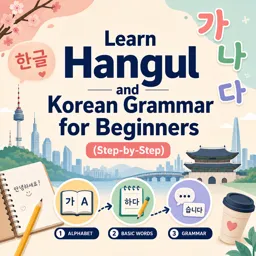
Free CourseLearn Hangul and Korean Grammar for Beginners (Step-by-Step)
4.6
(5)
6h44m
50 exercises

Free CourseKorean MasterClass
4.5
(2)
11h27m
9 exercises
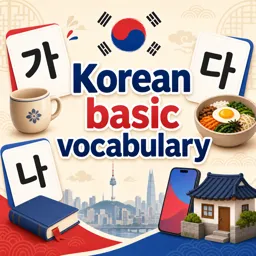
Free CourseKorean basic vocabulary
4.3
(3)
150h55m
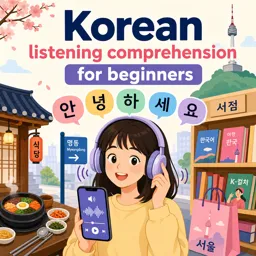
Free CourseKorean listening comprehension for beginners
4
(1)
1h15m
3 exercises

Free CourseKorean lessons for beginners
3.7
(3)
15h06m
21 exercises

Free CourseKorean listening comprehension advanced
2
(1)
55m
1 exercises
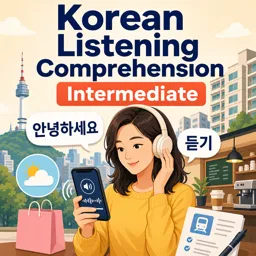
Free CourseKorean listening comprehension intermediate
New
55m
1 exercises
Carry knowledge in your pocket.
Download the Cursa app.
There are hundreds of free courses available, with a free certificate of completion that is saved in your mobile image gallery.
Download the app to access the Course Completion Certificate for Free.


+ 10 million
students

Free and Valid
Certificate

60 thousand free
exercises

4.8/5 rating in
app stores

Free courses in
video and ebooks