
Free ebook on beginner theater directing, covering script analysis, blocking, pacing, actor notes, visual storytelling, and rehearsals.
Free ebook content
-

The Director’s Job in a Beginner Theater Production: From Script to Stage
+ Exercise: When a scene feels one-note and flat, what is the most effective directing adjustment to create more drama while staying consistent with objective-based work?
-
Reading a Script Like a Director: Action, Beats, and Playable Intentions
+ Exercise: When breaking a scene into beats, what most accurately determines where a new beat begins?
-
Building a Clear Directing Concept: Tone, World Rules, and Audience Focus
+ Exercise: Which option best describes a usable directing concept for guiding consistent staging choices?


-
Blocking Basics for Beginners: Motivated Movement and Stage Geography
+ Exercise: Which choice best reflects a “motivated movement” in blocking, based on the idea that movement should change something in the scene?
-
Creating Coherent Stage Pictures: Composition, Focus, and Visual Storytelling
+ Exercise: When designing a picture-to-picture transition so the audience clearly understands a turning point, which approach best supports readability?
-
Pacing and Rhythm on Stage: Shaping Tempo Without Rushing the Story
+ Exercise: During rehearsal, a scene feels fast but “empty,” as if no one is compelled to act right now. Which quick test best helps diagnose that the stakes are unclear?
-
Directing Actors Practically: Objectives, Adjustments, and Behavior-Based Notes
+ Exercise: A director feels a moment is "flat" and wants a note the actor can repeat reliably under pressure. Which note best follows the approach of giving playable, behavior-based direction?
-
Running Efficient Rehearsals: Planning Calls, Leading the Room, and Tracking Decisions
+ Exercise: During a full run, what approach best supports the goal of building stamina, timing, and consistency?
-
Collaboration With Designers: Translating Story Needs Into Light, Sound, Set, and Costumes
+ Exercise: When giving design feedback, which approach best helps improve story clarity?
-
Staging Transitions and Scene Changes: Keeping the Audience Oriented and Engaged
+ Exercise: When using a blackout for a scene change, what directing choice best helps the audience instantly understand they are in a new moment?
-
Notes That Work: How to Give Feedback Clearly and Keep Morale Stable
+ Exercise: During rehearsal, which situation most justifies stopping immediately rather than letting the run continue and noting it for later?
-
Integrating Technical Elements: Tech Rehearsals for Directors Who Want Control Without Chaos
+ Exercise: During technical rehearsals, which approach best helps a director maintain control without creating chaos?
-
Final Runs and Preview Mindset: Consistency, Clarity, and Performance Readiness
+ Exercise: During final runs, which approach best balances consistency with performances that still feel alive?
About the free ebook
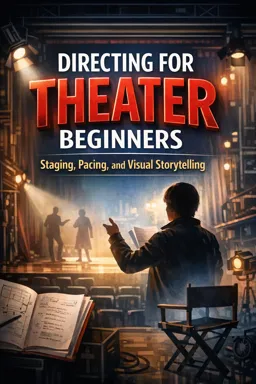
Directing for Theater Beginners: Staging, Pacing, and Visual Storytelling
This free ebook introduces practical theater directing skills for anyone leading an early production, from the first script reading through final runs. Learn how a director turns dramatic ideas into clear, playable action for actors and readable images for an audience.
Build a production with purpose
Explore how to identify beats, actions, objectives, tone, and the rules of a play’s world. The ebook helps you develop a directing concept that guides choices without overwhelming the story.
Stage movement audiences can follow
Use motivated blocking and stage geography to make relationships, conflict, and shifts in power visible. Discover how composition, focus, entrances, exits, levels, and spacing create coherent stage pictures.
Shape rhythm and support performers
Learn to adjust tempo without rushing meaning, give behavior-based actor notes, and maintain productive rehearsal momentum. Practical guidance covers rehearsal planning, decision tracking, feedback, and morale.
Bring every element together
Coordinate story needs with lighting, sound, scenery, costumes, and transitions. The final chapters explain how to approach technical rehearsals, solve staging problems calmly, and prepare consistent, audience-ready performances.
What you will practice
- Breaking scripts into playable units of action
- Creating visual focus and purposeful movement
- Giving clear, actionable rehearsal notes
- Planning efficient rehearsals and scene changes
- Collaborating with a creative team
How do theater directors create motivated blocking?
Connect each movement to an objective, new information, relationship shift, or practical stage need.
What are beats in a theater script?
Beats are units of action where a character’s tactic, goal, emotion, or the scene’s direction changes.
How can a director improve pacing without making actors rush?
Clarify actions and transitions, trim unnecessary pauses, and preserve the moments the audience needs to understand.
This ebook includes:

13 content chapters

Digital certificate of course completion (Free)

Exercises to train your knowledge

100% free, from content to certificate
Ready to get started?

 recommended
In the app you will also find...

Over 5,000 free courses
Programming, English, Digital Marketing and much more! Learn whatever you want, for free.

Study plan with AI
Our app's Artificial Intelligence can create a study schedule for the course you choose.

From zero to professional success
Improve your resume with our free Certificate and then use our Artificial Intelligence to find your dream job.
You can also use the QR Code or the links below.