It covers plot structure, viewpoint, worldbuilding, magic systems, characters, short stories, and publishing paths.

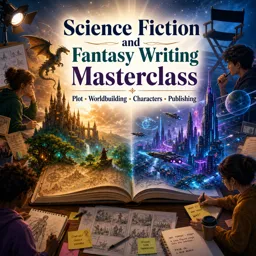
Duration of the online course: 14 hours and 47 minutes
New
Build unforgettable sci‑fi & fantasy stories—plot, worldbuilding, characters, and publishing—in this free online course with exercises and a certificate option.
Turn bold ideas into finished science fiction and fantasy stories you are proud to share. This free online course guides you through the full creative pipeline, from shaping a compelling premise to building a story that feels cinematic on the page. Designed for hobbyists and aspiring creators who love storytelling in film, theater, and beyond, it helps you develop a process you can repeat whenever inspiration strikes.
You will learn how to think like a writer when it comes to plot: making promises to readers, delivering payoffs, and building momentum that keeps pages turning. Along the way, you will practice making decisions about structure, openings, and viewpoint so your introduction earns attention and your scenes stay focused on what matters most. The goal is not rigid formulas, but a clear understanding of why stories work and how to fix them when they do not.
Worldbuilding is approached as more than lore. You will explore how to create settings, cultures, technology, and magic that feel coherent, purposeful, and emotionally engaging. Special attention is paid to internal consistency and to the way rules, limits, and consequences increase reader satisfaction, especially when extraordinary powers are used to solve problems. You will also learn a genre-focused mindset for designing worlds that generate conflict rather than just background detail.
Memorable characters are at the center of every great speculative story, so you will develop tools to earn reader investment through competence, likability, and understandable motivation. You will also learn how to handle backstory, tragedy, and sympathy with restraint, keeping characterization active in the present rather than trapped in exposition. Exercises and questions help you test your choices and sharpen what readers actually feel.
Finally, the course demystifies publishing by explaining the tradeoffs between traditional and indie paths, including how representation can help and why independent release can offer important advantages. By the end, you will have stronger craft fundamentals, a clearer creative workflow, and the confidence to move from idea to draft to publication-ready next steps.

14 hours and 47 minutes of online video course

Digital certificate of course completion (Free)

Exercises to train your knowledge

100% free, from content to certificate
What science fiction and fantasy writing skills does this masterclass teach?
It covers plot structure, viewpoint, worldbuilding, magic systems, characters, short stories, and publishing paths.
Does the course explain Brandon Sanderson's laws of magic and worldbuilding?
Yes. It explores how clear limitations, internal consistency, and reader expectations make magic systems satisfying.
What publishing options for fantasy and science fiction writers are covered?
The course compares traditional publishing, including literary agents, with indie publishing and its greater creative control.
Ready to get started?Download the app and get started today.
Install the app now
to access the course
Over 5,000 free courses
Programming, English, Digital Marketing and much more! Learn whatever you want, for free.

Study plan with AI
Our app's Artificial Intelligence can create a study schedule for the course you choose.

From zero to professional success
Improve your resume with our free Certificate and then use our Artificial Intelligence to find your dream job.
You can also use the QR Code or the links below.



Free CourseDramatic Portraiture and Lighting Class
5

(5)

2h39m

6 exercises
Free CourseTheatrical production
5
(3)
1h47m
19 exercises
Free CourseUsing Drones to create content
5
(1)
2h07m
4 exercises
Free CourseTheater 101 fundamentals
4.6

(5)
46m
20 exercises
Free CourseIntroduction to Theater and Drama Arts
3.7
(3)
27h08m
25 exercises
Free CourseDrone Filmmaking Beginners Guide
New
1h32m
6 exercises
Free CourseCreating a Short Film
New
2h58m
5 exercises
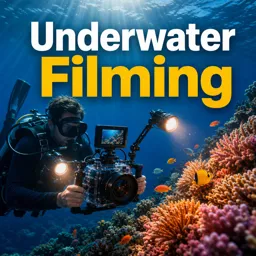
Free CourseUnderwater Filming
New
3h11m
15 exercises
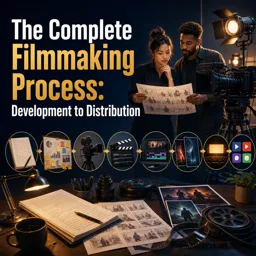
Free CourseThe Complete Filmmaking Process: Development to Distribution
New
2h30m
6 exercises
Carry knowledge in your pocket.
Download the Cursa app.
There are hundreds of free courses available, with a free certificate of completion that is saved in your mobile image gallery.
Download the app to access the Course Completion Certificate for Free.


+ 10 million
students

Free and Valid
Certificate

60 thousand free
exercises

4.8/5 rating in
app stores

Free courses in
video and ebooks