The course explores drama, audiences, plays, directing, acting, design, production, theater spaces, musical theater, and theater’s role in public life.

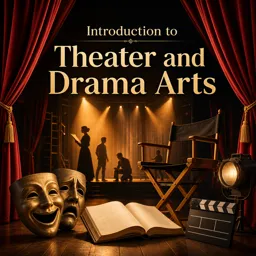
Duration of the online course: 27 hours and 8 minutes
3

(2)
Build confidence on stage and understand how theater works—take this free online course to explore drama, musicals, directing, design, and production.
Theater is more than performance; it is a living conversation between story, artists, and audience. In this free online course, you will gain a clear, engaging introduction to theater and drama arts, designed for curious beginners as well as creatives who want stronger vocabulary and a deeper understanding of how stage work comes together.
You will explore what makes drama a distinctive art form and why theater has remained a powerful space for public dialogue across history. Along the way, you will see how an audience is not just a passive observer, but an essential part of the theatrical event, shaping energy, meaning, and impact. This perspective helps you watch plays, musicals, film, and television with sharper insight—and participate in creative work with greater intention.
The course also connects the big picture to the practical realities of the field. You will encounter the craft behind musical theatre and the development of the American musical, including the traditions that shaped what many consider the most popular theatrical form today. You will also learn how a play works at its core: why structure matters, how dramatic conventions are established, and what elements give a story its momentum from opening moment to final beat.
Through a range of interviews and real-world viewpoints, you will step into the collaborative ecosystem that supports performance. You will get to know the responsibilities that guide a production—from directors interpreting scripts and shaping rehearsals, to producers balancing logistics, venues, and resources, to designers building the visual world and ensuring objects, spaces, and styles feel truthful. You will also reflect on the demands placed on performers, including the importance of presence, technique, and even physical preparedness in performance-intensive genres.
Whether your goal is personal enrichment, preparation for auditions, better appreciation of what you see on stage, or a first step toward working in theater and filmmaking, this course offers a grounded, inspiring foundation. By the end, you will be able to speak about theater with more confidence, recognize the moving parts that create live storytelling, and understand why drama continues to resonate across cultures and generations.

27 hours and 8 minutes of online video course

Digital certificate of course completion (Free)

Exercises to train your knowledge

100% free, from content to certificate
What topics are covered in an Introduction to Theater and Drama Arts course?
The course explores drama, audiences, plays, directing, acting, design, production, theater spaces, musical theater, and theater’s role in public life.
What is considered the Golden Age of American musical theatre?
The Golden Age generally refers to the mid-20th century, when integrated book musicals such as Oklahoma! helped define the modern Broadway form.
What does a theater director do during a production?
A director interprets the script, develops the production’s artistic vision, and guides actors and designers through rehearsals and performance.
Ready to get started?Download the app and get started today.
Install the app now
to access the course
Over 5,000 free courses
Programming, English, Digital Marketing and much more! Learn whatever you want, for free.

Study plan with AI
Our app's Artificial Intelligence can create a study schedule for the course you choose.

From zero to professional success
Improve your resume with our free Certificate and then use our Artificial Intelligence to find your dream job.
You can also use the QR Code or the links below.



Free CourseDramatic Portraiture and Lighting Class
5
(5)

2h39m

6 exercises
Free CourseTheatrical production
5
(3)
1h47m
19 exercises

Free CourseUsing Drones to create content
5
(1)
2h07m
4 exercises
Free CourseTheater 101 fundamentals
4.6

(5)
46m
20 exercises
Free CourseDrone Filmmaking Beginners Guide
New
1h32m
6 exercises
Free CourseCreating a Short Film
New
2h58m
5 exercises
Free CourseUnderwater Filming
New
3h11m
15 exercises
Free CourseScience Fiction and Fantasy Writing Masterclass (Plot, Worldbuilding, Characters and Publishing)
New
14h47m
14 exercises
Free CourseThe Complete Filmmaking Process: Development to Distribution
New
2h30m
6 exercises
Carry knowledge in your pocket.
Download the Cursa app.
There are hundreds of free courses available, with a free certificate of completion that is saved in your mobile image gallery.
Download the app to access the Course Completion Certificate for Free.


+ 10 million
students

Free and Valid
Certificate

60 thousand free
exercises

4.8/5 rating in
app stores

Free courses in
video and ebooks