

Free ebook on beginner automotive brake systems, covering pads, rotors, drum brakes, fluid, diagnostics, tools, and safe service practices.
Free ebook content
-

Brake System Basics: Pedal Feel, Hydraulic Force, and Friction at the Wheels
+ Exercise: During repeated hard braking, the pedal becomes longer/softer even though you are pressing with similar effort. Which explanation best matches this symptom?
-
Disc Brakes Explained: Calipers, Pads, Rotors, Slides, and Hardware
+ Exercise: On a vehicle with a floating (sliding) caliper, what is the most likely result if the slide pins are sticking and the caliper cannot move freely?
-
Drum Brakes Explained: Shoes, Drums, Springs, Adjusters, and Parking Brake Links
+ Exercise: When removing a drum brake, the drum won’t slide off easily. Which action is the safest next step to avoid forcing it and reduce the chance of damage?
-
Brake Fluid and Hydraulics: Types, Moisture, Air, and Pedal Symptoms
+ Exercise: A vehicle has a normal brake pedal when cold, but after repeated stops the pedal becomes longer/softer and braking effectiveness drops, then improves after cooling. What is the most likely fluid-related cause?


-
Recognizing Brake Problems: Squeal, Grinding, Vibration, Pulling, and Overheating
+ Exercise: During a gentle, low-speed brake road test, which situation indicates you should stop testing and arrange a tow or avoid further driving?
-
Safety Practices and Work Setup for Brake Service
+ Exercise: Which setup best reduces the two biggest hazards during brake service: vehicle movement and unexpected exposure to dust/chemicals/hot parts?
-
Tools and Materials for Beginner Brake Jobs
+ Exercise: Which approach best helps prevent rotor distortion and stud damage when reinstalling a wheel after brake work?
-
Inspecting Brake Wear: Pads, Rotors, Shoes, Drums, and Hardware Condition
+ Exercise: During a brake inspection, you find the inner pad is much thinner than the outer pad on the same wheel. What is the most appropriate next step?
-
Choosing Brake Pads and Rotors: Matching Driving Needs and Avoiding Noise
+ Exercise: A driver wants predictable, quiet braking with minimal surprises for normal daily street use. Which rotor style is generally the safest default choice?
-
Disc Brake Pad Replacement: Caliper Removal, Cleaning, Lubrication, and Reassembly
+ Exercise: During disc brake pad replacement on a floating caliper, what best practice helps prevent uneven wear, noise, and dragging brakes after reassembly?
-
Basic Drum Brake Service: Inspection, Cleaning, Adjustment, and Parking Brake Checks
+ Exercise: During manual drum brake adjustment, what result indicates the shoe-to-drum clearance is set correctly?
-
Bleeding and Flushing Brake Fluid: Two-Person, Gravity, and Bleeder-Tool Methods
+ Exercise: During a two-person pump-and-hold brake bleeding procedure, why must the bleeder screw be closed before the helper releases the brake pedal?
-
Avoiding Common Brake Mistakes: Soft Pedal, Uneven Braking, Noise, and Premature Wear
+ Exercise: After a brake job, what installation step most directly helps prevent vibration caused by rotor runout?
About the free ebook
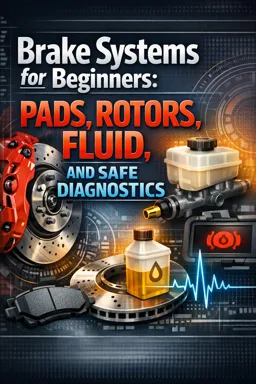
Brake Systems for Beginners: Pads, Rotors, Fluid, and Safe Diagnostics
This free online ebook introduces the practical fundamentals of automotive brake service, helping new technicians understand how braking force travels from the pedal to the wheels. Learn how friction, hydraulic pressure, and well-maintained components work together to stop a vehicle safely.
Build confident diagnostic habits
Brake concerns can appear as squealing, grinding, vibration, pulling, overheating, or a soft pedal. This guide explains what these symptoms may indicate and how to inspect components methodically before deciding on a repair. It emphasizes checking wear patterns, hardware condition, fluid condition, and signs of uneven braking.
Understand disc and drum brake service
Explore the function of calipers, pads, rotors, slides, clips, shoes, drums, springs, adjusters, and parking-brake parts. The ebook presents beginner-friendly service principles for pad replacement, basic drum-brake inspection, cleaning, lubrication, adjustment, and reassembly.
Work safely with brake hydraulics
Brake fluid absorbs moisture over time, and air in the hydraulic system can affect pedal feel. Learn the purpose of fluid flushing and bleeding, including gravity, two-person, and bleeder-tool approaches. Always follow the vehicle manufacturer’s specifications and use safe lifting and support procedures.
Make informed maintenance decisions
Use this ebook to choose suitable pads and rotors, recognize when parts require professional evaluation, and avoid common errors that cause noise, premature wear, soft pedals, or uneven braking. It is designed as a practical foundation for safer inspections and entry-level brake work.
What can cause a brake pedal to feel soft after brake service?
Air in the hydraulic system, fluid leaks, incorrect bleeding, or a fluid-related issue can cause a soft pedal and should be checked promptly.
What does grinding noise when braking usually mean?
Grinding may indicate severely worn pads or shoes, rotor or drum damage, or loose hardware. Stop driving if braking performance is affected.
Why do brakes pull to one side when stopping?
A pull can result from a sticking caliper, uneven pad wear, contaminated friction material, hydraulic restrictions, or suspension and tire issues.
This ebook includes:

13 content chapters

Digital certificate of course completion (Free)

Exercises to train your knowledge

100% free, from content to certificate
Ready to get started?

 recommended
In the app you will also find...

Over 5,000 free courses
Programming, English, Digital Marketing and much more! Learn whatever you want, for free.

Study plan with AI
Our app's Artificial Intelligence can create a study schedule for the course you choose.

From zero to professional success
Improve your resume with our free Certificate and then use our Artificial Intelligence to find your dream job.
You can also use the QR Code or the links below.