Developers may face higher upfront costs, financing constraints, uncertain future savings, or a split incentive when they do not receive the full benefit of lower operating costs.

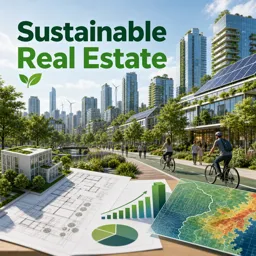
Duration of the online course: 13 hours and 38 minutes
5

(1)
Make smarter property decisions with this free online course on sustainable real estate—evaluate green value, manage climate risk, and boost career-ready skills.
Sustainable real estate is no longer a niche topic—it is becoming a practical advantage for anyone who buys, develops, leases, finances, or manages property. This free online course helps you understand when sustainability creates real value, when it gets stuck, and how market incentives, lease structures, and policy can change the outcome. You will learn to think like an investor while keeping an eye on people’s health, operating performance, and long-term resilience.
Rather than treating green features as a simple upgrade, the course builds a clear framework for evaluating the economics behind energy-efficient and healthy buildings. You will see why projects with attractive returns can still be hard to deliver, how split incentives can slow retrofits, and why certain tenants may be willing to pay more for high-performance space. By grounding sustainability in measurable outcomes, you gain language and logic you can use with stakeholders—from owners and asset managers to lenders and corporate occupiers.
A major focus is risk: how climate change can alter real estate markets, shift perceived safety, and affect value in ways that persist long after a headline event. You will explore how climate risk can be quantified, why pricing signals may be incomplete, and what that means for valuation, underwriting, and portfolio strategy. The course also connects building-level decisions to broader urban outcomes, helping you understand how sustainability scales from individual assets to cities.
You will also get a practical view of the financial and policy landscape, including why certain mortgages can become cheaper, how incentives can accelerate investment, and how green finance tools may support both capital access and reputation. By the end, you will be better prepared to assess sustainable investments, communicate trade-offs, and navigate the evolving expectations around buildings, resilience, and performance in the realtor and professional real estate ecosystem.

13 hours and 38 minutes of online video course

Digital certificate of course completion (Free)

Exercises to train your knowledge

100% free, from content to certificate
Why can a green building with a positive net present value still be difficult for a developer to pursue?
Developers may face higher upfront costs, financing constraints, uncertain future savings, or a split incentive when they do not receive the full benefit of lower operating costs.
How do triple net leases affect energy-efficiency retrofits in commercial real estate?
Because tenants typically pay utility costs under triple net leases, landlords may have little direct financial incentive to fund upgrades, even when the retrofit reduces total energy use.
Why might banks offer lower interest rates on green mortgages?
Energy-efficient properties can have lower operating costs and potentially lower default risk, making the loans less risky for lenders.
Ready to get started?Download the app and get started today.
Install the app now
to access the course
Over 5,000 free courses
Programming, English, Digital Marketing and much more! Learn whatever you want, for free.

Study plan with AI
Our app's Artificial Intelligence can create a study schedule for the course you choose.

From zero to professional success
Improve your resume with our free Certificate and then use our Artificial Intelligence to find your dream job.
You can also use the QR Code or the links below.




Free CourseReal State broker
5
(1)

63h44m

30 exercises
Free CourseCrash Course in Commercial Real Estate
5
(1)
10h51m
27 exercises
Free CourseReal Estate Exam Concepts
5
(1)
11h01m
41 exercises

Free CourseReal Estate Exame
5
(2)
2h52m
30 exercises
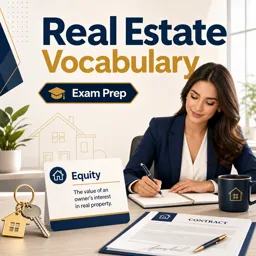
Free CourseReal Estate Vocabulary
5
(1)
7h15m
35 exercises
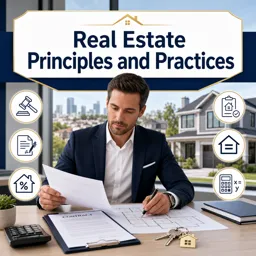
Free CourseReal estate principles and practices
4.9
(15)
18h15m
39 exercises
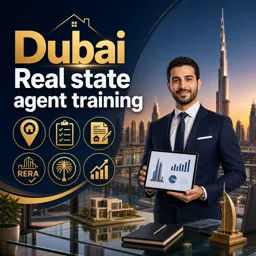
Free CourseDubai Real state agent training
4.9
(7)
7h39m
27 exercises
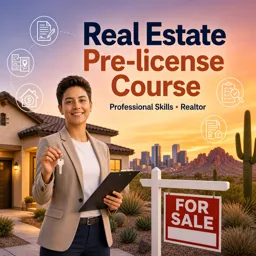
Free CourseReal Estate Pre-license Course
4
(1)
17h12m
42 exercises

Free CourseDrone Real Estate Photography
4
(2)
1h50m
6 exercises
Carry knowledge in your pocket.
Download the Cursa app.
There are hundreds of free courses available, with a free certificate of completion that is saved in your mobile image gallery.
Download the app to access the Course Completion Certificate for Free.


+ 10 million
students

Free and Valid
Certificate

60 thousand free
exercises

4.8/5 rating in
app stores

Free courses in
video and ebooks