
You can use a local server package such as XAMPP, which includes PHP, Apache, and tools for running PHP projects from your computer.

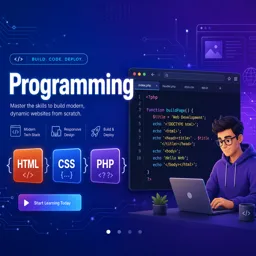
Duration of the online course: 6 hours and 7 minutes
4.5


(25)
Build real web apps with this free PHP course: master forms, validation, MySQL, and security basics—ideal for beginners and job-ready skills.
Turn an idea into a working website by learning how server-side code really operates. This free online course guides you through PHP for web development, helping you move from simple scripts to dynamic pages that respond to users, process data, and power real features you see in modern sites. If you want a practical path into backend development, PHP remains a widely used tool across content platforms, small businesses, and large applications—making it a valuable skill for both freelance and employed roles.
You will begin by setting up a local development environment and understanding how PHP runs on your machine, so you can build and test projects quickly. As you progress, you will learn to write clean code using variables, operators, string handling, arrays, loops, conditionals, and functions—core fundamentals that translate to any programming language. You will also practice writing reusable logic, organizing code sensibly, and understanding scope, including how global values behave.
From there, the course shifts into building interactive web experiences: handling form submissions, choosing between GET and POST, validating inputs, and displaying user-friendly error messages. You will learn habits that protect applications, including techniques to reduce the risk of cross-site scripting. You will also work with data persistence by connecting PHP to MySQL, running queries, and sorting results for clearer output. Along the way, you will see patterns used in everyday development, such as passing identifiers through query strings to show detail pages, working with superglobals, and using helpful language features like the null coalescing operator.
By the end, you will be more confident building structured PHP pages that read and write data, validate user input, and behave predictably in real scenarios. Whether your goal is to create a portfolio project, support a WordPress or CMS workflow, or take your first step into backend engineering, this course gives you a practical foundation you can apply immediately.

6 hours and 7 minutes of online video course

Digital certificate of course completion (Free)

Exercises to train your knowledge

100% free, from content to certificate
What software do I need to set up a local PHP development environment?
You can use a local server package such as XAMPP, which includes PHP, Apache, and tools for running PHP projects from your computer.
What is the difference between include and require in PHP?
Both insert another file into a script, but require stops execution if the file is missing, while include only produces a warning.
How do I validate and secure PHP form input?
Validate required fields and formats, use filter_var for email validation, and escape output with htmlspecialchars to help prevent XSS attacks.
Ready to get started?Download the app and get started today.
Install the app now
to access the course
Over 5,000 free courses
Programming, English, Digital Marketing and much more! Learn whatever you want, for free.

Study plan with AI
Our app's Artificial Intelligence can create a study schedule for the course you choose.

From zero to professional success
Improve your resume with our free Certificate and then use our Artificial Intelligence to find your dream job.
You can also use the QR Code or the links below.



Free CourseLaravel
5
(2)

4h04m

20 exercises
Free CourseProgressive Web Application PWA for Beginners
5
(5)
3h24m
15 exercises
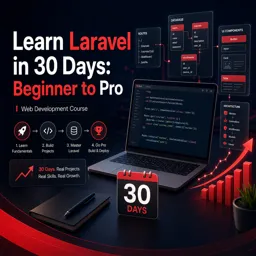
Free CourseLearn Laravel in 30 Days: Beginner to Pro
5
(1)
17h00m
30 exercises
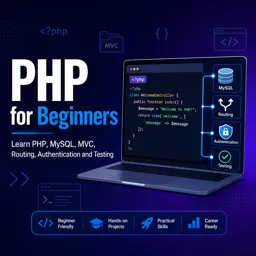
Free CoursePHP for Beginners: Learn PHP, MySQL, MVC, Routing, Authentication and Testing
5
(1)
10h45m
49 exercises
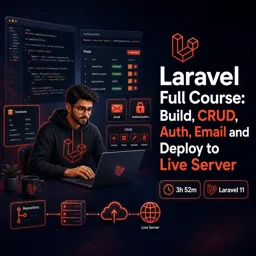
Free CourseLaravel Full Course: Build, CRUD, Auth, Email and Deploy to Live Server
5
(1)
3h52m
15 exercises
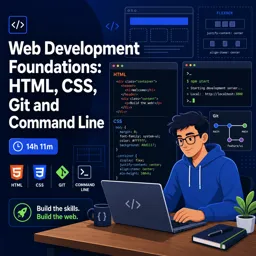
Free CourseWeb Development Foundations: HTML, CSS, Git and Command Line
5
(3)
14h11m
37 exercises
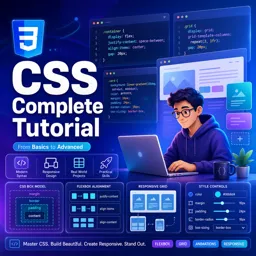
Free CourseCSS Complete Tutorial
5
(1)
8h30m
49 exercises
Free CoursePHP for Beginners: Learn PHP, MySQL and Login Systems
5
(3)
10h49m
29 exercises
Free CourseJavaScript for beginners
4.9
(27)
1h40m
2 exercises
Free CourseUmbraco CMS
4.9
(22)
6h21m
19 exercises
Carry knowledge in your pocket.
Download the Cursa app.
There are hundreds of free courses available, with a free certificate of completion that is saved in your mobile image gallery.
Download the app to access the Course Completion Certificate for Free.


+ 10 million
students

Free and Valid
Certificate

60 thousand free
exercises

4.8/5 rating in
app stores

Free courses in
video and ebooks
Course comments: Programming
ANBU
programming
Jose Amandio de Almeida
Excellent