You can use XAMPP, which bundles Apache, PHP, and MySQL, then place projects in its htdocs folder.

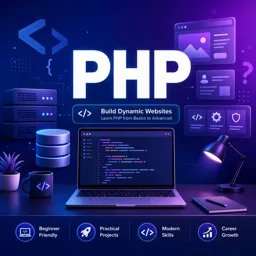
Duration of the online course: 6 hours and 7 minutes
3.5


(2)
Build dynamic websites with this free PHP course: learn forms, arrays, loops, functions and MySQL basics, plus practical projects to boost your web dev skills.
Unlock the skills to build real, dynamic websites with PHP, one of the most widely used server-side languages on the web. In this free online course, you will go from setting up a local development environment to writing clean, maintainable PHP that powers interactive pages, processes user input and communicates with a database. Whether you are starting your web development journey or adding backend skills to your toolkit, PHP remains a practical choice thanks to its broad hosting support, mature ecosystem and strong connection to everyday website features.
You will learn the core building blocks that make applications work behind the scenes: variables, data types and expressions, string handling and concatenation, arrays (including multi-dimensional structures), loops, and conditional logic. As you progress, you will start organizing code with functions, understand scope and global variables, and handle common patterns that show up in professional projects. The course also focuses on how pages can be assembled reliably using include and require, helping you keep layouts and reusable components consistent across a site.
Working with user-facing features is a key part of backend development, so you will practice processing web forms with GET and POST, handling superglobals, and validating inputs in a way that improves both usability and security. You will see how to store and display helpful error messages, validate fields like email addresses, and reduce risk from common threats such as cross-site scripting by sanitizing and escaping data properly. Along the way, you will also use practical syntax options that make templates and nested logic easier to read and maintain.
To connect your application to persistent data, you will be introduced to relational databases and the role of MySQL in typical PHP stacks. You will learn how PHP files communicate with a database, how a connection is established, and how to retrieve and sort records for display. You will also explore common web development techniques such as using query strings to show detail pages, handling default values with the null coalescing operator, and working with the filesystem by checking whether files exist and reading their contents when needed.
By the end, you will be able to create interactive pages that accept input, validate it, display dynamic results, and use data from a database to power simple applications. This course is designed to help you build confidence with backend fundamentals while reinforcing the habits that make code safer and easier to grow as your projects become more ambitious.

Explore free online PHP courses with certificates and learn to build dynamic, database-driven websites from scratch. Master PHP fundamentals, syntax, forms, sessions, MySQL integration, object-oriented programming, and web development best practices through flexible, self-paced lessons designed for beginners and aspiring developers.

Explore free online MySQL courses with certificates and learn essential database skills at your own pace. Master SQL queries, database design, data management, joins, indexing, and optimization through beginner-friendly and advanced lessons. Enroll today to build practical MySQL expertise, strengthen your resume, and advance your career in data or web development.

6 hours and 7 minutes of online video course

Digital certificate of course completion (Free)

Exercises to train your knowledge

100% free, from content to certificate
What software can I use to set up a local PHP development environment?
You can use XAMPP, which bundles Apache, PHP, and MySQL, then place projects in its htdocs folder.
What is the difference between include and require in PHP?
Both load another file, but require stops the script on failure while include only raises a warning.
How does PHP validate and protect form input?
PHP can validate required fields and email formats, then use htmlspecialchars() to safely display input and reduce XSS risks.
Ready to get started?Download the app and get started today.
Install the app now
to access the course
Over 5,000 free courses
Programming, English, Digital Marketing and much more! Learn whatever you want, for free.

Study plan with AI
Our app's Artificial Intelligence can create a study schedule for the course you choose.

From zero to professional success
Improve your resume with our free Certificate and then use our Artificial Intelligence to find your dream job.
You can also use the QR Code or the links below.




Free CourseLaravel
5
(2)

4h04m

20 exercises
Free CourseProgressive Web Application PWA for Beginners
5
(5)
3h24m
15 exercises
Free CourseLearn Laravel in 30 Days: Beginner to Pro
5
(1)
17h00m
30 exercises
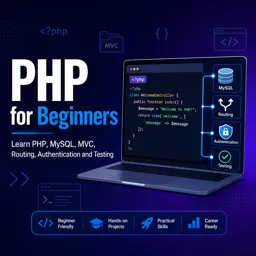
Free CoursePHP for Beginners: Learn PHP, MySQL, MVC, Routing, Authentication and Testing
5
(1)
10h45m
49 exercises
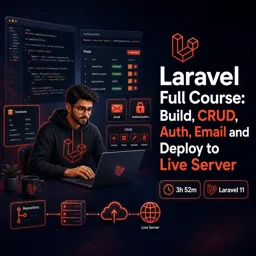
Free CourseLaravel Full Course: Build, CRUD, Auth, Email and Deploy to Live Server
5
(1)
3h52m
15 exercises
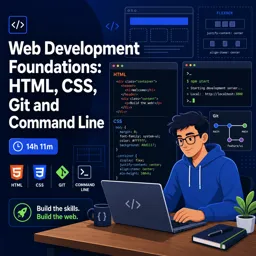
Free CourseWeb Development Foundations: HTML, CSS, Git and Command Line
5
(3)
14h11m
37 exercises
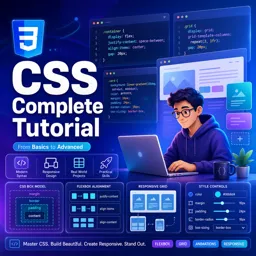
Free CourseCSS Complete Tutorial
5
(1)
8h30m
49 exercises
Free CoursePHP for Beginners: Learn PHP, MySQL and Login Systems
5
(3)
10h49m
29 exercises
Free CourseJavaScript for beginners
4.9
(27)
1h40m
2 exercises
Free CourseUmbraco CMS
4.9
(22)
6h21m
19 exercises
Carry knowledge in your pocket.
Download the Cursa app.
There are hundreds of free courses available, with a free certificate of completion that is saved in your mobile image gallery.
Download the app to access the Course Completion Certificate for Free.


+ 10 million
students

Free and Valid
Certificate

60 thousand free
exercises

4.8/5 rating in
app stores

Free courses in
video and ebooks