
Exercises
Assess your understanding of project procurement and contract management across the procurement life cycle. This quiz covers procurement planning, make-or-buy analysis, contract selection, bidder conferences, proposal evaluation, procurement statements of work, seller performance control, dispute resolution, and contract closure. Questions combine practical scenarios, calculations, and visual interpretation to test skills needed when acquiring products or services from external suppliers.
Answer the questions below and check the explanation for each answer.
0/11 answered
Auto audio on: the next questions will be read aloud when you click Continue.
The procurement management plan explains how procurements will be planned, conducted, controlled, and closed. It may address contract types, source selection, roles, schedules, and change control.
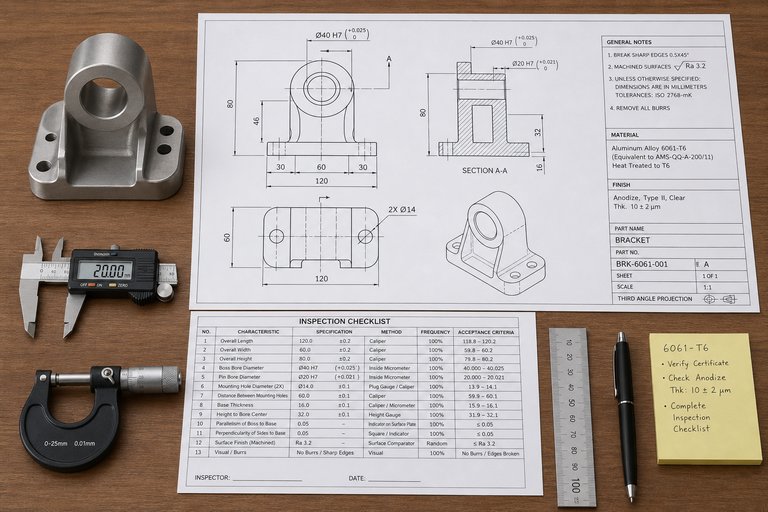
A firm-fixed-price contract is suitable when scope and requirements are well defined. The agreed price provides cost predictability and places most cost-overrun risk on the seller.
The buyer generally carries more cost risk because the seller is reimbursed for allowable costs. Incentives, ceilings, and oversight can limit exposure, but they do not make the arrangement equivalent to a fixed-price contract.
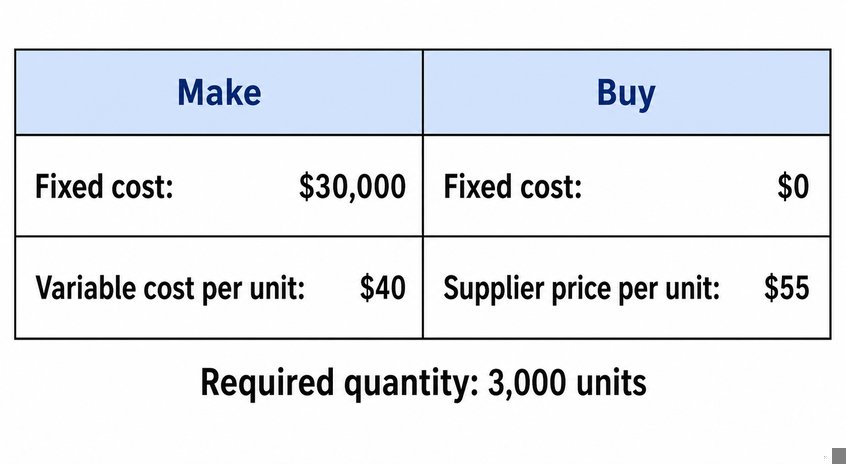
Making costs $30,000 + ($40 × 3,000) = $150,000. Buying costs $55 × 3,000 = $165,000. Based only on these costs, making internally saves $15,000.
A bidder conference helps prospective sellers interpret requirements consistently. Questions and clarifications should be handled fairly so that no bidder receives an improper informational advantage.
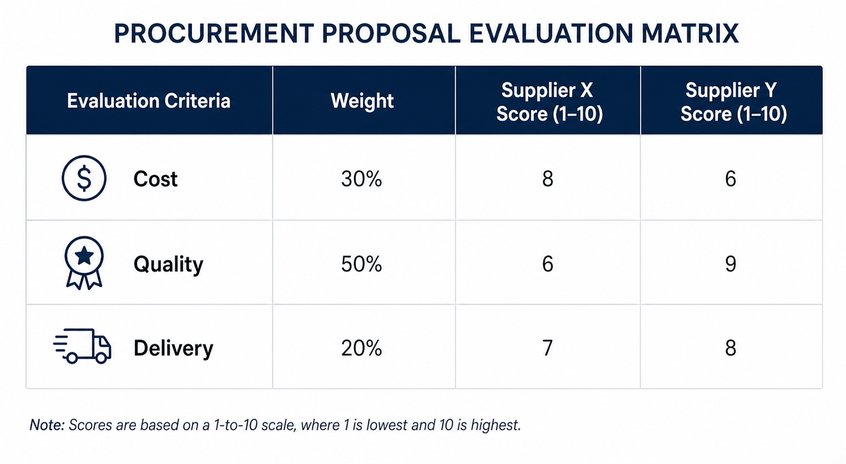
Supplier X scores (8 × 0.3) + (6 × 0.5) + (7 × 0.2) = 6.8. Supplier Y scores (6 × 0.3) + (9 × 0.5) + (8 × 0.2) = 7.9, so Supplier Y ranks higher.
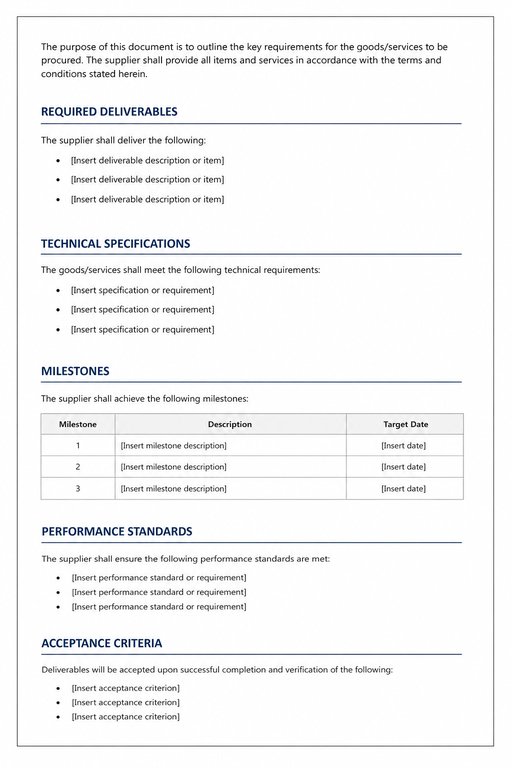
A procurement statement of work describes what the seller must provide. It commonly contains deliverables, technical requirements, milestones, performance standards, and acceptance criteria.
Arbitration uses a neutral arbitrator who issues a decision that is typically binding under the contract. A mediator assists negotiation but ordinarily does not impose a binding outcome.
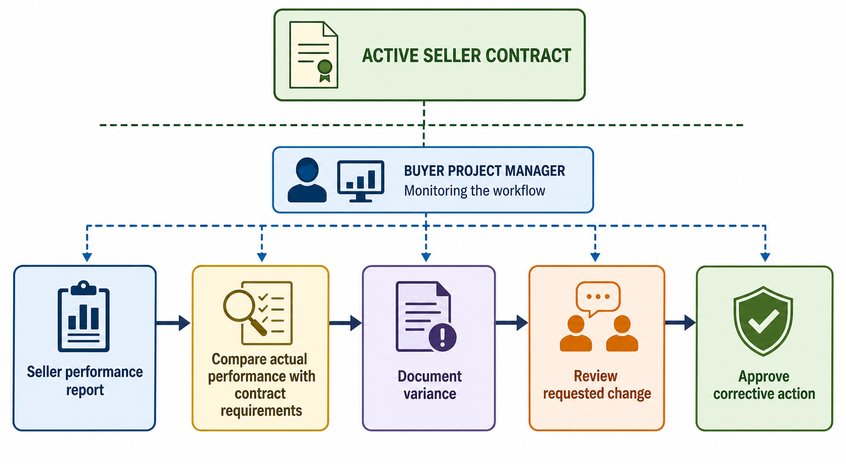
Comparing seller performance with contractual requirements, documenting variances, authorizing changes, and taking corrective action are central activities in controlling procurements.
A time-and-materials contract is a hybrid arrangement. Unit or hourly rates are predetermined, but the total price varies with the amount of time or materials used. A ceiling can help control buyer exposure.
Procurement closure requires verification that deliverables were accepted and obligations were fulfilled. Outstanding claims should be settled, final payments handled according to the contract, and records archived.
Free CourseProject Management Second Edition
5

(4)

18h17m

41 exercises
Free CourseAgile and Scrum
5
(14)
2h50m
4 exercises
Free CourseProject Management for managers
4.8
(6)
31h38m
32 exercises
Free CourseTime Management
4.8

(12)
2h16m
3 exercises
Free CourseProject Management Course
4.7
(24)
4h14m
20 exercises
Free CourseScrum Master course
4.7
(6)
3h28m
9 exercises
Free CourseProject Management course
4.6
(7)
10h06m
47 exercises
Free CourseProject management tutorial
4.5
(50)
15h48m
22 exercises
Thousands of online courses in video, ebooks and audiobooks.
To test your knowledge during online courses
Generated directly from your cell phone's photo gallery and sent to your email

Download our app via QR Code or the links below:.


Carry knowledge in your pocket.
Download the Cursa app.
There are hundreds of free courses available, with a free certificate of completion that is saved in your mobile image gallery.
Download the app to access the Course Completion Certificate for Free.


+ 10 million
students

Free and Valid
Certificate

60 thousand free
exercises

4.8/5 rating in
app stores

Free courses in
video and ebooks