
Exercises
Assess your understanding of public financial management with this quiz on the essential tools and principles used to manage public funds responsibly. Explore government financing, including public-private partnerships (PPPs), the purpose and structure of government budgets, fiscal-year revenue and expenditure plans, and financial tracking and reporting. Questions also cover sound PFM principles, outcome-focused budgeting methods, asset cost allocation through depreciation, and the role of external audits in promoting transparency and accountability. Ideal for students, public-sector professionals, and anyone seeking to strengthen their knowledge of government budgeting, financial oversight, and effective use of public resources.
Answer the questions below and check the explanation for each answer.
0/8 answered
Auto audio on: the next questions will be read aloud when you click Continue.
The acronym PPP in government financing typically stands for Public-Private Partnership. This arrangement involves collaboration between government agencies and private-sector companies to fund, build, and operate projects such as public transportation networks, parks, and infrastructure.
Accountability is a principle of sound public financial management because it ensures that financial managers are held responsible for their actions and decisions, promoting transparency and trust in the management of public funds.
The main purpose of a government budget is to outline the government's financial plan. It provides a detailed plan for government expenditures and revenues for a specific period, usually a fiscal year. This helps in allocating resources, managing public funds, and ensuring fiscal responsibility.
The Budget Statement is the document that outlines the government's planned revenues and expenditures for the fiscal year. It provides a detailed account of expected income from taxes and other sources, as well as planned spending in various sectors like healthcare, education, and infrastructure.
The correct term for the process of tracking and reporting the allocation and usage of a government's funds is Expenditure Tracking. This involves monitoring how allocated funds are used and ensuring that expenditures are aligned with budgetary plans.
Performance-based budgeting focuses on aligning the allocation of funds with specific outcomes and achievements. This method seeks to assess the impact of spending decisions by evaluating the results rather than simply the cost or historical allocation. It emphasizes why funds should be allocated based on the performance metrics.
The practice of spreading the cost of an asset over its useful life is known as Depreciation. This accounting method allocates the expense of a tangible asset systematically over its expected period of use to reflect its decreasing value. Depreciation helps in matching the cost of the asset with the revenue it generates over time.
An external audit in public financial management refers to an independent review of government's financial statements and processes. It is conducted by parties outside the organization being audited, ensuring unbiased assessments and compliance with accounting standards.

Free CourseEssentials of Global Health
5

(3)

11h16m

27 exercises

Free CourseIntroduction to Public Relations
5
(8)
7h51m
11 exercises
Free CoursePolitical Complexity
5
(52)
6h54m
19 exercises
Free CourseIntroduction to Enviromental Policy and Planning
4.7

(3)
1h52m
17 exercises

Free CourseInternational Relations
4.4
(8)
12h00m
54 exercises

Free CoursePower and politics
4.4
(20)
31h33m
22 exercises

Free CourseIntro to Political Science
4
(4)
1h51m
11 exercises

Free CoursePolitical Science
3.5
(4)
21h28m
18 exercises
Thousands of online courses in video, ebooks and audiobooks.
To test your knowledge during online courses
Generated directly from your cell phone's photo gallery and sent to your email

Download our app via QR Code or the links below:.


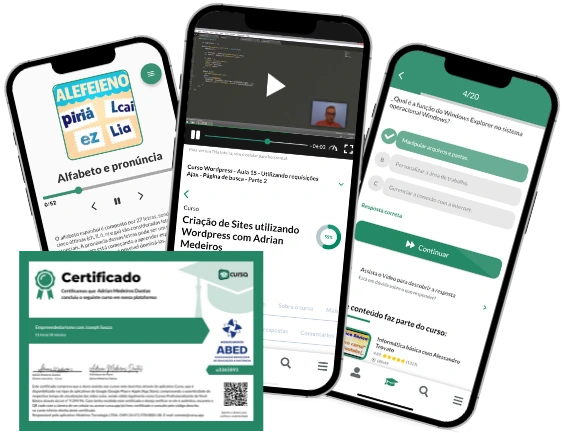
Carry knowledge in your pocket.
Download the Cursa app.
There are hundreds of free courses available, with a free certificate of completion that is saved in your mobile image gallery.
Download the app to access the Course Completion Certificate for Free.


+ 10 million
students

Free and Valid
Certificate

60 thousand free
exercises

4.8/5 rating in
app stores

Free courses in
video and ebooks