
Exercises
Challenge your understanding of muscle physiology with questions on the cellular mechanisms that power movement. Explore sarcomeres, actin, troponin, calcium ions, ATP, acetylcholine breakdown, and the sarcoplasmic reticulum. Test your knowledge of slow- and fast-twitch muscle fibers, myoglobin, creatine phosphate, glycogen breakdown, aerobic energy production, and endurance versus high-power activity. You will also review isometric contractions, muscle tension following repeated stimulation, and the processes that fuel muscles during exercise. Ideal for biology, anatomy, physiology, fitness, and health science learners.
Answer the questions below and check the explanation for each answer.
0/18 answered
Auto audio on: the next questions will be read aloud when you click Continue.
The sarcomere is the functional unit of muscle fibers, where actin and myosin filaments interact to produce muscle contraction.
Calcium ions bind to troponin, altering its shape and removing the tropomyosin blockade on actin, which is critical for muscle contraction.
Cellular respiration is the process that generates ATP by metabolizing nutrients, which is essential for sustained muscle contraction.
Myoglobin is a protein in muscle cells that binds oxygen, providing an oxygen reserve for use during intense muscle activity.
Type I fibers, also known as slow-twitch fibers, are more efficient at using oxygen to generate fuel and are suited for endurance activities.
The thin filament is composed of actin, along with regulatory proteins troponin and tropomyosin, and plays a critical role in muscle contraction.
ATP breaks down to provide energy, allowing myosin to detach from actin after a power stroke, and recock for the next cycle.
Acetylcholinesterase quickly breaks down acetylcholine in the synaptic cleft, terminating the nerve signal and allowing muscle relaxation.
Type IIx fibers are fast-twitch fibers that generate more force for shorter durations, ideal for power activities like sprinting.
The sarcoplasmic reticulum stores calcium, which is released during muscle contraction to facilitate actin-myosin interaction.
Fast-twitch fibers contract quickly and powerfully but tire rapidly as they have fewer mitochondria and capillaries compared to slow-twitch fibers.
During prolonged exercise, muscle cells primarily use fatty acids as the main energy source once glycogen stores are depleted.
Creatine phosphate donates a phosphate group to ADP to rapidly regenerate ATP, providing an immediate energy source for short bursts of muscular activity.
The process that breaks down glycogen to glucose-1-phosphate and then converts it to glucose-6-phosphate is known as glycogenolysis.
Isometric contraction occurs when the muscle generates force without changing its length, like holding a weight steady without moving it.
The treppe effect, or staircase phenomenon, describes the gradual increase in muscular contraction strength following repeated stimulation.
Troponin binds to calcium and causes a conformational change that moves tropomyosin, exposing binding sites for myosin on actin filaments.
Anaerobic glycolysis is the primary energy source for muscle activities lasting more than several seconds before oxidative phosphorylation takes over.
Free CourseHuman Physiology Lecture
5

(6)

52h21m

50 exercises
Free CourseNeuro Physiology
5
(2)
6h38m
19 exercises
Free CourseCardiovascular Physiology
5
(2)
9h02m
16 exercises
Free CourseAnatomy and Physiology
4.8
(5)
15h19m
24 exercises
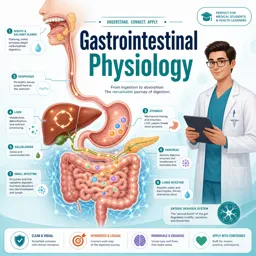
Free CourseGastrointestinal Physiology
4
(1)
13h16m
18 exercises
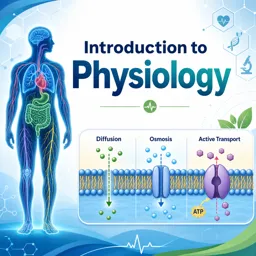
Free CourseIntroduction to Physiology
3
(1)
52m
6 exercises
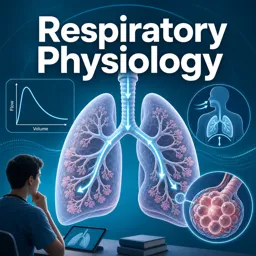
Free CourseRespiratory Physiology
New
9h24m
19 exercises
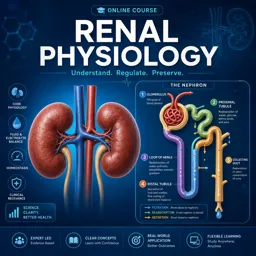
Free CourseRenal Physiology
New
5h04m
9 exercises
Thousands of online courses in video, ebooks and audiobooks.
To test your knowledge during online courses
Generated directly from your cell phone's photo gallery and sent to your email

Download our app via QR Code or the links below:.



Carry knowledge in your pocket.
Download the Cursa app.
There are hundreds of free courses available, with a free certificate of completion that is saved in your mobile image gallery.
Download the app to access the Course Completion Certificate for Free.


+ 10 million
students

Free and Valid
Certificate

60 thousand free
exercises

4.8/5 rating in
app stores

Free courses in
video and ebooks