
Exercises
Challenge your understanding of particle physics with this knowledge assessment. Explore the smallest building blocks of matter, the Higgs boson, antimatter, fermions, and the particles that mediate fundamental forces. Questions cover the strong force that binds atomic nuclei, photons and electromagnetism, weak-force carriers, stable particles in nuclei, and quantum concepts such as superposition. Ideal for students, science enthusiasts, and anyone curious about the Standard Model and the subatomic world.
Answer the questions below and check the explanation for each answer.
0/10 answered
Auto audio on: the next questions will be read aloud when you click Continue.
Quarks are a fundamental part of matter, making up protons and neutrons in the atomic nucleus. They are smaller than atoms and molecules.
The Higgs Boson is often referred to as the 'God Particle' because it is responsible for giving mass to other particles, confirming the mechanism that gives elementary particles mass.
The strong nuclear force is the force that holds protons and neutrons together in the nucleus of an atom.
The photon is the carrier of electromagnetic force, playing a fundamental role in electromagnetic interactions and phenomena such as light and radiation.
The neutron is a heavy particle that exists in stable atomic nuclei. It has no electric charge and contributes to the atomic mass.
The concept of antimatter is most relevant in Particle Physics, which studies particles and forces along with their opposites, like antiparticles.
Electrons are fermions, a class of particles that follow Fermi-Dirac statistics and form the building blocks of matter.
Entanglement is a quantum phenomenon where particles become interconnected, and changes to one instantly reflect on the other, disregarding the distance between them.
The W and Z bosons are the primary carriers of the weak nuclear force, responsible for processes like beta decay in nuclear physics.
The Higgs boson completes the Standard Model of particle physics by confirming the theory that explains how particles acquire mass through the Higgs mechanism.
Free CourseRelativity Course: Special and General Relativity, Tensors, Black Holes, Gravitational Waves and Cosmology
5

(3)

19h01m

39 exercises
Free CourseIntroduction to Thermodynamics
5
(1)
1h48m
9 exercises
Free CourseNuclear and Radiochemistry
5
(1)
31h56m
31 exercises
Free CoursePhysics for beginners
5
(1)
1h57m
2 exercises
Free CourseThermodynamics and Statistical Physics
5
(1)
14h53m
23 exercises
Free CourseAstrophysics and Cosmology Course
5
(1)
1h24m
5 exercises
Free CoursePhysics of Solar Energy Conversion
5
(4)
4h59m
16 exercises
Free CourseQuantum Physics
5
(1)
24m
4 exercises
Thousands of online courses in video, ebooks and audiobooks.
To test your knowledge during online courses
Generated directly from your cell phone's photo gallery and sent to your email

Download our app via QR Code or the links below:.


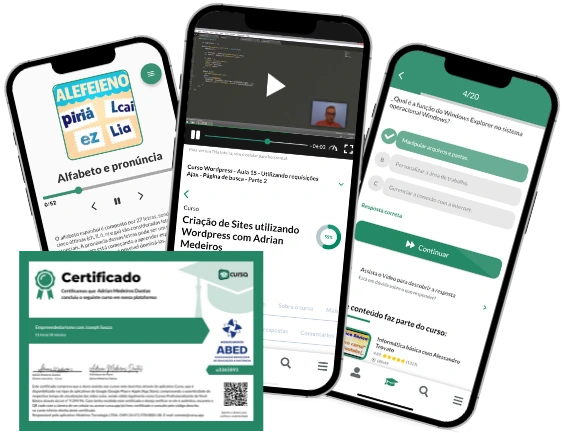
Carry knowledge in your pocket.
Download the Cursa app.
There are hundreds of free courses available, with a free certificate of completion that is saved in your mobile image gallery.
Download the app to access the Course Completion Certificate for Free.


+ 10 million
students

Free and Valid
Certificate

60 thousand free
exercises

4.8/5 rating in
app stores

Free courses in
video and ebooks