
Exercises
How well do you understand startup funding strategies? This quiz covers the key ways entrepreneurs finance and grow new ventures, including bootstrapping, equity funding, angel investment, venture capital, crowdfunding, convertible notes, and non-dilutive funding. Explore what investors look for, how much equity founders may exchange for capital, and the purpose of essential fundraising tools such as pitch decks. You will also test your understanding of funding stages like Series A and major exit milestones such as an IPO. Whether you are an aspiring founder, business student, or startup enthusiast, this quiz offers a practical introduction to the startup fundraising landscape.
Answer the questions below and check the explanation for each answer.
0/10 answered
Auto audio on: the next questions will be read aloud when you click Continue.
Most startups initially rely on personal savings or financial support from family and friends before seeking larger investments from venture capital or bank loans.
Angel investments are a form of equity funding where investors provide capital in exchange for ownership equity or convertible debt.
Crowdfunding allows startups to gauge market interest and engage with potential customers, providing valuable market validation.
Angel investors often look for equity stakes in the range of 10-20% in exchange for their early-stage investment in a company.
A convertible note is a short-term debt that converts into equity, often during a subsequent round of financing, providing flexibility to startups.
Venture capitalists provide funding to startups in exchange for equity ownership, usually looking for high potential returns on their investment.
Series A financing generally takes place in the growth stage to expand product development, distribution, and marketing efforts.
A pitch deck is a brief presentation that provides an overview of the business plan, vision, and financial targets, aimed at attracting investor interest.
Grants are non-dilutive funding sources, meaning they do not require the recipient to give up equity or ownership interests in the company.
An Initial Public Offering (IPO) refers to the process through which a private company offers shares to the public for the first time.
Free CourseOperations Management Course: Strategy, Planning, Quality and Inventory
5

(2)

32h22m

28 exercises
Free CourseBusiness Strategy
4.9
(12)
3h46m
24 exercises

Free CourseStartups Secrets
4.8
(12)
28h02m
14 exercises

Free CourseBusiness Fundamentals for Entrepreneurs
4.8
(5)
23h49m
50 exercises

Free CourseEntrepreneurship course
4.7

(10)
43h30m
43 exercises

Free CourseTechnology Entrepreneurship
4.7
(156)
7h19m
20 exercises

Free CourseLeadership and Team effectiveness
4.6
(19)
34h01m
33 exercises

Free CourseEntrepreneurship 101
4.6
(14)
1h15m
6 exercises
Thousands of online courses in video, ebooks and audiobooks.
To test your knowledge during online courses
Generated directly from your cell phone's photo gallery and sent to your email

Download our app via QR Code or the links below:.


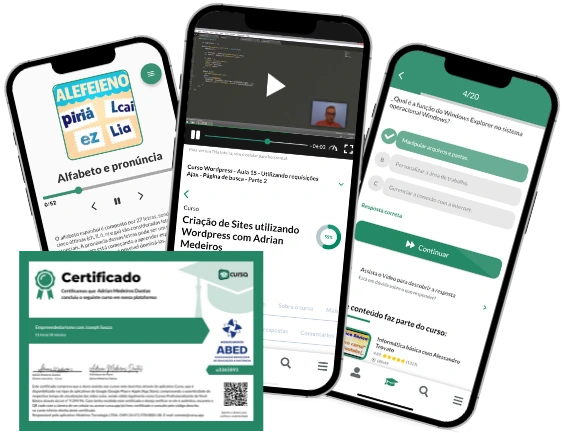
Carry knowledge in your pocket.
Download the Cursa app.
There are hundreds of free courses available, with a free certificate of completion that is saved in your mobile image gallery.
Download the app to access the Course Completion Certificate for Free.


+ 10 million
students

Free and Valid
Certificate

60 thousand free
exercises

4.8/5 rating in
app stores

Free courses in
video and ebooks