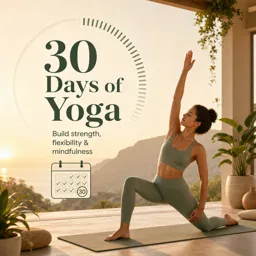
Mobility is the often-missed link between “being active” and “feeling good.” It’s the ability to move your joints through their full range of motion with control—so everyday actions like reaching overhead, squatting down, turning to look behind you, or getting up from the floor feel smooth instead of stiff.
Unlike flexibility (which focuses on passive range), mobility blends flexibility + strength + coordination. That combination matters because your body is more likely to “use” the range of motion you can control—leading to better posture, easier movement, and fewer aches that come from compensating.
Mobility training fits perfectly into a healthy-life exercise plan because it’s low equipment, scalable for beginners, and supportive of almost any activity—walking, running, lifting, sports, or simply being more comfortable during the day. If you’re exploring broader wellness topics, you can also browse https://cursa.app/free-online-health-courses and https://cursa.app/free-courses-health-online for structured lessons.
Why mobility training improves day-to-day well-being
Consistent mobility work improves movement efficiency. When your hips, ankles, thoracic spine, and shoulders move well, you reduce overload on the lower back, neck, and knees.
Common benefits:
- Easier stair climbing
- Smoother squatting
- Less shoulder and neck tension
- Better breathing mechanics
Mobility also enhances training quality by improving positioning and reducing compensation patterns.

A simple “daily 10” mobility routine (no equipment)
This routine is short, repeatable, and beginner-friendly. Move slowly and stay within a pain-free range.
1) Neck and upper-back reset (1 minute)
- Chin tucks (5–8 reps)
- Seated thoracic rotations (5 per side)
2) Shoulder circles + wall slides (2 minutes)
- Shoulder circles (8 each direction)
- Wall slides (6–10 reps, controlled)
3) Hip openers: 90/90 switches (2 minutes)
- 6–10 slow transitions
- Keep chest upright and controlled
4) Hip flexor lunge with reach (2 minutes)
- Half-kneeling position
- Light pelvic tuck
- 4–6 reps per side
5) Ankle rocks (2 minutes)
- Knee moves forward
- Heel stays down
- 8–12 reps per side
6) Controlled deep squat hold (1 minute)
- Use support if needed
- Keep heels grounded
- Breathe slowly
How to scale mobility
If you feel stiff
- Reduce range
- Move slower
- Use support (chair, wall)
- Focus on breathing
Consistency matters more than intensity.
If you’re already flexible
- Add control at end ranges
- Pause 2–3 seconds
- Use light resistance
Mobility = control, not just range.
Where mobility fits in your week
Treat mobility as “movement hygiene”:
- Before workouts: 5–10 minutes
- After workouts: light mobility for recovery
- Rest days: 10–20 minutes session
Combine with:
https://cursa.app/free-online-courses/strength-training
https://cursa.app/free-online-courses/yoga
https://cursa.app/free-online-courses/pilates

Common mobility mistakes
- Pushing into pain: stay within comfort
- Rushing movements: slow and controlled
- Ignoring asymmetries: give attention to weaker side
- Only stretching: add strength at end range
Progress markers
Look for real-life improvements:
- More comfortable squats
- Reduced stiffness
- Easier overhead reach
- Better walking mechanics
- Faster recovery
Next steps: build your habit
Choose:
- A time trigger (e.g., after brushing teeth)
- A minimum dose (5–10 minutes)
Consistency builds results over time.
Continue learning here:
https://cursa.app/free-courses-health-online