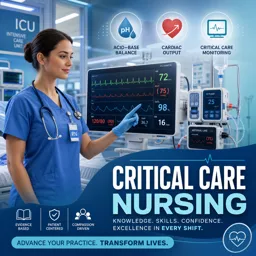
Nursing assessments get faster and more accurate when anatomy stops being “memorize and forget” and becomes a practical map for what you see, hear, and measure at the bedside. Instead of trying to recall isolated facts, you can learn anatomy by body systems and connect each structure to common symptoms, vital signs, and nursing interventions. This approach strengthens clinical judgment, improves communication with the care team, and helps you spot red flags earlier.
If you’re building skills through free learning, start by bookmarking:
https://cursa.app/free-courses-health-online
https://cursa.app/free-online-health-courses
Why anatomy matters in everyday nursing assessments
Anatomy is the “why” behind assessment findings. When you understand where structures sit and how they function, you can interpret what you observe instead of just recording it.
For example:
- Lung anatomy helps you interpret abnormal breath sounds
- Cardiac flow explains edema and shortness of breath
- Structural knowledge improves precise clinical reporting
This leads to clearer communication and better decision-making.

Learn anatomy by systems (and attach it to real nursing tasks)
Use this structure:
Structures → Function → Assessment Cues → Nursing Actions
Respiratory system: airways, lungs, and gas exchange
- Structures: airway, bronchi, alveoli, diaphragm
- Assessment cues: respiratory rate, effort, lung sounds, oxygen saturation
- Nursing actions: positioning, oxygen monitoring, secretion management
Cardiovascular system: pump, pipes, and perfusion
- Structures: heart, vessels, capillaries
- Assessment cues: pulse, blood pressure, edema, capillary refill
- Nursing actions: monitor vitals, track fluids, assess perfusion
Nervous system: baseline and changes
- Structures: brain, spinal cord, nerves
- Assessment cues: orientation, pupils, speech, motor function
- Nursing actions: neuro checks, fall prevention, rapid escalation
Renal and urinary system: filtration and balance
- Structures: kidneys, ureters, bladder
- Assessment cues: urine output, color, retention signs
- Nursing actions: I&O monitoring, hydration support, early detection of decline
Turn memorization into pattern recognition
1) Map symptoms to anatomy
Example: shortness of breath → lungs, heart, diaphragm
2) Use micro-cases
Short scenarios help build clinical reasoning quickly.
3) Practice spatial learning
Sketching improves recall and understanding of relationships.
Build a learning path that supports certification
Complement anatomy with:
- https://cursa.app/free-online-courses/nursing-fundamentals
- https://cursa.app/free-online-courses/hipaa-compliance
- https://cursa.app/free-online-courses/dosage-calculation
- https://cursa.app/free-online-courses/critical-care-nursing
A quick bedside checklist
Use this during assessments:
- Location: where is the issue?
- Function: what should be happening?
- Compensation: how is the body reacting?
- Trends: what changed?
- Risk: what’s the worst-case scenario?

Keep anatomy practical
The goal is not memorization—it’s clinical clarity.
Learn:
- One system at a time
- Connect to real tasks
- Practice with scenarios
This builds:
- Faster assessments
- Better communication
- Safer patient care
Conclusion
When anatomy becomes a practical tool instead of abstract knowledge, nursing assessments become sharper, faster, and more reliable. By connecting systems to real patient care tasks, you build confidence and improve outcomes at the bedside.