Nursing work moves fast: you assess, prioritize, document, communicate, and deliver care—often all within the same hour. That’s why the most effective online learning for nurses isn’t just “what to know,” but “what to do next” at the bedside. This guide lays out a practical learning roadmap across core nursing topics—anatomy, patient care, HIPAA, and professional responsibility—so you can build confidence step by step and earn certifications that actually reflect real clinical readiness.
1) Start with anatomy and physiology—then immediately connect it to assessment
Anatomy and physiology become far more memorable when you tie them to what you see, hear, and measure in patient assessment. Instead of trying to memorize every structure, focus on clinical anchors:
- Airway and breathing patterns
- Cardiovascular perfusion and blood pressure
- Renal function and urine output
- Neurological status and level of consciousness
A strong approach is learning each system alongside its assessment cues—what abnormal findings look like and what they indicate. This creates a mental map you can use during assessments and handoffs.
2) Build a “patient care stack”
Core nursing skills repeat across all settings. Organize them into a structured stack:
- Safety: fall prevention, infection control, emergency basics
- Assessment: vitals, pain, respiratory status, intake/output
- Comfort: hygiene, positioning, communication
- Documentation: clear charting and SBAR handoffs
This transforms learning into a repeatable workflow.

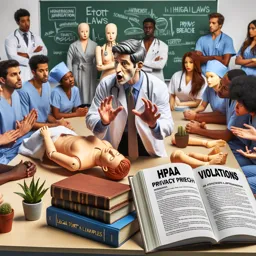
3) Learn HIPAA as a daily habit
HIPAA is not just theory—it’s constant decision-making:
- Where you speak about patients
- How you handle documents
- What you share and with whom
- How you protect devices and data
Practice scenario-based thinking:
- “Can I share this information?”
- “Is this the minimum necessary?”
4) Strengthen clinical judgment with prioritization frameworks
Use practical frameworks:
- ABCs: Airway, Breathing, Circulation
- Maslow: hierarchy of needs
- Acute vs. chronic: what changed
- Stable vs. unstable: who needs care first
Train with mini-scenarios:
“What do I do in the next 5 minutes?”
5) Earn certifications strategically
Build your progression:
- Start: foundational nursing knowledge
- Add: patient care and safety
- Include: HIPAA and professionalism
- Expand: specialized areas
This creates both competence and a strong resume narrative.
6) Map your learning path with targeted courses
Explore structured learning:
Recommended paths:
- https://cursa.app/free-online-courses/nursing-fundamentals
- https://cursa.app/free-online-courses/hipaa-compliance
- https://cursa.app/free-online-courses/critical-care-nursing
- https://cursa.app/free-online-courses/virology
- https://cursa.app/free-online-courses/dosage-calculation

7) Study in clinically realistic cycles
Use short, effective cycles:
- 15–20 min: learn a concept
- 10 min: apply to a scenario
- 5 min: document and report
This builds real-world readiness, not just memory.
Conclusion
The best nursing learning connects knowledge directly to action. When you combine anatomy, patient care routines, clinical judgment, and structured certifications, you don’t just study—you build a reliable bedside mindset.