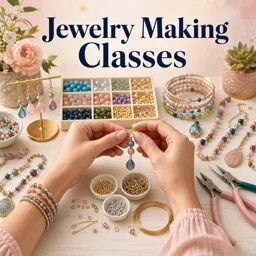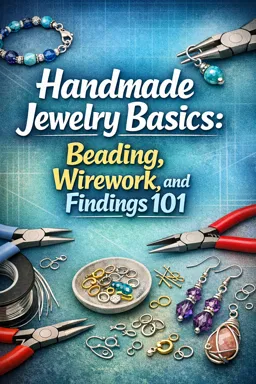


Free ebook on handmade jewelry basics: learn beading, wirework, findings, crimping, loops, sizing, and durable finishing techniques.
Free ebook content
-

Handmade Jewelry Basics: Tools, Workstation Setup, and Safe Handling
+ Exercise: When using flush cutters to trim wire, which setup best helps produce a neat kept end and improves safety?
-
Materials for Handmade Jewelry: Beads, Wire, Cord, and Their Use Cases
+ Exercise: A bracelet will be worn daily and will experience frequent rubbing and movement. Which stringing medium is the best match for durability and comfortable drape?
-
Jewelry Findings 101: Jump Rings, Clasps, Headpins, Ear Wires, and Connectors
+ Exercise: You’re designing a bracelet and want the clasp connection to be as secure as possible at a high-stress point. Which choice best improves security at that connection?


-
Correctly Opening and Closing Jump Rings for Durable Connections
+ Exercise: Which approach best helps ensure a jump ring closes with a tight, durable seam?
-
Stringing Basics: Measuring, Layout, Spacing, and Professional Finishes
+ Exercise: When designing a bracelet with a focal bead, which approach best helps keep the focal from rotating away from the top of the wrist?
-
Crimping Technique: Secure Ends with Crimp Beads, Covers, and Wire Guardians
+ Exercise: When using two-stage crimping pliers, what is the purpose of the first notch compared with the second notch?
-
Wirework Fundamentals: Cutting, Straightening, Work-Hardening, and Gauge Choice
+ Exercise: When making a flush cut with flush cutters, how should you orient the cutter to leave the kept piece with the cleanest, least-sharp end?
-
Making Simple Loops and Wrapped Loops with Headpins and Eyepins
+ Exercise: When making a wrapped loop, which approach best improves strength and keeps the loop consistent and snag-free?
-
Basic Wire Wrapping to Connect Components and Create Simple Links
+ Exercise: When creating a wrapped link, which action most directly helps prevent gaps between connected components?
-
Earrings, Bracelets, and Necklaces: Sizing, Comfort, and Wear Testing
+ Exercise: During wear-testing, you notice a necklace clasp keeps migrating toward the front. What adjustment best addresses this comfort issue?
-
Finishing, Quality Control, and Repair-Friendly Construction for Handmade Jewelry
+ Exercise: When finishing a jump ring connection, what combination of checks and adjustment best ensures the seam won’t snag and stays secure over time?
About the free ebook
Handmade Jewelry Basics: Beading, Wirework, and Findings 101
Create polished handmade jewelry with practical skills for working with beads, wire, cord, and essential findings. This free ebook explains how to set up a safe, efficient workspace and select materials that suit your design and intended wear.
Build dependable jewelry-making techniques
Learn the purpose of jump rings, clasps, headpins, ear wires, connectors, crimp beads, covers, and wire guardians. Clear guidance helps you make durable connections, including the correct twisting motion for opening and closing jump rings without weakening their shape.
- Plan stringing layouts with balanced spacing and accurate measurements.
- Secure strand ends with crimping methods designed for neat, reliable finishes.
- Choose wire gauges and prepare wire by cutting, straightening, and work-hardening it.
- Make simple loops, wrapped loops, component links, and basic wire-wrapped connections.
Design for comfort and lasting wear
Apply practical sizing guidance for earrings, bracelets, and necklaces, then evaluate comfort and movement through wear testing. The ebook also introduces quality-control checks and repair-friendly construction so your pieces are easier to maintain and more enjoyable to wear.
Useful skills for handmade collections
Whether you are creating personal accessories, gifts, or a small product line, these foundational methods support cleaner finishes, stronger assemblies, and more intentional jewelry designs.
What is the correct way to open and close a jump ring?
Twist the two ends sideways apart and back together; do not pull them outward, which can distort the ring.
What wire gauge should I use for handmade jewelry?
Choose gauge by purpose: thicker wire supports structure, while thinner wire is better for wrapping and delicate links.
How do crimp beads secure a beaded necklace or bracelet?
A crimp bead is compressed around beading wire near the clasp to lock the strand in place and create a finished end.
This ebook includes:

11 content chapters

Digital certificate of course completion (Free)

Exercises to train your knowledge

100% free, from content to certificate
Ready to get started?

 recommended
In the app you will also find...

Over 5,000 free courses
Programming, English, Digital Marketing and much more! Learn whatever you want, for free.

Study plan with AI
Our app's Artificial Intelligence can create a study schedule for the course you choose.

From zero to professional success
Improve your resume with our free Certificate and then use our Artificial Intelligence to find your dream job.
You can also use the QR Code or the links below.