
Free ebook for absolute beginner clarinet players: learn setup, reed care, tone, fingerings, music reading, and maintenance.
Free ebook content
-

Clarinet Setup for Absolute Beginners: Parts, Assembly, and Safe Handling
+ Exercise: When joining the upper and lower joints, which bridge-key alignment helps the keys move freely?
-
Mouthpiece and Reed Basics for Beginners: Choosing, Placing, and Caring
+ Exercise: While playing a medium-volume note, you notice you must bite to keep the sound steady and you get tired quickly. Which reed adjustment best matches these symptoms?
-
Embouchure Fundamentals on Clarinet: Comfortable Seal and Control
+ Exercise: If you notice air leaking from the corners of your mouth during the small “sip” self-check, what adjustment should you make to improve the seal?
-
Breath Support for Clarinet Beginners: Airflow, Posture, and Starting Notes Cleanly
+ Exercise: When starting a clarinet note cleanly, what sequence best supports a clear, immediate sound?


-
First Fingerings on Clarinet: Left-Hand Setup and the Lower Register
+ Exercise: When switching between lower-register G and F while keeping the tone stable, what should change in the left hand?
-
Reading Music for Clarinet Beginners: Staff, Treble Clef, and Simple Rhythms
+ Exercise: In 4/4 time, what does the time signature tell you about a measure?
-
Building a Stable Clarinet Tone: Long Tones and Consistent Low Notes
+ Exercise: When practicing crescendo/decrescendo on a single low note, what should you focus on to change volume without changing pitch or tone quality?
-
Smooth Transitions Between Notes: Finger Coordination and Clean Connections
+ Exercise: When practicing a tongued note change on clarinet, what timing helps prevent squeaks and wrong notes?
-
Avoiding Squeaks and Leaks on Clarinet: Practical Diagnostics for Beginners
+ Exercise: A clarinet note is consistently airy or delayed even though your reed setup feels correct. Which diagnostic approach best matches this symptom pattern?
-
Clarinet Maintenance for Beginners: Cleaning, Swabbing, and Preventing Damage
+ Exercise: A clarinet joint feels stuck when you try to disassemble it. What is the safest beginner response?
-
Putting It Together: Beginner Clarinet Pieces Using Tone, Fingerings, and Reading Skills
+ Exercise: While practicing a beginner clarinet piece that includes rests, what should you do during a rest to keep the rhythm and tone quality consistent?
About the free ebook
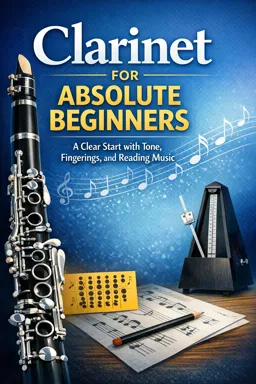
Clarinet for Absolute Beginners: A Clear Start with Tone, Fingerings, and Reading Music
Start playing clarinet with a practical, reassuring foundation. This free ebook guides new players through the essential habits that help produce a clear sound, read simple music, and play early notes with greater confidence.
Build healthy playing habits from the first note
Learn how to assemble and hold the clarinet safely, position the mouthpiece and reed, and create a comfortable embouchure. Clear explanations of posture and breath support help you use steady air rather than excess pressure, making clean note starts and a more reliable tone easier to achieve.
Understand fingerings and music notation
Develop left-hand coordination and begin in the lower register with approachable fingerings. The ebook also introduces the treble clef, staff, note placement, and simple rhythms so that written music becomes a useful guide rather than a barrier.
Improve tone, connections, and reliability
Focused practice ideas for long tones, low notes, and note changes support a stable sound. Discover practical ways to identify common causes of squeaks, airy notes, and unwanted interruptions, including issues with fingers, reed placement, airflow, and possible instrument leaks.
Care for your instrument and make music
Good clarinet care protects both the instrument and your progress. Learn simple cleaning and swabbing routines, then apply your developing tone, fingering, and reading skills to beginner-friendly pieces.
This ebook is designed as a clear first step toward enjoyable, consistent clarinet playing.
How do I stop my clarinet from squeaking?
Check that all tone holes are fully covered, the reed is aligned, and your air is steady without biting the mouthpiece.
What strength reed should a new clarinet player use?
Many beginners start with a soft reed, often strength 1.5 or 2, depending on the mouthpiece and comfort.
Why are my low clarinet notes airy or hard to play?
Low notes need complete finger coverage, a well-sealed embouchure, steady air, and pads that close properly.
This ebook includes:

11 content chapters

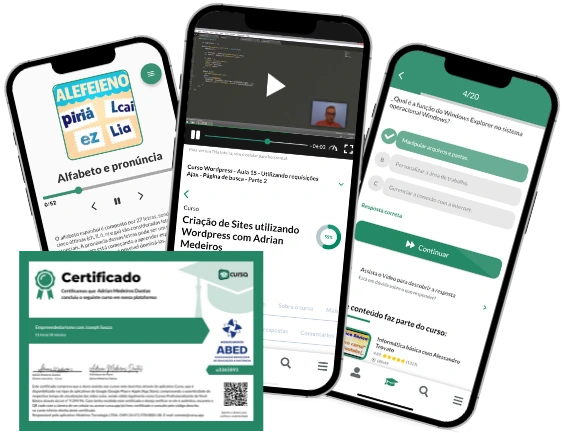
Digital certificate of course completion (Free)

Exercises to train your knowledge

100% free, from content to certificate
Ready to get started?

 recommended
In the app you will also find...

Over 5,000 free courses
Programming, English, Digital Marketing and much more! Learn whatever you want, for free.

Study plan with AI
Our app's Artificial Intelligence can create a study schedule for the course you choose.

From zero to professional success
Improve your resume with our free Certificate and then use our Artificial Intelligence to find your dream job.
You can also use the QR Code or the links below.