A beginner adult player is generally advised to start with a softer reed, typically around size 2.

Duration of the online course: 1 hours and 7 minutes
4

(1)
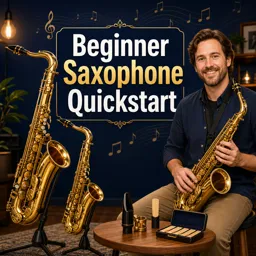
Build a solid saxophone foundation fast with this free online course—setup, clean attacks, and your first notes plus a certificate-ready finish.
Starting saxophone can feel intimidating: reeds, mouthpieces, squeaks, and the challenge of producing a clear first note. This free beginner quickstart is designed to remove that friction and get you playing with confidence from day one. You will learn how to set up your mouthpiece the right way, choose a sensible reed strength for a new adult player, and avoid common beginner issues that can slow your progress.
A great sound is not only about breath; it is also about control. The lessons guide you through how to articulate with the tongue so notes begin cleanly instead of exploding into airy attacks or accidental honks. You will understand what the tongue actually does on the saxophone and how to use it musically, whether you play alto or tenor. By focusing on simple, repeatable technique, you will build habits that translate directly into better tone, rhythm, and phrasing later on.
Once your setup and articulation feel steady, you will move into playing your first group of notes, learning practical fingerings and how to coordinate both hands without tension. The course helps you recognize which notes are easier to produce and why, making practice feel logical instead of random. As your comfort grows, you will take the next step into the second octave, learning how to transition from the lower register into the upper register using the key that makes that jump possible.
This is an ideal online course for absolute beginners returning to music, self-taught players who want a cleaner start, or anyone who has a saxophone at home and wants a clear plan. With short, focused videos and quick checks that reinforce what you just learned, you will leave with a reliable baseline technique and a confident path to continue practicing, performing, or earning a certificate of completion if you choose.

1 hours and 7 minutes of online video course

Digital certificate of course completion (Free)

Exercises to train your knowledge

100% free, from content to certificate
What saxophone reed size is recommended for a beginner adult player?
A beginner adult player is generally advised to start with a softer reed, typically around size 2.
How do you start saxophone notes cleanly without a breathy attack?
Use tonguing: lightly touch the reed with the tongue, then release it as you begin blowing.
Which key moves a saxophone from the lower register to the upper octave?
The octave key is used to move from lower-register notes to their upper-octave equivalents.
Ready to get started?Download the app and get started today.
Install the app now
to access the course
Over 5,000 free courses
Programming, English, Digital Marketing and much more! Learn whatever you want, for free.

Study plan with AI
Our app's Artificial Intelligence can create a study schedule for the course you choose.

From zero to professional success
Improve your resume with our free Certificate and then use our Artificial Intelligence to find your dream job.
You can also use the QR Code or the links below.



Free CourseSaxophone to beginners - stage 1 -
4.9
(7)

1h27m

14 exercises
Free CourseSaxophone to beginners - stage 2 -
4.2
(6)
1h14m
10 exercises
Free CourseSaxophone course to Beginners
New
47m
5 exercises
Free CourseJazz Saxophone for Beginners
New
57m
10 exercises
Free CourseClarinet for beginners
New
2h45m
17 exercises
Free CourseSaxophone for beginners
New
1h32m
23 exercises
Free CourseBeginner Clarinet Lessons: Assembly, Embouchure, Fingerings and First Notes
New
55m
8 exercises
Carry knowledge in your pocket.
Download the Cursa app.
There are hundreds of free courses available, with a free certificate of completion that is saved in your mobile image gallery.
Download the app to access the Course Completion Certificate for Free.


+ 10 million
students

Free and Valid
Certificate

60 thousand free
exercises

4.8/5 rating in
app stores

Free courses in
video and ebooks