Cargo is Rust’s build system and package manager. It creates projects, builds and runs code, manages dependencies, and can run tests.

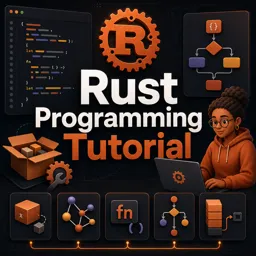
Duration of the online course: 2 hours and 14 minutes
New
Build safer, faster apps with this free Rust programming course—learn Cargo, types, functions, and memory management for modern systems development.
Unlock the ability to write fast, reliable software by learning Rust, a modern programming language built for performance without sacrificing safety. This free online course is designed for learners who want practical Rust skills for systems development, backend services, command-line tools, and performance-critical applications. Whether you are coming from Python, Java, C, or C++, you will see how Rust’s approach to correctness helps you avoid common bugs while still producing efficient, low-level code.
You will begin with the fundamentals and quickly get comfortable using the Rust toolchain. You will work with Cargo to create and manage projects, run builds, handle dependencies, and develop in a workflow that feels professional from day one. Along the way, you will pick up good habits with formatting tools so your code stays clean, consistent, and easier to maintain as projects grow.
As you progress, you will learn core language concepts such as variables, constants, and shadowing, plus the data types that form the backbone of Rust programs. You will practice taking console input, performing arithmetic, and handling type casting with confidence, building the kind of accuracy that matters when correctness and speed both count. The course also guides you through writing expressive code with control flow and functions, reinforcing how Rust treats expressions and returns in a way that can make programs feel both concise and predictable.
A major focus is understanding memory, especially the difference between stack and heap allocation and how to think about dynamically sized data. By strengthening your intuition around memory management, you will be better prepared to write Rust code that is efficient, stable, and easier to reason about than many traditional approaches. Short exercises throughout help you check understanding and turn concepts into skill.
By the end, you will have a solid foundation to continue into more advanced Rust topics and start applying Rust confidently in real projects, interviews, and day-to-day development work.

2 hours and 14 minutes of online video course

Digital certificate of course completion (Free)

Exercises to train your knowledge

100% free, from content to certificate
What is Cargo in Rust and what does it do?
Cargo is Rust’s build system and package manager. It creates projects, builds and runs code, manages dependencies, and can run tests.
How does Rust improve memory safety compared with C or C++?
Rust uses ownership, borrowing, and compile-time checks to prevent many memory errors, such as null-pointer dereferences and data races, without needing a garbage collector.
Where is dynamically sized data stored in Rust?
Dynamically sized data is typically stored on the heap, often through types such as String, Vec
Ready to get started?Download the app and get started today.
Install the app now
to access the course
Over 5,000 free courses
Programming, English, Digital Marketing and much more! Learn whatever you want, for free.

Study plan with AI
Our app's Artificial Intelligence can create a study schedule for the course you choose.

From zero to professional success
Improve your resume with our free Certificate and then use our Artificial Intelligence to find your dream job.
You can also use the QR Code or the links below.



Free CourseLearn Python
5

(3)

13h00m

17 exercises
Free CourseJava Programming
5
(4)
9h15m
48 exercises
Free CourseRuby on Rails
5
(7)
9h39m
34 exercises
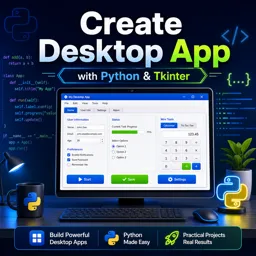
Free CourseCreate Desktop App
5
(4)
5h33m
30 exercises
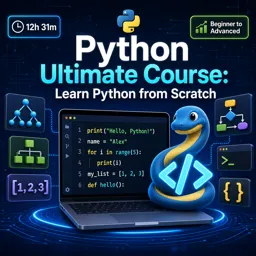
Free CoursePython Ultimate Course: Learn Python from Scratch
5
(1)
12h31m
42 exercises
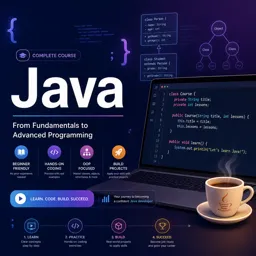
Free CourseJava
4.8
(56)
22h17m
28 exercises
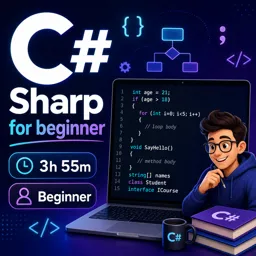
Free CourseC# Sharp for beginner
4.8
(37)
3h55m
15 exercises
Free CourseC++ as your first Programming Language
4.8
(108)
5h12m
23 exercises
Free CourseJava for beginners
4.8
(183)
26h50m
49 exercises
Free CourseComputer science and Java
4.8
(65)
9h15m
31 exercises
Carry knowledge in your pocket.
Download the Cursa app.
There are hundreds of free courses available, with a free certificate of completion that is saved in your mobile image gallery.
Download the app to access the Course Completion Certificate for Free.


+ 10 million
students

Free and Valid
Certificate

60 thousand free
exercises

4.8/5 rating in
app stores

Free courses in
video and ebooks