
Exercises
Explore the fundamentals of robotics sensors with this quiz covering the devices that help robots perceive and respond to their surroundings. Test your understanding of obstacle and proximity detection, directional sensing, acceleration, angular movement, light measurement, metal detection, gas monitoring, vibration sensing, and moisture detection. Ideal for students, beginners, and robotics enthusiasts, these questions reinforce how common sensors collect environmental and motion data for navigation, safety, control, and automation.
Answer the questions below and check the explanation for each answer.
0/10 answered
Auto audio on: the next questions will be read aloud when you click Continue.
Ultrasonic sensors are commonly used in robotics to detect obstacles because they measure the distance to an object using sound waves, providing accurate detection without physical contact.
A compass sensor is used to determine the Earth's magnetic field direction, allowing a robot to know its orientation relative to the magnetic north, which is vital for navigation.
An accelerometer measures acceleration forces, including static forces like gravity, and dynamic forces caused by movement, helping robots understand their speed and changes in motion.
A photoresistor, or light-dependent resistor, changes its resistance based on the light level it is exposed to, making it suitable for detecting light intensity in robotic applications.
Inductive sensors are used to detect metals without contact. They work by generating an electromagnetic field and detecting any changes caused by the presence of metallic objects.
A gyroscope is crucial for detecting rotation or angular movement. It measures the rate of rotation around an axis, helping robots maintain balance or navigation control.
Gas sensors are used to detect various gases in the environment. They are essential for applications like environmental sensing, air quality monitoring, and safety.
Vibration sensors detect mechanical oscillations and vibrations. They have applications in detecting machinery faults, security systems, and interaction sensing in robotics.
Proximity sensors detect the presence of objects nearby without physical contact. They use various technologies, such as infrared, ultrasonic, or magnetic fields, for detection.
A humidity sensor measures the moisture content in the air. They are useful for applications in agriculture, climate control systems, and environmental monitoring in robotics.

Free CourseArduino tutorial for beginners
5

(2)

12h28m

24 exercises

Free CourseArduino Masterclass in 90 mins
5
(3)
1h25m
6 exercises
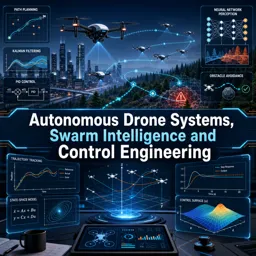
Free CourseAutonomous Drone Systems, Swarm Intelligence and Control Engineering
5
(1)
27h57m
49 exercises
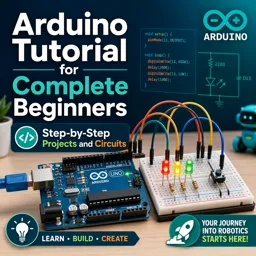
Free CourseArduino Tutorial for Complete Beginners: Step-by-Step Projects and Circuits
5
(1)
2h11m
15 exercises
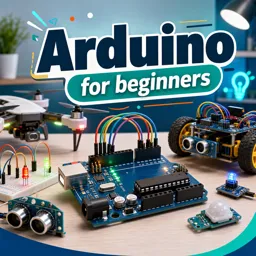
Free CourseArduino for beginners
4.8

(8)
4h04m
9 exercises
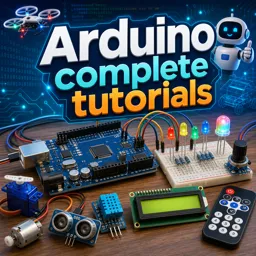
Free CourseArduino complete tutorials
3.9
(9)
32h21m
35 exercises
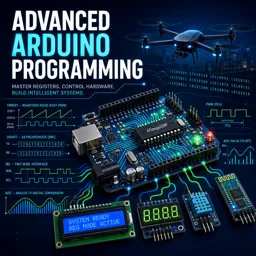
Free CourseAdvanced Arduino Programming
1
(1)
5h41m
36 exercises
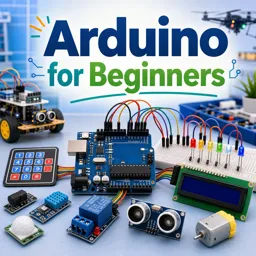
Free CourseArduino for Beginners
New
9h53m
39 exercises
Thousands of online courses in video, ebooks and audiobooks.
To test your knowledge during online courses
Generated directly from your cell phone's photo gallery and sent to your email

Download our app via QR Code or the links below:.



Carry knowledge in your pocket.
Download the Cursa app.
There are hundreds of free courses available, with a free certificate of completion that is saved in your mobile image gallery.
Download the app to access the Course Completion Certificate for Free.


+ 10 million
students

Free and Valid
Certificate

60 thousand free
exercises

4.8/5 rating in
app stores

Free courses in
video and ebooks