
Exercises
Explore the mental shortcuts and systematic thinking errors that shape everyday judgments and choices. This quiz covers key cognitive biases in decision-making, including confirmation bias, self-serving bias, the gambler’s fallacy, hindsight bias, anchoring, status quo bias, authority bias, base rate neglect, and the planning fallacy. Challenge yourself to identify how beliefs, first impressions, past outcomes, authority, and uncertainty can influence reasoning. Ideal for students, psychology enthusiasts, and anyone seeking to make more informed, objective decisions.
Answer the questions below and check the explanation for each answer.
0/10 answered
Auto audio on: the next questions will be read aloud when you click Continue.
The tendency to favor information that confirms one's pre-existing beliefs or hypotheses is known as confirmation bias. It is a psychological phenomenon where people give more weight to evidence that supports their existing views and disregard evidence that contradicts them, leading to biased decision-making and reinforcing existing beliefs.
The fundamental attribution error is a cognitive bias that leads people to overestimate the influence of personal characteristics and underestimate situational factors when assessing someone else's behavior. It causes individuals to attribute others' successes or failures more to their personal traits rather than external circumstances.
The Gambler's fallacy is a cognitive bias where people incorrectly believe that past events influence future probabilities in random processes. For example, after several coin tosses resulting in heads, one might wrongly expect tails to be 'due'. This fallacy arises because individuals falsely assume that outcomes in a random sequence should equal out in the short term.
The tendency to seek, interpret, and remember information in a way that confirms one's preconceptions is known as confirmation bias. This cognitive bias affects how we gather and recall information, often leading us to focus on evidence that supports our beliefs while disregarding contradictory evidence.
The phenomenon described is known as hindsight bias. It occurs when individuals believe they predicted an event's outcome after it has happened, even though it was not foreseeable. This bias gives a false sense of predictability and insight.
The Anchoring bias is the cognitive bias that leads people to rely excessively on the first piece of information they receive when making subsequent judgments or decisions. This initial piece of information is known as the 'anchor,' and it can significantly influence decision-making and judgments, even when it is irrelevant or misleading.
The correct answer is Status quo bias. This term refers to a person's preference to keep things the same by doing nothing or by sticking with a decision made previously. It involves a resistance to change, often because the current state of affairs is seen as a safer or more comfortable option.
The term Authority bias describes the cognitive bias where individuals tend to attribute greater accuracy to the opinion of an authority figure, irrespective of the content of their opinion. This bias leads people to trust and agree with authority figures without critical evaluation.
The Planning fallacy is a cognitive bias where individuals underestimate the time, costs, and risks associated with future tasks, while overestimating the benefits. It often leads to projects taking longer and costing more than initially expected.
Free CourseIntro to Psychology
5

(7)

3h28m

18 exercises
Free CourseIntroduction to Psychology Lecture Videos
5
(2)
16h21m
34 exercises
Free CourseThe Future of Neuromarketing
5
(1)
1h01m
6 exercises
Free CourseIntroduction to Psychology
4.9
(102)
18h43m
30 exercises
Free CourseIntroduction to Psychology
4.9
(7)
18h43m
20 exercises
Free CourseChild and Adolescent Mental Health
4.8
(26)
46m
21 exercises
Free CourseCognitive Psychology
4.8
(5)
21h18m
38 exercises
Free CoursePsychology Class
4.8
(127)
12h34m
22 exercises
Thousands of online courses in video, ebooks and audiobooks.
To test your knowledge during online courses
Generated directly from your cell phone's photo gallery and sent to your email

Download our app via QR Code or the links below:.


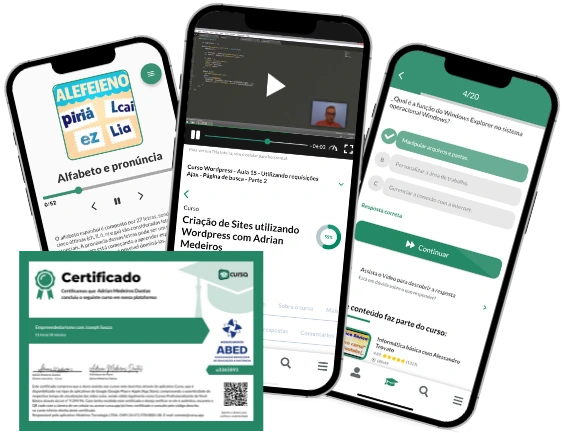
Carry knowledge in your pocket.
Download the Cursa app.
There are hundreds of free courses available, with a free certificate of completion that is saved in your mobile image gallery.
Download the app to access the Course Completion Certificate for Free.


+ 10 million
students

Free and Valid
Certificate

60 thousand free
exercises

4.8/5 rating in
app stores

Free courses in
video and ebooks