
Exercises
This quiz explores how energy density and portion size influence calorie intake and weight management. You will calculate calories per gram, interpret food labels and graphs, compare foods by volume, and examine how water content, dietary fat, serving containers, soups, beverages, and pre-portioned foods affect eating behavior. The questions emphasize practical methods for creating satisfying meals while maintaining an appropriate calorie intake.
Answer the questions below and check the explanation for each answer.
0/17 answered
Auto audio on: the next questions will be read aloud when you click Continue.
Energy density is calculated as calories divided by food weight in grams. Lower-energy-density foods provide fewer calories for a given weight of food.
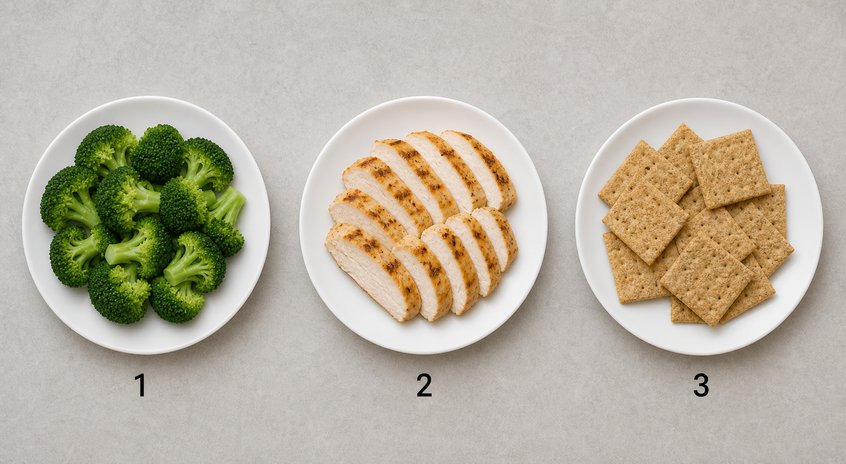
Steamed broccoli contains a large proportion of water and relatively few calories. At the same weight, it generally has a lower energy density than chicken or dry crackers.
Water adds weight and volume but no calories. Foods naturally rich in water, such as vegetables, fruit, and broth-based soups, therefore tend to have lower energy density.
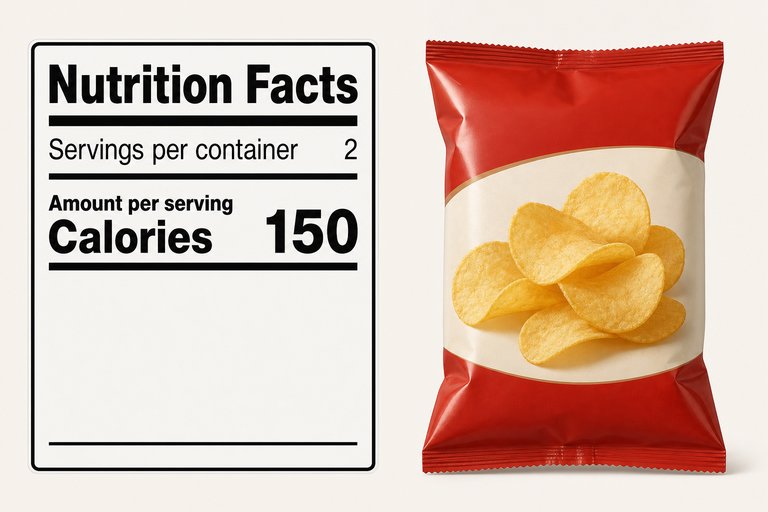
The package contains two servings at 150 calories each. Eating the whole package provides 2 × 150 = 300 calories.
Fat supplies about 9 calories per gram, more than carbohydrate or protein. Even a modest amount of oil can therefore add substantial calories without much food weight.
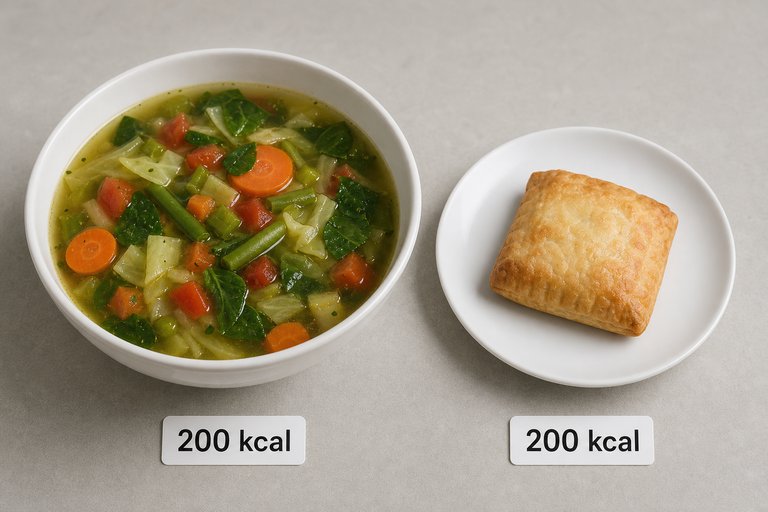
A broth-based soup can occupy a large volume because much of its weight comes from water. This lowers its calories per gram compared with a small, dry pastry.
A low-energy-density soup adds volume before the main course and may promote fullness. When it does not add excessive calories, this can reduce total energy consumed during the meal.
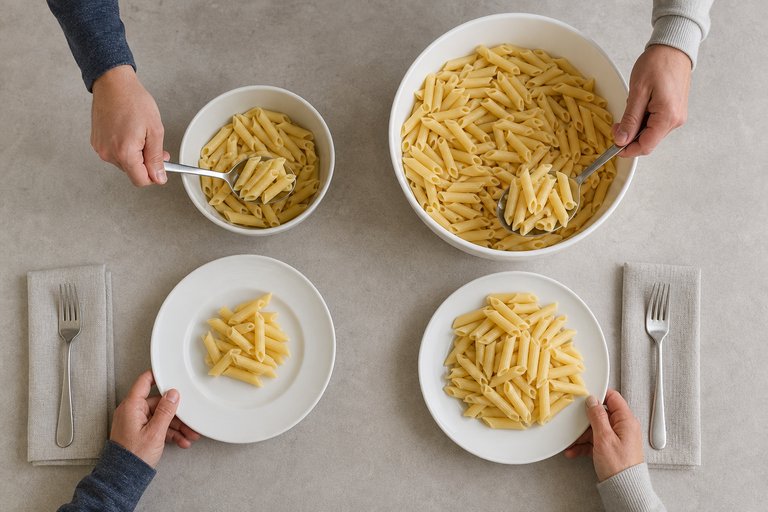
Container size can influence how much people serve themselves. A larger bowl may establish a larger visual norm, leading to greater intake even when hunger has not changed.
Non-starchy vegetables add water-rich food volume for relatively few calories. Replacing part of an energy-dense dish with them can lower the meal's overall calories per gram.
Divide calories by weight: 240 ÷ 300 = 0.8 calories per gram. The serving size does not need to be converted when both values describe the same meal.
The portion-size effect is the tendency to eat more when more food is served. People often fail to reduce later intake enough to offset all of those additional calories.
Fresh grapes contain substantial water, so a given number of calories is distributed across a larger food weight and volume than in many dry or fatty snacks.
Calories consumed in beverages may be less filling for some people than calories in solid food, and later intake may not fully compensate for them. Replacing them can therefore lower total intake.
Separating part of an oversized meal before eating establishes a planned portion and reduces repeated exposure to the remaining food. The boxed portion can be saved for another meal.
Energy density does not determine whether a food is healthy. Nuts can contribute valuable nutrients, but measuring a portion helps account for their substantial calories.
The upward trend indicates that energy consumed rises as the served portion becomes larger. The graph illustrates the portion-size effect without proving that every individual responds identically.
Vegetables can lower a dish's overall energy density by adding water-rich volume, while measuring items such as oils, cheese, or dressings directly controls concentrated calorie sources.
Free CourseWeight Loss Made Easy
5

(3)

1h02m

6 exercises
Free CourseLow-Cost, High-Nutrition Eating for Graduate and Professional Students
5
(1)
2h06m
8 exercises
Free CourseDairy and Food Processing Technology: Preservation, Quality and Packaging
5
(4)
31h03m
27 exercises
Free CourseThe Power of Nutrition
5
(6)
37m
1 exercises
Free CourseHuman Metabolism
5
(2)
14h23m
31 exercises
Free CourseThe Science of Nutrition
5
(3)
1h47m
15 exercises
Free CourseMediterranean Diet meal prep
5
(2)
28m
6 exercises
Free CourseSports Nutrition
4.9
(9)
8h30m
36 exercises
Thousands of online courses in video, ebooks and audiobooks.
To test your knowledge during online courses
Generated directly from your cell phone's photo gallery and sent to your email

Download our app via QR Code or the links below:.


Carry knowledge in your pocket.
Download the Cursa app.
There are hundreds of free courses available, with a free certificate of completion that is saved in your mobile image gallery.
Download the app to access the Course Completion Certificate for Free.


+ 10 million
students

Free and Valid
Certificate

60 thousand free
exercises

4.8/5 rating in
app stores

Free courses in
video and ebooks