
Exercises
Challenge your understanding of lean logistics process optimization with this quiz on the principles and tools used to create efficient, customer-focused supply chains. Explore key topics including waste reduction, value stream mapping, root-cause analysis, Just-In-Time delivery, Kanban systems, pull production, standardization, automation, and team empowerment. Whether you are a logistics student, supply chain professional, or operations manager, this quiz helps you assess your knowledge of how lean methods improve flow, reduce costs, minimize delays, and deliver value.
Answer the questions below and check the explanation for each answer.
0/10 answered
Auto audio on: the next questions will be read aloud when you click Continue.
The primary objective of lean logistics is to eliminate waste and improve efficiency throughout the logistics process, ensuring value delivery with minimal resources.
Continuous improvement, also known as Kaizen, is a fundamental principle of lean logistics. It focuses on making iterative changes to enhance processes and eliminate waste.
Value stream mapping is a lean technique used to visualize the entire flow of materials and information needed to bring a product or service to the customer, identifying areas of waste.
The 5 Whys is a tool used in lean logistics to explore the cause-and-effect relationships underlying a particular problem, helping to identify the root cause of waste.
Just-In-Time (JIT) is a strategy in lean logistics where materials and products are produced and delivered to meet demand exactly when they are needed, minimizing waste.
Standardization in lean logistics leads to consistent and efficient processes, reducing variability and ensuring reliability across operations.
Automation plays a vital role in lean logistics by streamlining processes, reducing manual errors, and increasing operational efficiency, thus minimizing waste.
In lean logistics, 'Kanban' is a scheduling system that supports just-in-time production by signaling when to produce or move inventory to meet demand efficiently.
'Pull Production' means that production is initiated based on actual demand, which reduces excess inventory and eliminates waste associated with overproducing.
Team empowerment is vital in lean logistics because it allows employees to contribute ideas, drive continuous improvement, and take ownership of processes, leading to enhanced efficiency.
Free CourseOperations Management
5

(16)

4h47m

30 exercises
Free CourseSupply Chain Analytics
5
(24)
30m
4 exercises
Free CourseSupply Chain Management and Logistics: Operations, Transportation, and Global Strategy
4.8
(6)
53m
12 exercises
Free CourseSupply Chain Digitization
4.8
(9)
31h55m
31 exercises
Free CourseLogistics Management
4.6

(19)
1h29m
11 exercises
Free CourseFundamentals of Supply Chain
4.6
(5)
2h42m
8 exercises
Free CourseSupply chain management
4.3
(49)
12h07m
16 exercises
Free CourseAPICS CLTD 3.0 Certification Prep: Logistics, Transportation and Distribution
4
(2)
17h55m
13 exercises
Thousands of online courses in video, ebooks and audiobooks.
To test your knowledge during online courses
Generated directly from your cell phone's photo gallery and sent to your email

Download our app via QR Code or the links below:.


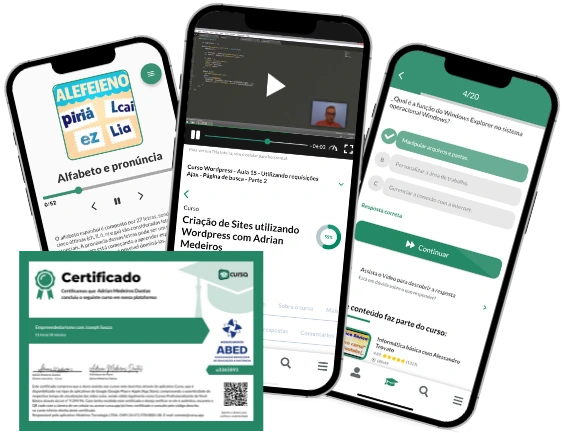
Carry knowledge in your pocket.
Download the Cursa app.
There are hundreds of free courses available, with a free certificate of completion that is saved in your mobile image gallery.
Download the app to access the Course Completion Certificate for Free.


+ 10 million
students

Free and Valid
Certificate

60 thousand free
exercises

4.8/5 rating in
app stores

Free courses in
video and ebooks