
Exercises
This quiz assesses practical knowledge of Incoterms 2020 in international logistics. It covers the purpose and scope of the rules, multimodal and maritime terms, transfer of risk, transportation costs, insurance, customs clearance, unloading responsibilities, containerized cargo, and documentation. Scenario-based questions help learners select and apply appropriate terms in commercial transactions.
Answer the questions below and check the explanation for each answer.
0/17 answered
Auto audio on: the next questions will be read aloud when you click Continue.
Incoterms define responsibilities for delivery, transportation costs, risk, customs procedures, and related tasks. They do not determine price, payment terms, or transfer of legal ownership.
Incoterms 2020 contains 11 rules: seven for any mode of transport and four specifically for sea or inland waterway transport.
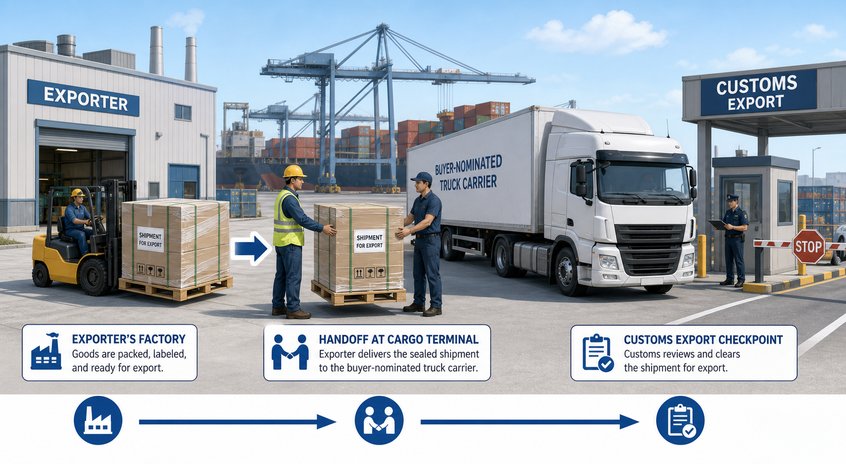
Under FCA, the seller completes export clearance and delivers the goods to the carrier or another party nominated by the buyer at the specified place.

DPU, Delivered at Place Unloaded, is the only Incoterms 2020 rule under which the seller must deliver and unload the goods at the named destination.
Under DDP, the seller has the maximum obligation, including export and import clearance and payment of applicable import duties and taxes, subject to the contract and local law.
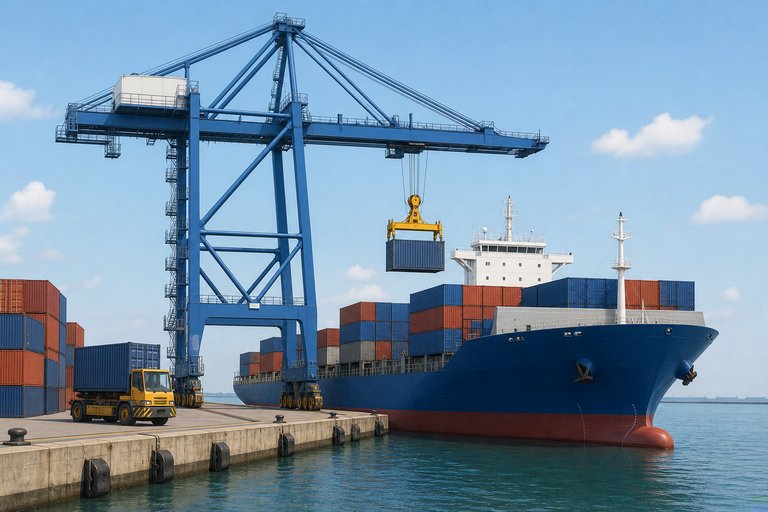
Under FOB, risk transfers when the goods are placed on board the vessel nominated by the buyer at the named port of shipment.
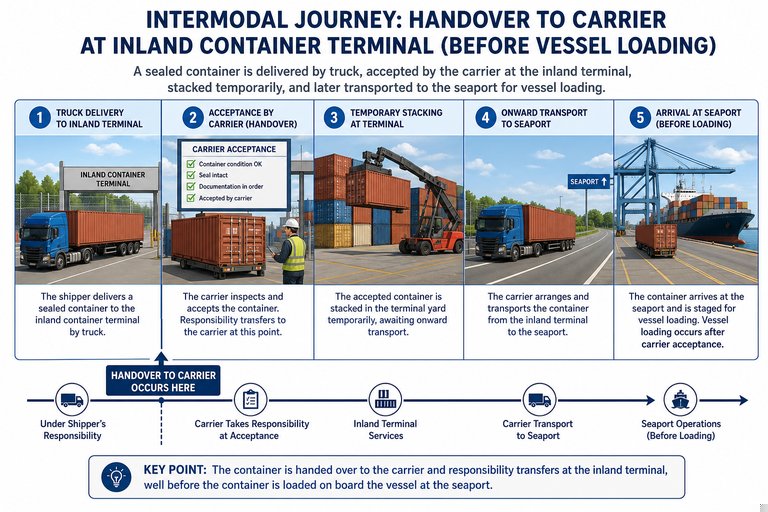
FCA is generally more suitable for containerized cargo because delivery can occur when the container is handed to the carrier at a terminal, before vessel loading.
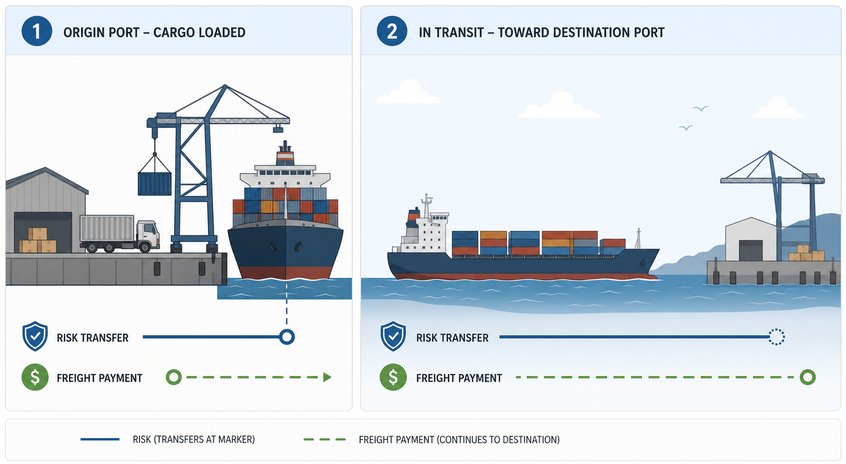
Under CFR, the seller contracts and pays for carriage to the destination port. However, risk transfers earlier, once the goods are on board the vessel at the shipment port.
CIF requires the seller to obtain insurance based on Institute Cargo Clauses (C) or similar minimum cover, unless the parties agree to broader protection.
CIP normally requires broad insurance corresponding to Institute Cargo Clauses (A). This differs from CIF, which defaults to the more limited Clauses (C) standard.
Under CPT, risk normally transfers when the seller hands the goods to the first carrier, even though the seller pays carriage to the named destination.

Under DAP, delivery occurs when the goods are placed at the buyer's disposal on the arriving means of transport, ready for unloading. The buyer handles unloading.

Under FAS, the seller delivers when the goods are placed alongside the vessel at the named port of shipment. The buyer then arranges loading and main carriage.
Under EXW, the buyer normally handles export clearance. Because this may be difficult for a foreign buyer, FCA is often more practical when the seller can complete export formalities.
Incoterms address delivery, risk, costs, carriage, and certain customs obligations. Transfer of legal ownership must be established separately in the sales contract and applicable law.
Incoterms 2020 allows the parties under FCA to agree that the buyer will instruct its carrier to issue an on-board bill of lading to the seller after loading.
A precise named location reduces disputes because it identifies where delivery occurs or how far the seller must pay carriage. The contract should also identify the rule and version, such as Incoterms 2020.

Free CourseOperations Management
5

(16)

4h47m

30 exercises

Free CourseSupply Chain Analytics
5
(24)
30m
4 exercises
Free CourseSupply Chain Management and Logistics: Operations, Transportation, and Global Strategy
4.8
(6)
53m
12 exercises

Free CourseSupply Chain Digitization
4.8
(9)
31h55m
31 exercises
Free CourseLogistics Management
4.6

(19)
1h29m
11 exercises
Free CourseFundamentals of Supply Chain
4.6
(5)
2h42m
8 exercises
Free CourseSupply chain management
4.3
(49)
12h07m
16 exercises
Free CourseAPICS CLTD 3.0 Certification Prep: Logistics, Transportation and Distribution
4
(2)
17h55m
13 exercises
Thousands of online courses in video, ebooks and audiobooks.
To test your knowledge during online courses
Generated directly from your cell phone's photo gallery and sent to your email

Download our app via QR Code or the links below:.


Carry knowledge in your pocket.
Download the Cursa app.
There are hundreds of free courses available, with a free certificate of completion that is saved in your mobile image gallery.
Download the app to access the Course Completion Certificate for Free.


+ 10 million
students

Free and Valid
Certificate

60 thousand free
exercises

4.8/5 rating in
app stores

Free courses in
video and ebooks