
Exercises
Challenge your understanding of advanced logistics techniques and supply chain strategies. This quiz covers Just-In-Time inventory management, green logistics practices, reverse logistics, RFID tracking, cross-docking, electronic data interchange (EDI), and third-party logistics (3PL) services. Explore how the bullwhip effect affects supply chain performance, why logistics audits matter, and which strategies can reduce risk across global supply networks. Ideal for students, logistics professionals, and anyone looking to strengthen their knowledge of efficient, resilient, and technology-driven logistics operations.
Answer the questions below and check the explanation for each answer.
0/10 answered
Auto audio on: the next questions will be read aloud when you click Continue.
Just-In-Time (JIT) inventory management primarily aims to reduce storage costs by maintaining minimal inventory levels, aligning closely with production schedules.
Green logistics involves practices like utilizing fuel-efficient transport methods to minimize environmental impact.
Reverse logistics refers to the processes involved in returning products from end users to the manufacturer or recycling facilities.
RFID (Radio Frequency Identification) technology improves logistics by enhancing the accuracy of tracking inventory throughout the supply chain.
Cross-docking involves transferring goods directly from inbound to outbound transport, bypassing storage and minimizing handling.
EDI (Electronic Data Interchange) facilitates the exchange of business documents in a standard electronic format, streamlining logistics operations.
Third-party logistics (3PL) providers offer flexibility and specialized expertise, enabling businesses to efficiently manage logistics needs.
The bullwhip effect refers to the amplification of demand fluctuations, leading to excessive inventory and inefficiencies across the supply chain.
A logistics audit aims to review and evaluate logistics operations, identifying areas for improvement to enhance efficiency and performance.
Diversifying suppliers in a global supply chain can mitigate risks by reducing dependency on a single source, enhancing resilience.
Free CourseOperations Management
5

(16)

4h47m

30 exercises
Free CourseSupply Chain Analytics
5
(24)
30m
4 exercises
Free CourseSupply Chain Management and Logistics: Operations, Transportation, and Global Strategy
4.8
(6)
53m
12 exercises
Free CourseSupply Chain Digitization
4.8
(9)
31h55m
31 exercises

Free CourseLogistics Management
4.6

(19)
1h29m
11 exercises
Free CourseFundamentals of Supply Chain
4.6
(5)
2h42m
8 exercises

Free CourseSupply chain management
4.3
(49)
12h07m
16 exercises
Free CourseAPICS CLTD 3.0 Certification Prep: Logistics, Transportation and Distribution
4
(2)
17h55m
13 exercises
Thousands of online courses in video, ebooks and audiobooks.
To test your knowledge during online courses
Generated directly from your cell phone's photo gallery and sent to your email

Download our app via QR Code or the links below:.


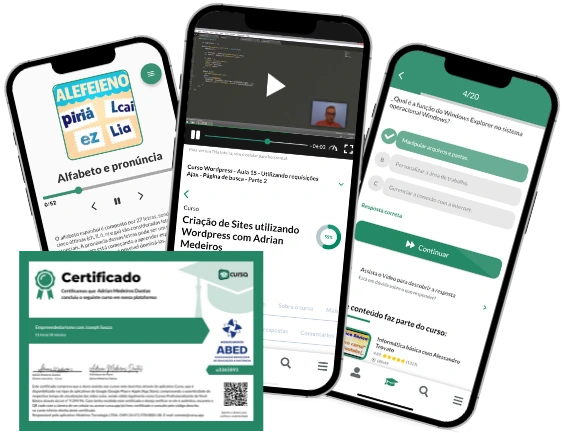
Carry knowledge in your pocket.
Download the Cursa app.
There are hundreds of free courses available, with a free certificate of completion that is saved in your mobile image gallery.
Download the app to access the Course Completion Certificate for Free.


+ 10 million
students

Free and Valid
Certificate

60 thousand free
exercises

4.8/5 rating in
app stores

Free courses in
video and ebooks