
Exercises
Challenge your understanding of Jenkins Pipeline concepts with this quiz covering CI/CD automation, Jenkinsfiles, and pipeline syntax. Test what you know about declarative versus scripted pipelines, stages and steps, allocating build agents, running shell commands, accessing environment variables, and defining parallel tasks. You will also review pipeline sections, common Jenkinsfile responsibilities, and triggering builds through Git repository webhooks. Whether you are learning Jenkins for the first time or sharpening your DevOps skills, this quiz provides a practical check of the fundamentals used to create, automate, and manage reliable build and deployment workflows.
Answer the questions below and check the explanation for each answer.
0/10 answered
Auto audio on: the next questions will be read aloud when you click Continue.
A Jenkins Pipeline is a series of automated steps to perform a software build. It allows for continuous integration and continuous delivery (CI/CD) by automating tasks such as building, testing, and deploying code, enabling faster and more reliable software development processes.
A Jenkinsfile is not responsible for storing user credentials. It is used for defining build steps and describing pipeline stages within a Jenkins project. Storing and managing credentials in Jenkins is handled by the Jenkins Credentials Plugin, which allows for secure storage and usage of sensitive information like passwords, SSH keys, and API tokens.
In a declarative Jenkins Pipeline, steps are used to define tasks that need to be executed sequentially within a stage. They specify the actual work that needs to be performed, such as building, testing, or deploying the application. Option 1 is correct as it correctly describes the role of steps in organizing tasks within a specific stage.
In a Jenkins Pipeline, the agent directive is used to specify where the Pipeline or a particular stage should run, by allocating an executor on a node. It defines the execution environment for the Pipeline.
A scripted Pipeline in Jenkins is defined using a Domain-Specific Language (DSL) based on Groovy. It allows for a more traditional and linear sequence of steps, providing users with extensive flexibility and control over the pipeline's flow and logic. This contrasts with declarative Pipelines, which emphasize simplicity and structure.
In Jenkins Pipeline, the command sh is used to execute shell commands. This command allows Jenkins to run shell scripts or single shell commands within the pipeline. Option 1, bash, is a shell itself but not a Jenkins Pipeline command. Option 3, execute, is also not a valid Jenkins Pipeline command for running shell scripts.
In Jenkins Pipeline, environment variables can be accessed using env.VARIABLE_NAME. This is a Groovy syntax that allows you to get the value of the environment variable named VARIABLE_NAME within a pipeline stage.
The parallel syntax in a Jenkinsfile is employed to define tasks that can be executed concurrently. By using parallel, Jenkins orchestrates the simultaneous execution of specified stages or steps, which can significantly reduce the overall pipeline execution time, especially in CI/CD processes where multiple processes can run independently of each other.
In Jenkins declarative pipeline syntax, triggers and post are valid sections used to define actions based on triggers or post-build steps, respectively. However, scripts is not a valid top-level section. Instead, scripting logic should be placed within the stages block using the script step if needed.
Jenkins Pipelines can be triggered via a webhook by setting a designated URL in the git repository. This triggers the pipeline to start when specific events, like code pushes, occur in the repository.
Free CourseGit and GitHub
5

(1)

4h02m

5 exercises
Free CourseDocker Containers and Kubernetes Fundamentals
5
(1)
5h56m
6 exercises
Free CourseJenkins
5
(1)
3h53m
20 exercises
Free CourseUse ChatGPT for DevOps tasks
5
(1)
1h07m
6 exercises
Free CourseKubernetes for Beginners
5
(2)
3h36m
6 exercises
Free CourseGit and Git Hub
4.8
(55)
2h00m
54 exercises
Free CourseGoogle Chrome dev tools
4.8

(4)
51m

Free CourseEthical hacking for beginners
4.7
(67)
21h06m
13 exercises
Thousands of online courses in video, ebooks and audiobooks.
To test your knowledge during online courses
Generated directly from your cell phone's photo gallery and sent to your email

Download our app via QR Code or the links below:.


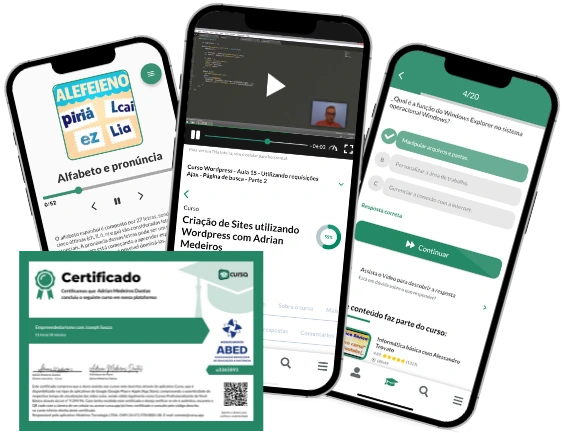
Carry knowledge in your pocket.
Download the Cursa app.
There are hundreds of free courses available, with a free certificate of completion that is saved in your mobile image gallery.
Download the app to access the Course Completion Certificate for Free.


+ 10 million
students

Free and Valid
Certificate

60 thousand free
exercises

4.8/5 rating in
app stores

Free courses in
video and ebooks