
Exercises
Put your Basic Life Support (BLS) skills to the test with questions covering essential emergency response steps. Review what to do when you find an unconscious person, proper adult CPR hand placement, compression rate and compression-to-ventilation ratio, and correct rescue-breath technique. You will also be tested on AED safety before delivering a shock, when CPR should be stopped, the preferred breathing barrier device when available, choking response for an infant when you are alone, and the pulse point used to assess an adult. This quiz is designed to reinforce key BLS principles for learners, caregivers, students, and healthcare professionals. It is an educational review and does not replace accredited BLS training or local emergency protocols.
Answer the questions below and check the explanation for each answer.
0/10 answered
Auto audio on: the next questions will be read aloud when you click Continue.
When you encounter an unconscious person, the first step is to check for breathing and pulse. This helps determine if the person requires immediate CPR (cardiopulmonary resuscitation). Identifying whether they are breathing or have a pulse can dictate the urgency and type of help they need, ensuring you provide the most effective assistance possible.
The recommended rate for chest compressions during CPR is 100-120 compressions per minute. This rate is based on guidelines which ensure effective blood flow during resuscitation. Performing compressions within this range is crucial for maintaining circulation and increasing the chances of survival in cardiac arrest situations.
During CPR, the rescuer should place their mouth over the person's mouth when providing rescue breaths. This ensures that the breaths are directed effectively into the person's lungs, enhancing the effectiveness of the resuscitation effort.
Before delivering a shock with an AED, it is crucial to ensure nobody is touching the person to prevent accidental shock to someone else. Verbally stating 'CLEAR' warns bystanders to move away from the patient, ensuring safety. Continuing compressions or turning off the AED is incorrect in this situation.
When performing chest compressions on an adult, you should place your hands on the lower half of the breastbone, also known as the sternum. This position allows for effective compressions on the heart to maintain blood circulation during cardiopulmonary resuscitation (CPR). Avoid placing your hands on the upper half or on the side, as this can lead to ineffective compressions and potential injury.
For CPR in adults, the recommended compression to ventilation ratio is 30 compressions to 2 ventilations. This ratio helps maintain adequate blood flow and oxygenation during resuscitation efforts according to CPR guidelines.
A barrier device, such as a CPR face shield or mask, should be used when providing breaths during CPR if available. This helps protect both the rescuer and the victim from potential infections or bodily fluids during mouth-to-mouth resuscitation.
You should stop CPR when trained emergency responders take over or when an AED becomes available and is ready for use. This option ensures that the individual receives professional medical assistance or the benefit of an automated external defibrillator, which can greatly increase the chances of survival.
The correct action when encountering a choking infant is to begin back slaps and chest thrusts immediately. This direct intervention can help dislodge the obstruction from the infant's airway quickly, potentially saving their life while waiting for emergency services or additional help to arrive.
In Basic Life Support (BLS), the carotid pulse is typically checked to assess the presence of a pulse in an adult because it is both readily accessible and provides a strong indicator of heart function. It is located on either side of the neck and is usually easier to find than the radial or brachial pulses in emergency situations.
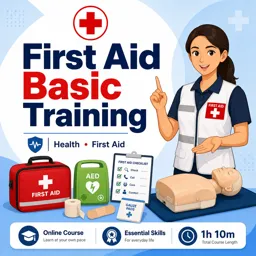
Free CourseFirst Aid basic training
4.8

(39)

1h10m

14 exercises
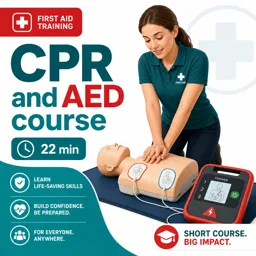
Free CourseCPR and AED course
4.8
(28)
22m
4 exercises
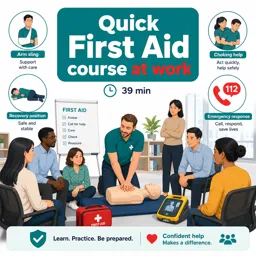
Free CourseQuick First Aid course at work
4.8
(10)
39m
21 exercises

Free CourseFirst Aid for Dogs
4.8
(5)
20m
4 exercises
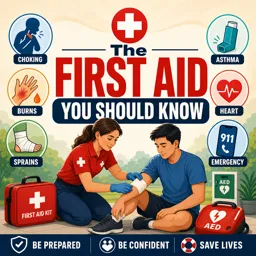
Free CourseThe First Aid you should know
4.8
(14)
2h45m
38 exercises
Free CourseWilderness First Aid
4.8
(9)
5h32m
28 exercises
Free CourseBasic First Aid training
4.7

(34)
1h02m
21 exercises
Free CourseFirst Aid training
4.7
(173)
5h59m
24 exercises
Thousands of online courses in video, ebooks and audiobooks.
To test your knowledge during online courses
Generated directly from your cell phone's photo gallery and sent to your email

Download our app via QR Code or the links below:.


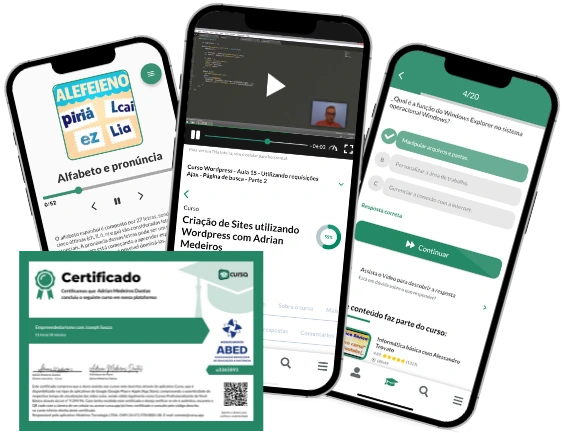
Carry knowledge in your pocket.
Download the Cursa app.
There are hundreds of free courses available, with a free certificate of completion that is saved in your mobile image gallery.
Download the app to access the Course Completion Certificate for Free.


+ 10 million
students

Free and Valid
Certificate

60 thousand free
exercises

4.8/5 rating in
app stores

Free courses in
video and ebooks