
Exercises
Put your intermediate oil painting knowledge to the test. This quiz explores essential studio techniques and materials, including glazing, impasto, sgraffito, underpainting, limited palettes, blending brushes, palette knives, solvents, drying mediums, and the fat over lean principle. Discover how well you understand the processes that help artists build luminous layers, create texture, control drying times, and produce durable oil paintings. Ideal for developing painters, art students, and anyone seeking to strengthen their practical understanding of traditional and expressive oil painting methods.
Answer the questions below and check the explanation for each answer.
0/10 answered
Auto audio on: the next questions will be read aloud when you click Continue.
Glazes are thin, transparent layers of oil paint applied on top of dried layers, allowing artists to adjust tones and create depth without altering the underlying paint.
Alkyd mediums are often used in oil painting to accelerate the drying process while maintaining the paint's brilliance and gloss.
The 'fat over lean' principle ensures that upper layers dry more slowly and are flexible, preventing cracking of the paint surface by layering more oil-rich paint over layers with less oil content.
A limited palette can foster greater color unity and consistency throughout a painting, forcing the artist to think critically about color mixing and tonal relationships.
Flat brushes, with their broader, even bristles, are excellent for blending paints seamlessly due to their ability to cover larger areas evenly.
Impasto involves applying thick layers of paint to add texture, dimension, and expressiveness to a painting, often emphasizing brush or knife strokes.
Sgraffito is a technique where the artist scratches through a top layer of wet paint to expose areas of the underlying surface, adding texture and depth.
Underpainting sets the foundation for the painting's tonal values and composition, guiding the artist in adding detail and depth in subsequent layers.
Washes are created when oil paint is thinned with solvents like turpentine, resulting in a transparent layer that can be used for soft transitions and atmospheric effects.
A palette knife can apply paint in distinct, textured layers, allowing the artist to create bold lines and shapes, contrasting the smooth strokes of a brush.
Free CourseHow to Draw on iPad
5

(3)

35m

6 exercises
Free CourseOil Painting techniques
5
(1)
23m
4 exercises
Free CoursePerspective Drawing Fundamentals: One, Two and Three-Point Perspective
5
(2)
2h57m
22 exercises
Free CourseArt Fundamentals
5
(3)
13h16m
29 exercises
Free CourseAcrylic Painting Course
5
(5)
135h55m
51 exercises
Free CoursePainting tutorials and lessons
4.9
(47)
5h26m
19 exercises
Free CourseContemporary Art Trends
4.9
(11)
24h51m
18 exercises
Free CourseBeginners Drawing course
4.9
(7)
72h50m
24 exercises
Thousands of online courses in video, ebooks and audiobooks.
To test your knowledge during online courses
Generated directly from your cell phone's photo gallery and sent to your email

Download our app via QR Code or the links below:.


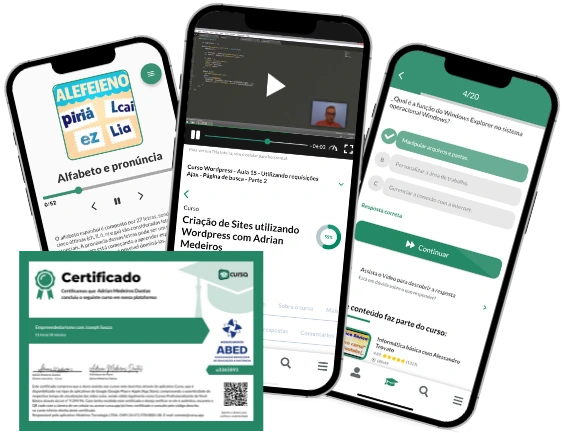
Carry knowledge in your pocket.
Download the Cursa app.
There are hundreds of free courses available, with a free certificate of completion that is saved in your mobile image gallery.
Download the app to access the Course Completion Certificate for Free.


+ 10 million
students

Free and Valid
Certificate

60 thousand free
exercises

4.8/5 rating in
app stores

Free courses in
video and ebooks