
Exercises
Assess practical knowledge of preparing graphic design files for commercial printing. This quiz covers bleed, font embedding, effective image resolution, PDF/X standards, crop marks, dielines, overprinting, imposition, spot inks, trapping, and soft proofing. The questions combine production concepts with visual scenarios to help you recognize common prepress requirements and avoid costly printing errors.
Answer the questions below and check the explanation for each answer.
0/11 answered
Auto audio on: the next questions will be read aloud when you click Continue.
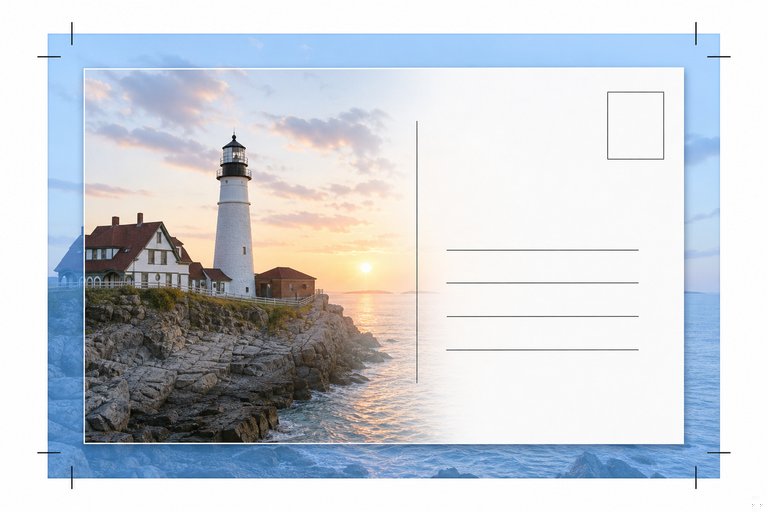
The extension is the bleed. It allows artwork to reach the finished edge even when minor movement occurs during printing and trimming.
Embedding includes the required font data in the PDF, helping the printer reproduce the intended characters and formatting without substituting another font.
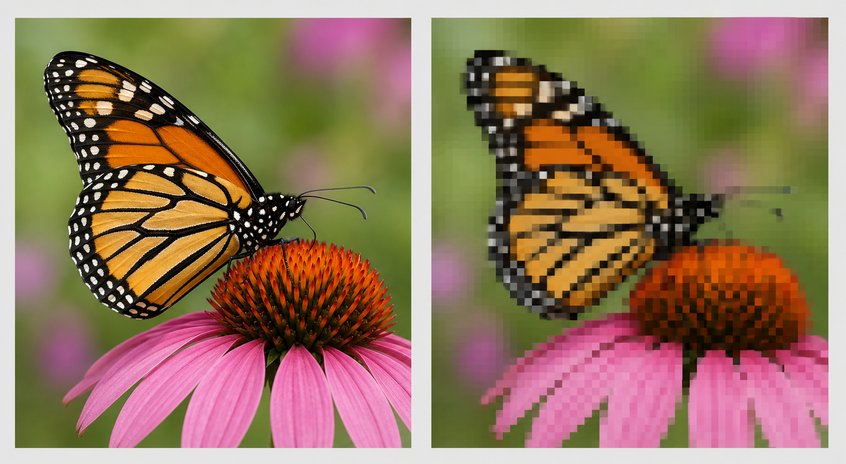
A raster image with insufficient effective resolution lacks enough pixels at its placed size, producing visible pixelation or softness in print.
PDF/X limits problematic PDF features and defines requirements for print exchange, such as font handling and production color information. It improves reliability but does not guarantee identical output.
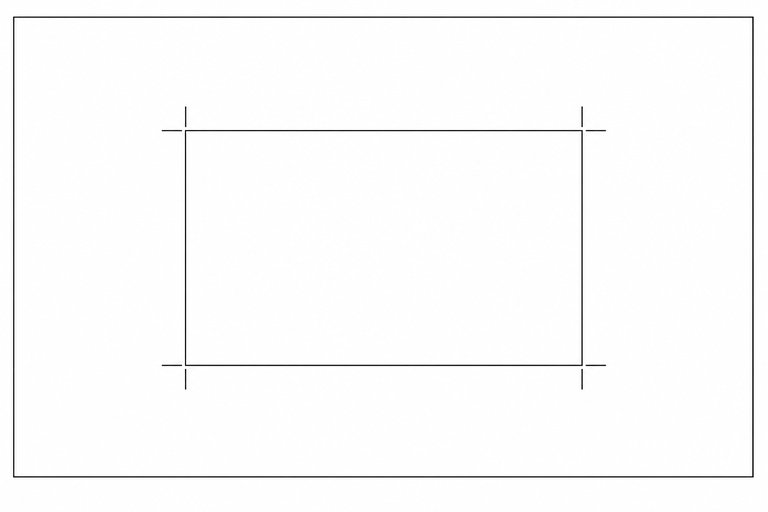
Crop marks indicate where the printed sheet should be trimmed to produce the final page size. They are placed outside the finished artwork.
Vector paths remain mathematically precise at different sizes, making them suitable for the cut, crease, and fold contours used by packaging production equipment.
Overprinting small black text avoids knocking a matching hole out of the background. If plates shift slightly, the colored background remains beneath the text instead of exposing a white edge.
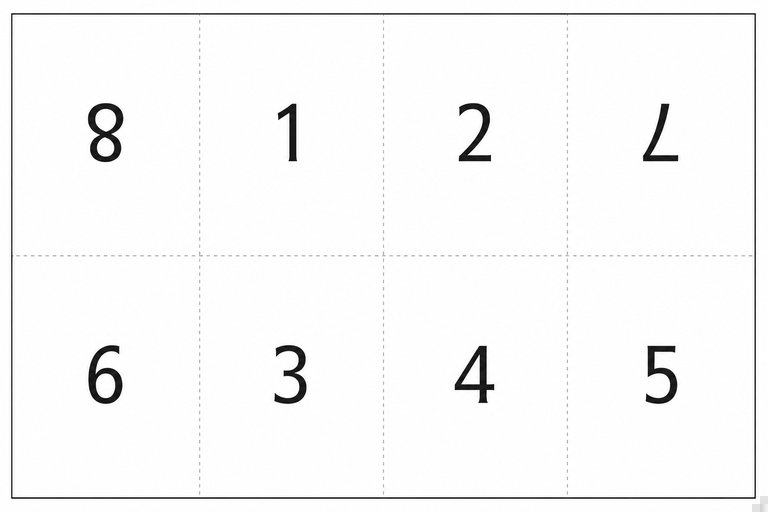
This arrangement is called imposition. Pages are positioned on the press sheet so they fall into the correct reading order after folding, binding, and trimming.
A spot ink is premixed and printed with its own plate. It is useful for tightly controlled brand colors and effects such as metallic or fluorescent inks that process inks may not reproduce well.
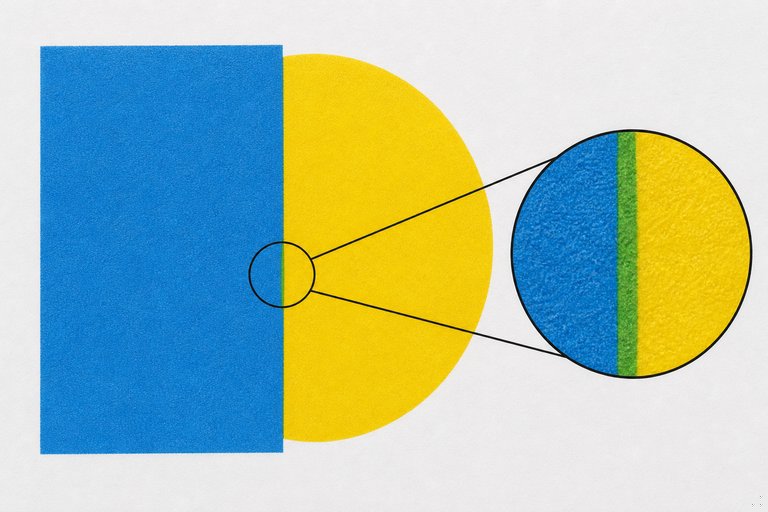
Trapping creates a slight overlap between adjacent colors. This compensates for small registration shifts that could otherwise reveal a white gap.
A calibrated soft proof can provide a useful color simulation, but a luminous monitor cannot perfectly reproduce physical paper, ink absorption, surface texture, or all press conditions.
Free CoursePro Logo Design
4.9

(9)

10h16m

45 exercises
Free CourseBeginners guide to Graphic Design
4.8
(289)
6h26m
22 exercises
Free CourseGame artist using Krita
4.8
(9)
8h54m
31 exercises
Free CourseGraphic design for Beginners
4.8
(13)
11h12m

Free CourseCanva Video Editor
4.7

(15)
21m
5 exercises
Free CourseAdobe illustrator
4.7
(54)
5h32m
20 exercises
Free CourseCorelDRAW for Beginners: Complete Graphic Design and Vector Tools Training
4.7
(3)
8h03m
46 exercises
Free CourseAnimation
4.6
(8)
31m
5 exercises
Thousands of online courses in video, ebooks and audiobooks.
To test your knowledge during online courses
Generated directly from your cell phone's photo gallery and sent to your email

Download our app via QR Code or the links below:.



Carry knowledge in your pocket.
Download the Cursa app.
There are hundreds of free courses available, with a free certificate of completion that is saved in your mobile image gallery.
Download the app to access the Course Completion Certificate for Free.


+ 10 million
students

Free and Valid
Certificate

60 thousand free
exercises

4.8/5 rating in
app stores

Free courses in
video and ebooks