
Exercises
Explore how the human immune system detects and eliminates threats. This quiz covers innate defenses, antigen presentation, B- and T-cell activation, antibody functions, complement proteins, immunological memory, vaccination, and allergic responses. Questions range from foundational concepts to the interpretation of immune-system diagrams and response graphs.
Answer the questions below and check the explanation for each answer.
0/12 answered
Auto audio on: the next questions will be read aloud when you click Continue.
Skin and mucous membranes are part of innate immunity. They provide immediate physical and chemical barriers without recognizing a specific antigen.
Professional antigen-presenting cells display processed extracellular antigens on MHC class II, which is recognized by CD4-positive helper T cells.
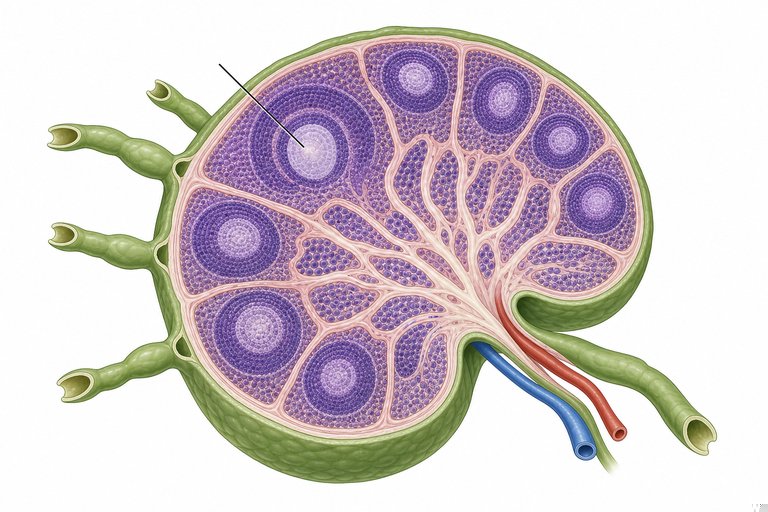
Germinal centers form after B-cell activation. They are major sites of B-cell proliferation, somatic hypermutation, affinity maturation, and selection.
Under clonal selection, an antigen binds to a lymphocyte with a complementary receptor. That cell is activated and produces a clone of effector and memory cells.
Neutralizing antibodies bind viral surface structures and block attachment, receptor engagement, or membrane entry, preventing the virus from infecting susceptible cells.
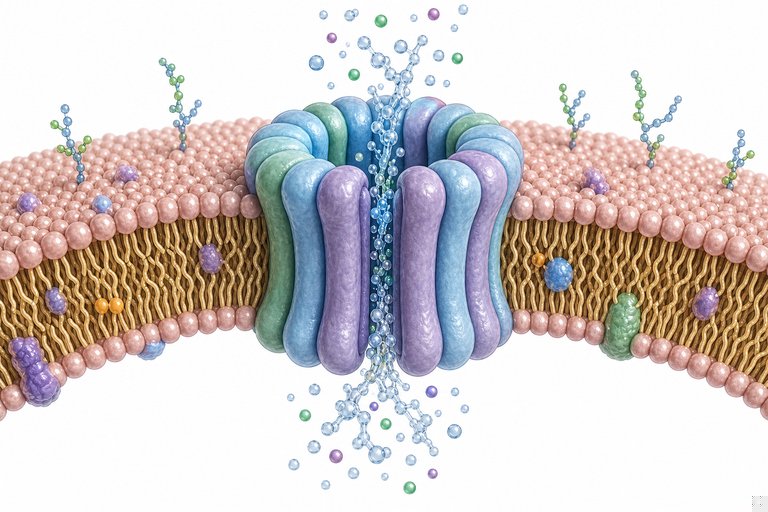
The membrane attack complex, assembled from terminal complement proteins, forms pores in susceptible microbial membranes and can cause cell lysis.
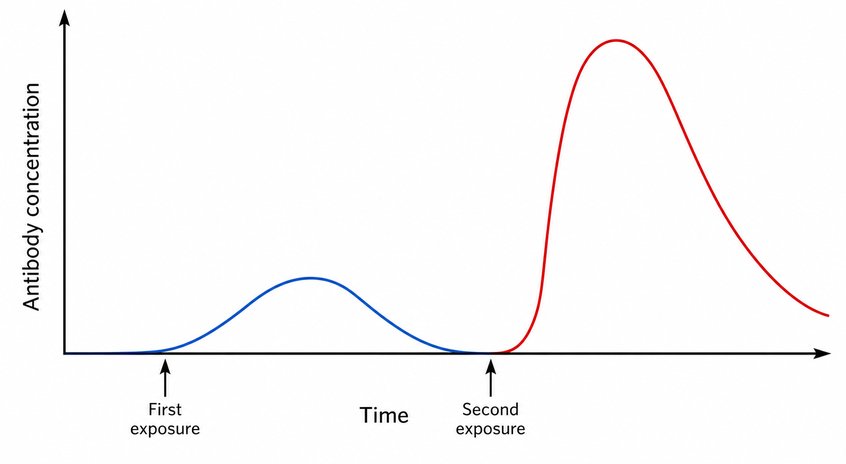
Memory B cells formed during the primary response persist. On re-exposure, they rapidly proliferate and differentiate, producing a faster and often larger antibody response.
Class switching replaces the heavy-chain constant region but preserves the rearranged variable region. The antibody therefore keeps the same antigen specificity while gaining different effector functions.
Negative selection removes developing T cells that bind too strongly to self-antigens. This supports central tolerance and reduces the risk of autoimmune reactions.
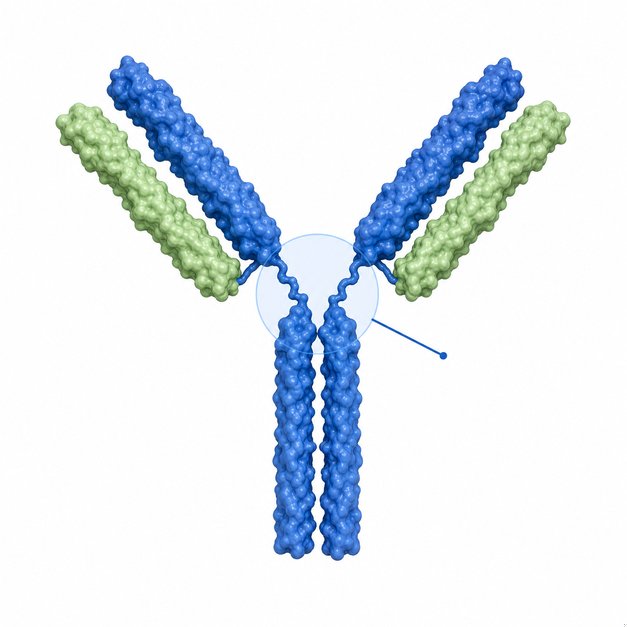
The hinge region gives the antibody arms flexibility, helping both antigen-binding sites engage targets positioned at different distances or angles.
Adjuvants enhance immune responses by stimulating innate signals, improving antigen presentation, or prolonging antigen exposure. This can produce stronger and more durable immunity.
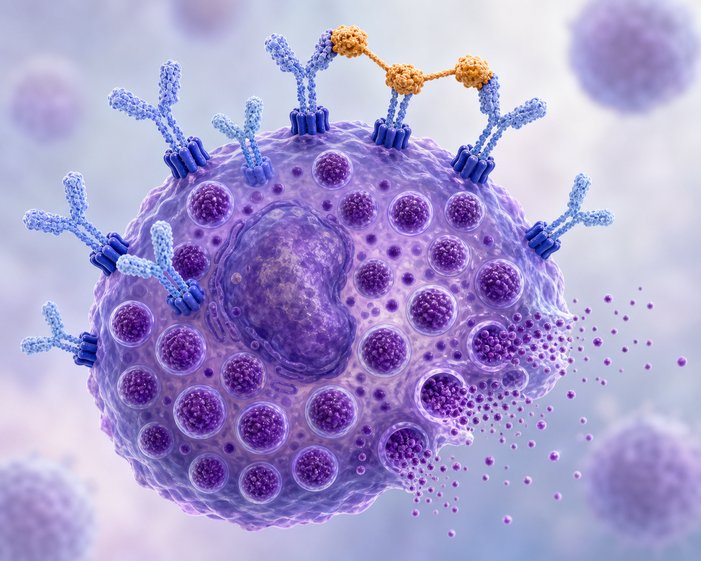
IgE binds high-affinity receptors on mast cells. Allergen-mediated cross-linking of adjacent IgE molecules triggers degranulation and the release of inflammatory mediators.

Free CourseBiology Learning
5

(3)

12h23m

43 exercises

Free CourseGenetics Basics
5
(1)
3h26m
21 exercises
Free CourseCell Biology
4.8
(5)
13h41m
18 exercises

Free CourseBiology
4.7

(27)
27h28m
36 exercises
Free CourseIntroduction to Biology
4.7
(63)
1h41m
16 exercises
Free CourseIntroductory Biology
4.7
(6)
27h52m
20 exercises

Free CourseBiology course
4.7
(3)
7h09m
28 exercises

Free CourseBiology foundations
4.5
(6)
1h33m
12 exercises
Thousands of online courses in video, ebooks and audiobooks.
To test your knowledge during online courses
Generated directly from your cell phone's photo gallery and sent to your email

Download our app via QR Code or the links below:.



Carry knowledge in your pocket.
Download the Cursa app.
There are hundreds of free courses available, with a free certificate of completion that is saved in your mobile image gallery.
Download the app to access the Course Completion Certificate for Free.


+ 10 million
students

Free and Valid
Certificate

60 thousand free
exercises

4.8/5 rating in
app stores

Free courses in
video and ebooks