
Exercises
Explore the fundamentals of cell biology in this quiz covering the structures and processes that keep cells alive. Test your understanding of mitochondria and ATP production, plant and animal cell differences, cytoplasm, the rough endoplasmic reticulum, cell membrane fluidity, osmosis, prokaryotic cells, the nucleus, and cytoskeletal fibers. Whether you are reviewing for a biology class or strengthening your knowledge of cellular function, this quiz offers a focused way to assess what you know about the building blocks of life.
Answer the questions below and check the explanation for each answer.
0/10 answered
Auto audio on: the next questions will be read aloud when you click Continue.
The mitochondria are known as the powerhouse of the cell. Their primary function is to produce energy in the form of ATP (adenosine triphosphate) through the process of cellular respiration. This makes Option 2 the correct answer.
Plant cells have a cell wall, which provides structural support and protection. In contrast, animal cells do not have a cell wall; they are surrounded only by a plasma membrane.
The cytoplasm is the semi-fluid matrix that surrounds the organelles within a cell. It is composed of cytosol, organelles, and various particles, providing a medium for biochemical processes and structural support.
The rough endoplasmic reticulum (RER) is studded with ribosomes, giving it a 'rough' appearance. Its primary function is protein synthesis, where it plays a crucial role in translating mRNA into polypeptide chains. Lipid metabolism and detoxification are functions more associated with the smooth endoplasmic reticulum.
The mitochondria is responsible for generating cellular energy in the form of ATP. It is often referred to as the powerhouse of the cell because it produces ATP through cellular respiration, providing the energy necessary for various cellular processes.
The component of the cell membrane that determines its fluidity is cholesterol. Cholesterol molecules fit between the phospholipid tails in the membrane and modulate its fluidity by preventing the fatty acid chains from becoming too closely packed in cold temperatures and restricting excessive movement in warm temperatures. This balance is crucial for maintaining membrane stability and function.
The process that describes the movement of water across a semi-permeable membrane is Osmosis. Osmosis specifically refers to the diffusion of water molecules from a region of lower solute concentration to a region of higher solute concentration, aiming to equalize concentrations on both sides of the membrane.
Prokaryotic cells, such as bacteria and archaea, lack a nuclear envelope. Their genetic material is not enclosed within a nucleus. Therefore, option 2, nuclear envelope, is the correct answer as something not found in prokaryotic cells. Prokaryotes do have DNA, which is free-floating in the cytoplasm, and ribosomes, which are used for protein synthesis.
The primary role of the cell nucleus is to house the cell's DNA. It acts as the control center, containing genetic material that dictates all cellular functions and regulates gene expression. Producing ATP and digesting waste materials are functions of the mitochondria and lysosomes, respectively.
Actin filaments are primarily responsible for cellular movements including muscle contraction. They interact with myosin motor proteins to perform the contraction process. This system is crucial for not only muscle movement but also changes in cell shape, cell division, and other dynamic processes in the cell.
Free CourseBiology Learning
5

(3)

12h23m

43 exercises
Free CourseGenetics Basics
5
(1)
3h26m
21 exercises
Free CourseCell Biology
4.8
(5)
13h41m
18 exercises
Free CourseBiology
4.7

(27)
27h28m
36 exercises
Free CourseIntroduction to Biology
4.7
(63)
1h41m
16 exercises
Free CourseIntroductory Biology
4.7
(6)
27h52m
20 exercises
Free CourseBiology course
4.7
(3)
7h09m
28 exercises

Free CourseBiology foundations
4.5
(6)
1h33m
12 exercises
Thousands of online courses in video, ebooks and audiobooks.
To test your knowledge during online courses
Generated directly from your cell phone's photo gallery and sent to your email

Download our app via QR Code or the links below:.


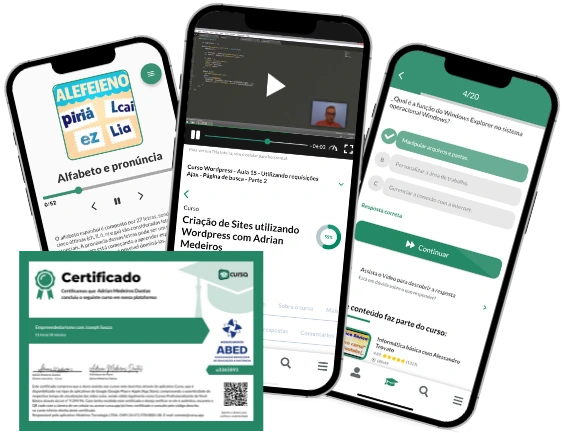
Carry knowledge in your pocket.
Download the Cursa app.
There are hundreds of free courses available, with a free certificate of completion that is saved in your mobile image gallery.
Download the app to access the Course Completion Certificate for Free.


+ 10 million
students

Free and Valid
Certificate

60 thousand free
exercises

4.8/5 rating in
app stores

Free courses in
video and ebooks