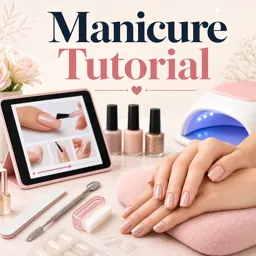
The Essential Steps for a Professional Manicure at Home

Learn the essential steps for a professional at-home manicure, including nail prep, cuticle care, polish application, and finishing tips for lasting results.

Share on Linkedin Share on WhatsApp

Estimated reading time: 2 minutes

Article image The Essential Steps for a Professional Manicure at Home

Achieving a salon-quality manicure at home is easier than you think. With proper preparation, technique, and care, you can enjoy beautiful, healthy nails anytime.

Introduction

A well-executed manicure not only enhances your hands’ appearance but also boosts confidence and supports nail health. Learning the essentials of a professional manicure at home allows for both relaxation and long-lasting results.

Preparing Your Nails

  • Remove old nail polish with a gentle, acetone-free remover.
  • Trim nails to your desired shape using nail clippers.
  • Smooth edges with a nail file, avoiding aggressive filing to prevent weakening the nails.

Soaking and Cuticle Care

  • Soak hands in warm, soapy water for 3–5 minutes to soften skin and cuticles.
  • Pat hands dry and gently push back cuticles with a cuticle pusher.
  • Trim excess cuticle only if necessary; never cut live skin to avoid infection.

Buffing and Moisturizing

  • Use a nail buffer to smooth ridges and create a natural shine.
  • Apply nourishing hand cream or cuticle oil to hydrate and protect nails and skin.

Applying Nail Polish

  • Start with a base coat to protect nails and improve polish adherence.
  • Apply two thin layers of your chosen color, allowing each layer to dry completely.
  • Finish with a clear top coat to seal color and add shine.

Finishing Touches

  • Clean up stray polish using a cotton bud dipped in remover.
  • Maintain results with daily hand moisturization and regular cuticle oil application.

Conclusion

Mastering the manicure process at home empowers you to keep nails beautiful and healthy with ease. Regular care ensures your DIY manicures rival salon results while saving time and money.

Understanding Variables and Data Types in Python

Learn what variables and data types are in Python, how to use them, and why they are the foundation of every program you write.

How Websites Work: A Beginner’s Guide to Domains, Hosting, and Servers

Ever wondered what happens when you type a web address? Learn how domains, hosting, and servers work together to load a website.

What Is Prompt Engineering? A Beginner’s Guide

Learn what prompt engineering is, why it matters for working with AI tools, and practical techniques beginners can use to write better prompts.

What Is Version Control? An Introduction to Git for Beginners

Discover what version control is, why developers use Git, and the key concepts every beginner should know before writing their first commit.

Understanding Zero Trust Security: A Beginner’s Guide

Learn what Zero Trust security is, the core principles behind it, and why organizations are adopting this modern approach to cybersecurity.

SQL vs NoSQL: Understanding the Key Differences

Confused about SQL and NoSQL databases? Learn how they differ in structure, scaling, and use cases to choose the right one for your project.

What Is Responsive Web Design? A Beginner’s Guide

Learn what responsive web design is, why it matters, and the core techniques—fluid grids, flexible images, and media queries—to get started.

HTML, CSS, and JavaScript: The Three Pillars of Web Development

Learn how HTML, CSS, and JavaScript work together to build every website, and why they are the foundation of web development.