Introduction
In the fast-paced world of news and media, clear and effective communication is the foundation of successful journalism. Whether you aspire to be a reporter, editor, or broadcaster, mastering English for professional journalism is essential to connect with audiences, convey stories accurately, and uphold journalistic standards.
Why English Matters in Journalism
English is the global language of news and media, allowing stories to reach a wider audience and breaking down barriers to information exchange. Strong English skills enable journalists to:
- Conduct interviews with confidence and clarity
- Write compelling news articles and features
- Fact-check and verify sources
- Edit and proofread for accuracy
- Engage with international news agencies
Core English Skills for Journalists
To advance in journalism, it is crucial to develop the following language skills:
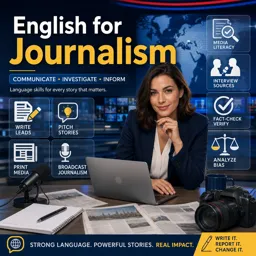
- News Writing: Learn concise, objective, and engaging ways to report facts. Practice using the inverted pyramid structure in your writing.
- Interview Techniques: Prepare and present questions clearly, and understand nuances in responses.
- Editing and Grammar: Catch errors that could change the meaning of your stories and produce polished content.
- Critical Reading: Analyze diverse news sources and distinguish between facts, opinions, and biases.
- Ethical Communication: Use sensitive language when addressing complex topics and respect cultural diversity.
Practical Tips to Improve Your English for Journalism
- Read international newspapers and news websites to expand your vocabulary and awareness of news styles.
- Practice summarizing articles to develop clarity and conciseness.
- Listen to news podcasts to improve your comprehension and note-taking skills.
- Join writing workshops or online forums for peer feedback.
- Follow style guides such as AP, Reuters, or BBC to learn professional standards.
Conclusion
Building strong English skills is a key step for those entering the journalism profession. Clear communication not only enhances your reporting but also establishes your credibility. Start improving your English today to unlock opportunities in global journalism and tell stories that matter.