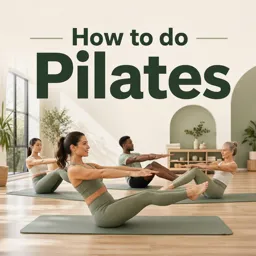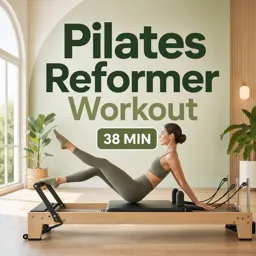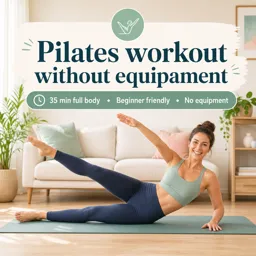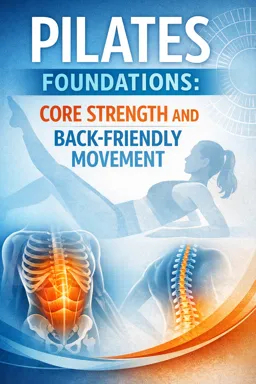

Free ebook on Pilates foundations for core strength, neutral spine, posture, hip mobility, and back-friendly movement.
Free ebook content
-

Pilates Foundations for Core Strength and Back-Friendly Movement
+ Exercise: During a beginner, back-friendly Pilates session, what should you do if an exercise creates a “yellow” caution signal (e.g., pinching, breath-holding, or shaky control)?
-
Pilates Breath Patterns for Core Engagement and Spinal Support
+ Exercise: Which breathing approach best supports the spine during Pilates movements while avoiding bracing?
-
Neutral Spine in Pilates: Finding Pelvic Stability Without Strain
+ Exercise: When choosing between neutral pelvis and imprint during a supine leg movement, which approach best matches the guidance for protecting the low back and maintaining control?
-
Control and Precision in Pilates Technique: Moving Slowly to Move Better
+ Exercise: During a foundational Pilates drill (like knee folds or heel slides), what should you do if you notice your pelvis rocking or your ribs lifting as your limb moves?
-
Core Foundations in Pilates: Deep Abdominals, Glutes, and Back Extensors Working Together
+ Exercise: During beginner Pilates core work, which approach best matches the idea of “core” as support rather than rigidity?


-
Back-Friendly Pilates Mat Essentials: Supine Stability Series
+ Exercise: During the supine stability exercises, what strategy best supports a back-friendly goal when you feel low-back strain or gripping?
-
Pilates for Posture: Ribcage, Shoulder Girdle, and Upper-Back Support
+ Exercise: When lifting the arms overhead, which approach best supports a back-friendly posture and reduces neck/shoulder tension?
-
Hip Mobility and Pelvic Control in Pilates: Protecting the Low Back
+ Exercise: During a side-lying clamshell, what best indicates you are keeping the movement in the hip (not borrowing motion from the pelvis/low back) for a back-friendly practice?
-
Pilates Modifications and Progressions: Adapting for Ability Levels and Back Sensitivity
+ Exercise: During a Pilates exercise, you notice your low back feels “pinchy” and you start holding your breath. What is the recommended response to keep the movement back-friendly?
-
Pilates Session Design: Beginner Routines for Consistent Core Strength and Back Comfort
+ Exercise: When dosing beginner Pilates exercises, what is the best response if your breath becomes held or you feel back pinching during a set?
About the free ebook
Pilates Foundations: Core Strength and Back-Friendly Movement
This free ebook introduces practical Pilates principles for building core strength while supporting comfortable, controlled movement. Learn how breath, alignment, and deliberate technique can help you create a more stable foundation for everyday activity.
Build stability without unnecessary strain
Pilates is more than abdominal work. This guide explores how the deep abdominals, glutes, back extensors, hips, ribcage, and shoulder girdle work together to support the spine. You will practice finding a neutral spine, coordinating breath with movement, and using control rather than momentum.
Focus on back-friendly movement habits
Discover mat-based stability ideas designed to encourage pelvic control, hip mobility, upper-back support, and better posture awareness. Each concept emphasizes precision, comfortable ranges of motion, and thoughtful adjustments for back sensitivity.
Adapt the practice to your needs
The ebook explains how to modify and progress Pilates movements according to your current ability, mobility, and comfort. It also offers guidance for designing simple beginner routines that support consistent core training and back comfort.
What you will develop
- Breath patterns that support core engagement
- Neutral-spine and pelvic-stability awareness
- Controlled technique for more efficient movement
- Strategies for posture, hip mobility, and shoulder support
- Options for adapting a Pilates practice with care
Important: Move within a comfortable range and seek advice from a qualified health professional for persistent pain, injury, or medical concerns.
How does Pilates help support the lower back?
Pilates develops coordinated core, hip, and pelvic control to support efficient spinal movement and posture.
What is a neutral spine in Pilates?
It is a comfortable, natural spinal alignment that avoids excessive flattening, arching, or bracing.
How can Pilates exercises be modified for back sensitivity?
Use smaller ranges of motion, added support, slower pacing, and positions that remain comfortable.
This ebook includes:

10 content chapters

Digital certificate of course completion (Free)

Exercises to train your knowledge

100% free, from content to certificate
Ready to get started?

 recommended
In the app you will also find...

Over 5,000 free courses
Programming, English, Digital Marketing and much more! Learn whatever you want, for free.

Study plan with AI
Our app's Artificial Intelligence can create a study schedule for the course you choose.

From zero to professional success
Improve your resume with our free Certificate and then use our Artificial Intelligence to find your dream job.
You can also use the QR Code or the links below.