Free Course Image Principles of Managerial Accounting

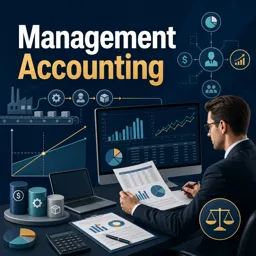
Free online coursePrinciples of Managerial Accounting

Duration of the online course: 4 hours and 16 minutes

New

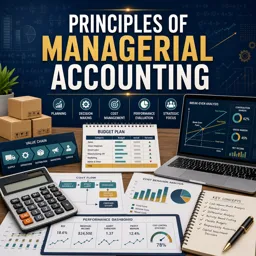
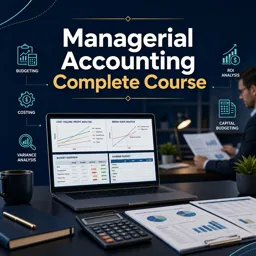
Free managerial accounting course covering costing, budgeting, CVP analysis, performance metrics, and capital budgeting for better business decisions.

In this free course, learn about

  • Managerial Accounting Foundations
  • Product Costing Systems: Job and Process Costing
  • Overhead Allocation and Activity-Based Costing
  • Cost Behavior and Cost Estimation
  • Cost-Volume-Profit (CVP) Analysis
  • Master Budgeting and Planning
  • Performance Evaluation and Financial Metrics
  • Short-Term Decision-Making
  • Capital Budgeting and Time Value of Money
  • Sustainability and Business Overview

Course Description

Principles of Managerial Accounting is a free online course in Business and Marketing that builds practical accounting skills for planning, control, and decision-making inside an organization. It clarifies how managerial accounting differs from financial accounting and shows how internal reports support managers across operations, marketing, and strategy.

You will explore core cost concepts from product versus period costs and inventory accounts to cost of goods manufactured and the language used to describe costs. The course explains how costs move through job costing and process costing systems, including tracking materials, labor, and manufacturing overhead, along with handling over- or under-allocated overhead and equivalent units.

To improve accuracy in overhead allocation, the course covers activity-based costing from plant-wide and departmental rates through activity-based rates, cost hierarchy, and activity-based management. You will also learn cost behavior analysis using cost equations, scatter plots, high-low method, and regression, then connect these insights to contribution margin income statements.

Cost-volume-profit analysis is presented for break-even and target income planning, including multi-product scenarios, sensitivity analysis, margin of safety, and operating leverage. Budgeting concepts progress through the master budget, covering sales, production, materials, labor, overhead, operating expenses, cash collections and payments, and cash budgeting, culminating in budgeted financial statements and capital expenditure planning.

The course also addresses performance evaluation through responsibility centers, operational decision-making, balanced scorecards, and key financial analysis measures such as return on equity, return on sales, asset turnover, and residual income. Finally, you will apply managerial accounting to short-term decisions like pricing, special orders, discontinuation, product mix, outsourcing, and process-further choices, then move into capital budgeting with payback, time value of money, present and future value tools, net present value, internal rate of return, and profitability index, with an introduction to sustainability in business.

Course content

  • Video class: Comparison of Managerial vs Financial Accounting 03m
  • Video class: Managerial Accounting: An Introduction 06m
  • Video class: Managerial Accounting: Inventory Accounts 03m
  • Exercise: Which set of inventory accounts is used by a manufacturing company?
  • Video class: Managerial Accounting: Value Chain 03m
  • Video class: Managerial Accounting: Product vs Period Costs 04m
  • Video class: Managerial Accounting: Costs of Goods Manufactured 06m
  • Video class: Managerial Accounting: Cost Terms 05m
  • Exercise: Which cost is considered relevant to a decision?
  • Video class: Product Costing: Job vs Process Costing 02m
  • Video class: Job Costing: Record Materials to Jobs 03m
  • Exercise: Which sequence correctly describes how manufacturing costs flow through inventory accounts?
  • Video class: Job Costing: Record Labor to Jobs 02m
  • Video class: Job Costing: Record MFG Overhead to Jobs 05m
  • Exercise: In a manufacturing company, where are actual overhead-related costs (like depreciation, utilities, and expired prepaid insurance tied to production) first recorded?
  • Video class: Job Costing: Over or Under Allocated Overhead 03m
  • Video class: Process Costing: Process Cost Flows 08m
  • Video class: Process Costing: Equivalent Units 04m
  • Video class: Process Costing: 5 Steps to Complete Process Costing 08m
  • Exercise: In process costing, what is the primary purpose of Step 5?
  • Video class: ABC Costing: Allocate Overhead via Plant-wide Rate 03m
  • Video class: ABC Costing: Allocate Overhead Via Departmental Rates 04m
  • Exercise: Which statement best describes the departmental rate method for allocating manufacturing overhead?
  • Video class: ABC Costing: Allocate MFG Overhead via Activity-Based Rates 06m
  • Video class: ABC Costing: ABC Comprehensive Example 02m
  • Exercise: In activity-based costing (ABC), how is the activity rate for each cost pool calculated?
  • Video class: ABC Costing: Activity-Based Management 01m
  • Video class: ABC Costing: Cost Hierarchy 02m
  • Exercise: In an Activity-Based Costing (ABC) cost hierarchy, which level is the least refined allocation base?
  • Video class: Cost Behaviors: Variable, Fixed, and Mixed Costs 04m
  • Video class: Cost Behaviors: Cost Equation 02m
  • Exercise: Which cost equation is used to predict total mixed cost at various levels of volume (within the relevant range)?
  • Video class: Cost Behaviors: Scatter Plots 01m
  • Video class: Cost Behaviors: High-Low Method 03m
  • Exercise: In the high-low method, what is calculated by dividing the change in total cost by the change in volume?
  • Video class: Cost Behaviors: Using Regression Analysis 03m
  • Video class: Cost Behaviors: Contribution Margin Income Statement 02m
  • Exercise: In a contribution margin income statement, which sequence correctly shows how operating income is calculated?
  • Video class: CVP: Contribution Margin Ratio 03m
  • Video class: CVP: Breakeven - The Income Statement Approach 02m
  • Exercise: Using the income statement approach, what is the breakeven point in units if price = $50, variable cost per unit = $30, and fixed costs = $10,000?
  • Video class: CVP: Breakeven Unit Contribution Margin Approach 01m
  • Video class: CVP: Breakeven Contribution Margin Ratio Approach 02m
  • Exercise: Using the contribution margin ratio method, what is the breakeven sales revenue if fixed costs are $10,000, price is $50, and variable cost is $30?
  • Video class: CVP: Graphing CVP Relationships 01m
  • Video class: CVP: Target Operating Income 01m
  • Exercise: How many units must be sold to achieve a target operating income using CVP analysis?
  • Video class: CVP: Breakeven Sensitivity Analysis 03m
  • Video class: CVP: Breakeven Multi-product 02m
  • Exercise: In a multi-product company, what value is used to compute break-even units given a sales mix?
  • Video class: CVP: Margin of Safety 01m
  • Video class: CVP: Operating Leverage 02m
  • Exercise: What is the formula for the degree of operating leverage (operating leverage factor)?
  • Video class: Master Budget: Introduction to Budgeting 05m
  • Video class: Master Budget: Sales Budget 02m
  • Exercise: Which budget typically starts the master budgeting process and drives production/purchasing plans?
  • Video class: Master Budget: Production Budget 02m
  • Video class: Master Budget: Direct Materials Budget 02m
  • Exercise: In a direct materials budget, how are the pounds of direct materials to be purchased calculated?
  • Video class: Master Budget: Direct Labor Budget 01m
  • Video class: Master Budget: Manufacturing Overhead Budget 02m
  • Exercise: How is total variable manufacturing overhead cost calculated in a manufacturing overhead budget?
  • Video class: Master Budget: Cost of Goods Sold Budget 02m
  • Video class: Master Budget: Operating Expense Budget 03m
  • Video class: Master Budget: Budgeted Income Statement 02m
  • Video class: Master Budget: Capital Expenditure Budget 01m
  • Exercise: What is the main purpose of a capital expenditures budget?
  • Video class: Master Budget: Cash Collections Budget 05m
  • Video class: Master Budget: Cash Payment Budget 04m
  • Exercise: Which item is added back when converting manufacturing overhead expense to cash payments for the cash disbursements budget?
  • Video class: Master Budget: Cash Budget 03m
  • Video class: Performance Evaluation: Operational Decision-Making 01m
  • Exercise: Which advantage is most associated with decentralized decision-making in an organization?
  • Video class: Performance Evaluation: Responsibility Centers 02m
  • Video class: Performance Evaluation: Systems 04m
  • Exercise: Which pair best describes why managers should use both lag and lead indicators in performance evaluation?
  • Video class: Financial Analysis: Return on Equity Example 01m
  • Video class: Financial Analysis: Return on Sales Example 02m
  • Exercise: Which formula is most commonly used to calculate return on sales (profit margin)?
  • Video class: Financial Analysis: Asset Turnover Ratio Example 01m
  • Video class: Financial Analysis: Residual Income Example 01m
  • Exercise: Which formula correctly calculates residual income when the target income is based on a return on total assets?
  • Video class: Performance Evaluations: Balanced Scorecard 02m
  • Video class: Short-Term Business Decisions: Incremental Analysis 03m
  • Exercise: In incremental analysis for short-term decisions, which items should be the focus when comparing alternatives?
  • Video class: Short-Term Business Decisions: Pricing Decisions 04m
  • Video class: Short-Term Business Decisions: Special Order Decisions 02m
  • Exercise: When evaluating a one-time special order at a reduced price, which costs are relevant in incremental analysis?
  • Video class: Short-Term Business Decisions: Discontinue Decisions 04m
  • Video class: Short-Term Business Decisions: Product Mix Decisions 02m
  • Exercise: When a company faces a production constraint (e.g., limited machine hours), what should it prioritize to maximize profit?
  • Video class: Short-Term Business Decisions: Outsourcing Decisions 02m
  • Video class: Short-Term Business Decisions: Process Further Decisions 02m
  • Video class: Capital Budgeting: Introduction 04m
  • Video class: Capital Budgeting: Payback Period 04m
  • Exercise: How is the payback period calculated when annual net cash inflows are equal each year?
  • Video class: Time Value of Money: Overview 05m
  • Video class: TVM: Future Value in Excel 04m
  • Exercise: In Excel’s FV function, how should the present value (pv) or payment (pmt) be entered when calculating a future value?
  • Video class: TVM: Present Value in Excel 03m
  • Video class: TVM: Present Value Using Tables 03m
  • Exercise: Which present value table should be used for a one-time, non-recurring future amount (single sum)?
  • Video class: Capital Budgeting: Net Present Value (NPV) 06m
  • Video class: Capital Budgeting: Internal Rate of Return (IRR) 03m
  • Exercise: When is a capital project acceptable using the internal rate of return (IRR) method?
  • Video class: Capital Budgeting: Profitability Index 02m
  • Video class: What is Sustainability 03m
  • Exercise: Which statement best describes the triple bottom line used in sustainable business decisions?
  • Video class: Business 03m

This free course includes:

4 hours and 16 minutes of online video course

Digital certificate of course completion (Free)

Exercises to train your knowledge

100% free, from content to certificate

Ready to get started?Download the app and get started today.

Install the app now

to access the course
Icon representing technology and business courses

Over 5,000 free courses

Programming, English, Digital Marketing and much more! Learn whatever you want, for free.

Calendar icon with target representing study planning

Study plan with AI

Our app's Artificial Intelligence can create a study schedule for the course you choose.

Professional icon representing career and business

From zero to professional success

Improve your resume with our free Certificate and then use our Artificial Intelligence to find your dream job.

You can also use the QR Code or the links below.

QR Code - Download Cursa - Online Courses

More free courses at Accounting

Free Ebook + Audiobooks! Learn by listening or reading!

Download the App now to have access to + 5000 free courses, exercises, certificates and lots of content without paying anything!

  • 100% free online courses from start to finish

    Thousands of online courses in video, ebooks and audiobooks.

  • More than 60 thousand free exercises

    To test your knowledge during online courses

  • Valid free Digital Certificate with QR Code

    Generated directly from your cell phone's photo gallery and sent to your email

Cursa app on the ebook screen, the video course screen and the course exercises screen, plus the course completion certificate