
Exercises
This quiz explores the practical skills violinists need when playing in an orchestra. Questions cover section leadership, desk-partner responsibilities, divisi and non-divisi notation, cues, multimeasure rests, rehearsal marks, conductor gestures, mutes, tremolo, and other common instructions found in orchestral violin parts. Use it to strengthen your ability to follow a conductor, coordinate with a section, and interpret orchestral notation accurately.
Answer the questions below and check the explanation for each answer.
0/18 answered
Auto audio on: the next questions will be read aloud when you click Continue.
The concertmaster leads the first violin section, communicates with the conductor, and often helps establish consistent bowings and interpretations for the strings.
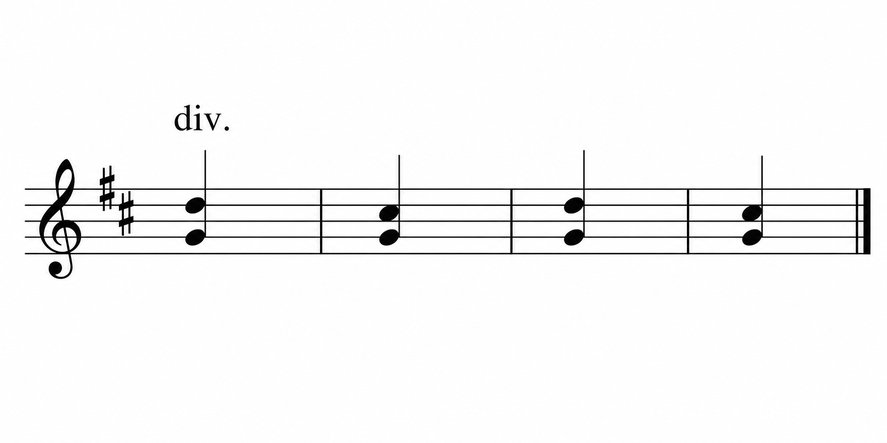
Div. is short for divisi. It instructs the section to divide simultaneous notes rather than having every player perform all of them.
Tutti means “all.” After divisi writing, it signals that the entire section should return to playing the same complete line.
The inside player generally turns the page so the outside player can continue performing and preserve the continuity of the section's sound.
Pencil markings are visible but erasable, allowing bowings, dynamics, cuts, and other rehearsal decisions to be revised without damaging the music.
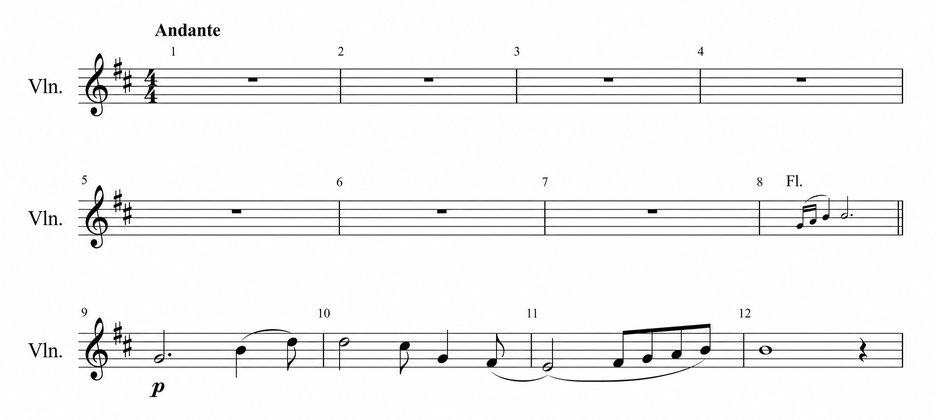
Cue notes reproduce recognizable material from another instrument or section. They help a resting player follow the music and enter accurately.
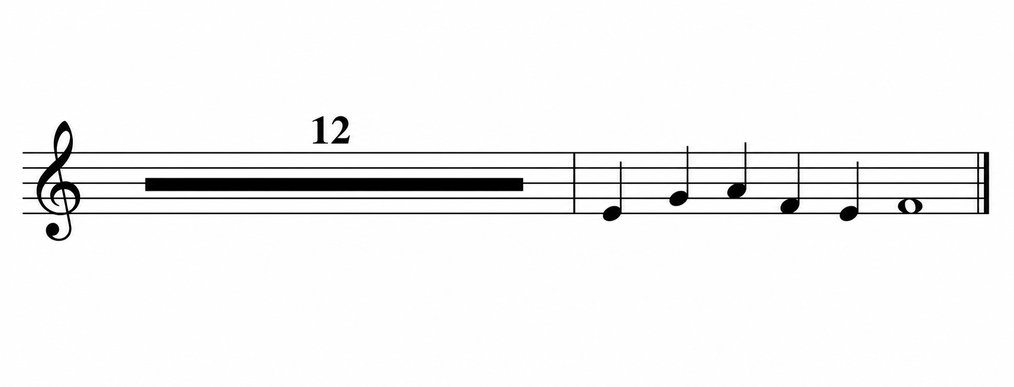
The number above a multimeasure rest gives the total number of full measures of rest. The player must continue counting and watching the conductor throughout all 12 measures.
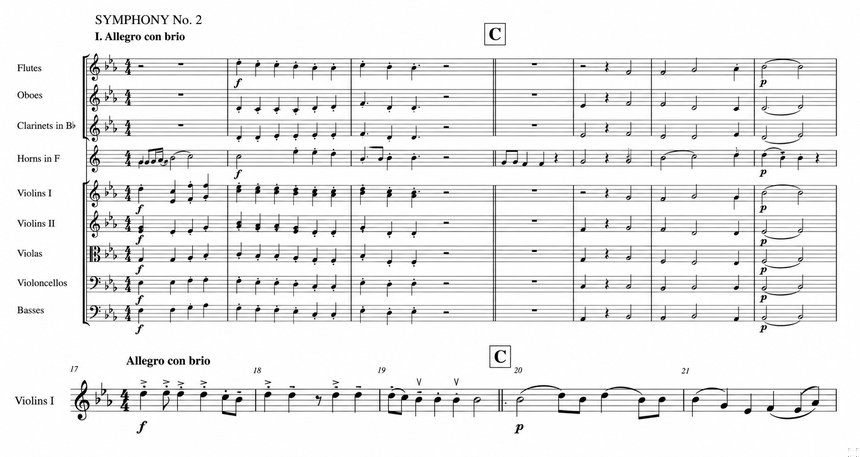
Rehearsal letters and numbers let the conductor and musicians locate passages quickly, such as “begin four measures before rehearsal C.”
A clear preparation establishes when the beat will arrive and often communicates tempo, dynamic energy, articulation, and musical character.
Arco instructs the violinist to return to bowing after pizzicato or another non-bowed manner of sound production.
Con sord., short for con sordino, means “with mute.” A violin mute changes the instrument's resonance and produces a more subdued tone color.
The mute should be prepared early during an appropriate rest. This avoids noise, rushing, and a late entrance while preserving attention to the conductor.
Unmeasured bowed tremolo calls for rapid repeated bow strokes rather than a precisely counted subdivision, usually sustained for the written duration.
Unified bowings support coordinated articulation, phrasing, and visual consistency. Section decisions should be marked clearly and followed unless the conductor changes them.
Non div. directs players not to divide the notes. When technically possible, each violinist performs both pitches together as a double stop.
A conductor's cutoff coordinates the exact release of a sustained sound. Watching the gesture allows the section to stop together cleanly.
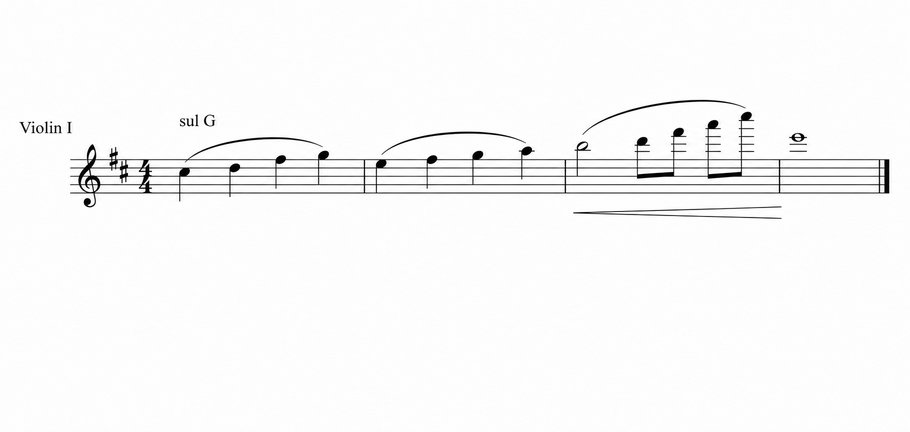
Sul G means “on the G string.” It may require shifting higher than usual to preserve the G string's distinctive dark tone color.
In a section part, solo generally assigns the passage to an individual player, normally the principal or another specifically designated musician.
Free CourseViolin complete course
5

(1)

8h21m

9 exercises
Free CourseViolin
4.9
(10)
2h03m
49 exercises
Free CourseViolin
4.9
(15)
1h35m
10 exercises
Free CourseViolin from basics to advanced
New
5h39m
26 exercises
Free CourseLearn To Play The Violin
New
1h14m
17 exercises
Free CourseViolin Bowing Fundamentals
New
5h19m
12 exercises
Free CourseBasic Violin exercises
New
48m
6 exercises

Free CourseViolin Course for Beginners
New
1h00m
6 exercises
Thousands of online courses in video, ebooks and audiobooks.
To test your knowledge during online courses
Generated directly from your cell phone's photo gallery and sent to your email

Download our app via QR Code or the links below:.


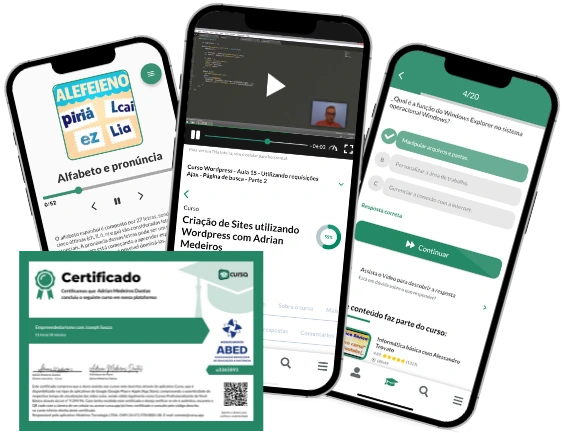
Carry knowledge in your pocket.
Download the Cursa app.
There are hundreds of free courses available, with a free certificate of completion that is saved in your mobile image gallery.
Download the app to access the Course Completion Certificate for Free.


+ 10 million
students

Free and Valid
Certificate

60 thousand free
exercises

4.8/5 rating in
app stores

Free courses in
video and ebooks